Temple Of Jupiter
Split, Croatia
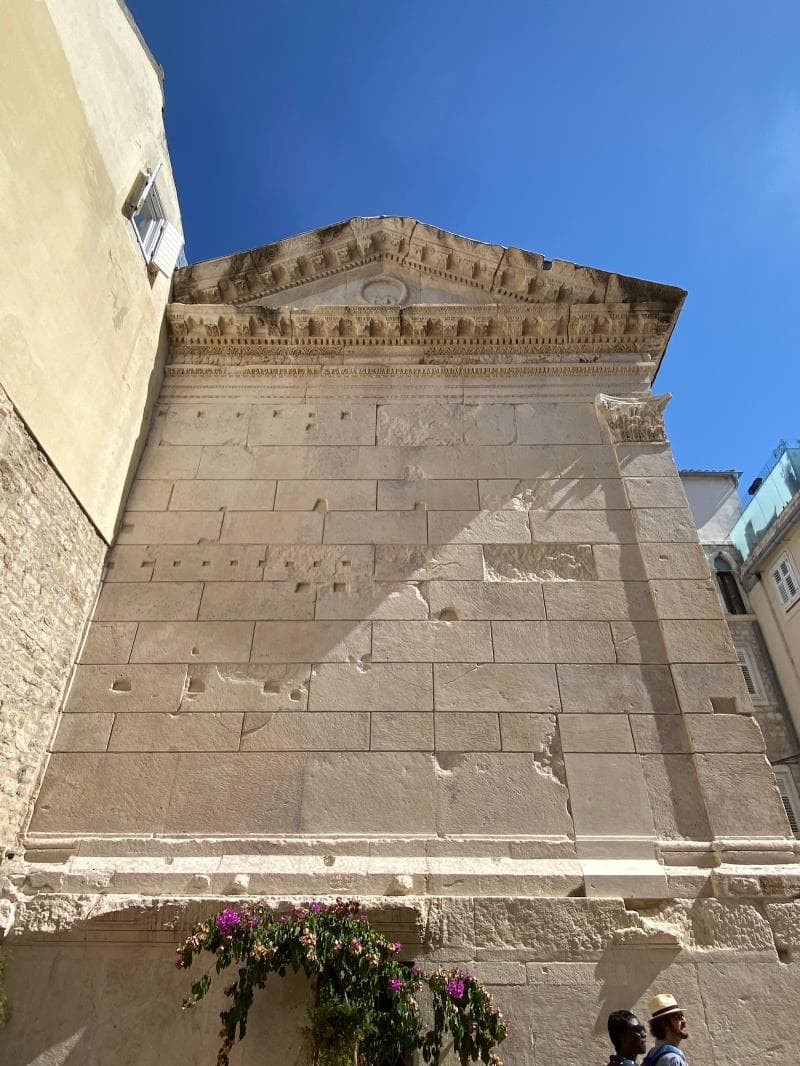
Explore Split's Temple of Jupiter, an ancient Roman temple built by Emperor Diocletian, later transformed into a baptistery. Discover its history, unique architecture, and hidden gems in Split, Croatia.
Overview
Tucked within the vibrant heart of Diocletian's Palace in Split, Croatia, stands the Temple of Jupiter. This ancient Roman edifice, constructed between 295 and 305 AD by Emperor Diocletian, was originally dedicated to Jupiter, the supreme Roman god whom Diocletian considered his 'divine father'. Its remarkably preserved state and historical significance have led many, including the eminent Scottish architect Robert Adam, to consider it one of Europe's most beautiful monuments. As Christianity spread, the temple underwent a profound transformation in the 6th century, becoming the Baptistery of St. John the Baptist. Today, it remains an integral part of Diocletian's Palace, a UNESCO World Heritage Site, offering a captivating glimpse into Split's layered past.
History & Cultural Background
Emperor Diocletian commissioned the Temple of Jupiter as a crucial component of his sprawling retirement palace on the Adriatic coast. Building on his belief of a divine connection, Diocletian explicitly identified himself as the son of Jupiter, utilizing this temple to reinforce his imperial authority and divine right to rule. The temple served as a sacred space for imperial sacrifices and ceremonies, underscoring its role in upholding Roman religious orthodoxy. Construction, however, was unexpectedly halted in 305 AD when Diocletian abdicated, leaving some parts of the structure unfinished. The shift from pagan worship to Christian devotion is strikingly evident in the temple's conversion in Late Antiquity. In the 6th century, the structure was repurposed as a baptistery, with a crypt dedicated to St. Thomas simultaneously constructed beneath it. This adaptation saw the addition of a baptismal font and Christian symbols, yet much of the original Roman architecture was carefully preserved, telling a compelling story of cultural continuity.
What Makes It Special
Despite its modest size, the Temple of Jupiter stands as an architectural marvel. Its interior boasts a magnificently preserved barrel-vaulted, coffered ceiling, a feature that profoundly influenced early Renaissance art in Dalmatia. The entrance is richly decorated, featuring intricate reliefs depicting Roman deities such as Victoria, Triton, Helios, Hercules, Jupiter, and Apollo, showcasing the exquisite craftsmanship of the era. Guarding the temple's entrance is a striking black granite sphinx, an ancient Egyptian artifact brought to Split by Emperor Diocletian himself, providing a fascinating connection to an even older civilization. The temple's rectangular plan and elevated podium also contribute to its distinctive appearance, making it a standout structure within the palace complex. This harmonious blend of pagan and Christian elements within the same structure makes it a unique and historically rich site.
Stories, Fun Facts & Local Details
- Inside the temple, visitors can admire a notable bronze statue of St. John the Baptist, created by the renowned Croatian sculptor Ivan Meštrović.
- The baptismal font within the former temple was crafted in the 13th century from parts of an 11th-century altar screen, and it bears what is believed to be the oldest known representation of a Croatian king (either Petar Krešimir IV or Demetrius Zvonimir) with his subjects on a medieval stone sculpture.
- The temple also houses sarcophagi containing the remains of two Archbishops of Split, Ivan of Ravenna (died c. 1059) and Lovre (died c. 1099), providing a tangible link to medieval ecclesiastical history.
- Adjacent to the Temple of Jupiter is a famously narrow alleyway known locally as 'Pusti me proć', which translates to 'Let me pass', adding a touch of local charm and a fun photo opportunity for curious travelers.
Visitor Perspective
The Temple of Jupiter, while a powerful standalone landmark, is most effectively experienced as part of a larger exploration of Diocletian's Palace. Its location within the western part of the palace, close to the Peristyle, makes it an easy and essential stop on any walking tour of Split's historic old town. Although it is a relatively small monument, typically requiring 20 to 45 minutes for a visit, its rich history, unique architecture, and fascinating artifacts leave a lasting impression. The temple is generally open to visitors, often with a modest entrance fee. To best appreciate its intricate details and absorb the atmosphere without large crowds, consider visiting earlier in the day.
Coordinates: 16.439568, 43.508341
View on Google Maps💬 How Travelers Describe This Place
Based on community votes
Unique
703Must See
521Photogenic
380Interesting
291Beautiful
28
Traveler Stories
Discover memorable experiences shared by travelers who have visited this place.
No traveler stories yet.
Be the first traveler to share what made this place memorable.
Things to see at Temple Of Jupiter



Tour
By
Spot
Discover amazing places around the world. Your journey starts here.
Explore
© 2026 TourBySpot. All rights reserved.