Skanderbeg Square
Tirana, Albania
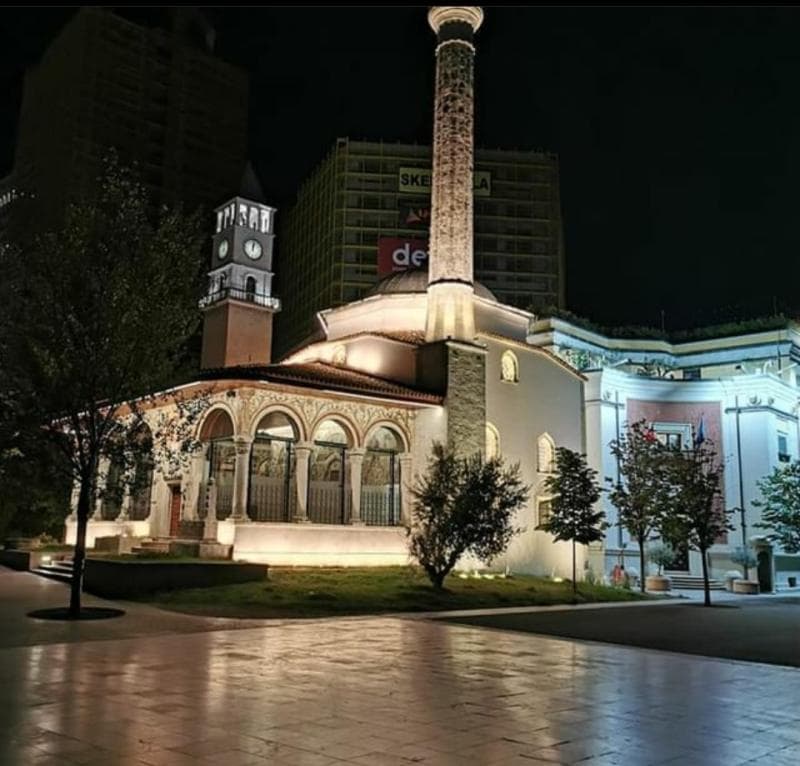
Discover Skanderbeg Square, Tirana, Albania's central plaza. Explore its rich history, unique pyramid design, and iconic landmarks like the Skanderbeg Monument and Et'hem Bey Mosque. A vibrant cultural hub.
Overview
Skanderbeg Square, or 'Sheshi Skënderbej' in Albanian, lies at the vibrant heart of Tirana, Albania's capital city. More than just a large urban space, it serves as the symbolic and geographic core of the city, representing Albania's rich history and ongoing transformation. The square is a vast, open plaza, prominently featuring the equestrian statue of its namesake, Gjergj Kastrioti Skanderbeg, Albania's revered national hero. Reopened in its current pedestrian-friendly design in 2017, the square has become a central gathering place, inviting both locals and travelers to experience the pulse of Tirana.
History & Cultural Background
The history of Skanderbeg Square is a tapestry woven with significant periods of Albanian development and change. Its origins trace back to 1917, when the Austrians established a public square in this area. After Tirana became the capital in 1920, the square began to evolve, influenced by various architectural plans. During the Albanian monarchy, it featured a roundabout with a fountain at its center. The square as we largely recognize it today, named after Skanderbeg, took shape over decades, notably with the placement of the impressive 11-meter-tall Skanderbeg Monument in 1968, commemorating the 500th anniversary of his death. This period also saw the construction of several monumental buildings around the square, including the National Opera, National Museum, and Tirana International Hotel. However, the square has undergone continuous transformations, reflecting the political and social shifts in Albania. A major redevelopment project, completed in 2017, transformed it into a predominantly pedestrian zone, earning international acclaim including the European Prize for Urban Public Space in 2018.
What Makes It Special
What truly sets Skanderbeg Square apart is its ingenious design and its role as a convergence point for history, culture, and daily life. The square's expansive surface of approximately 40,000 square meters is paved with natural stones sourced from every region where Albanians live, symbolizing national unity. This stone pavement is uniquely shaped like a shallow pyramid, gently rising to a central point about 1.80 meters high. This subtle elevation not only provides a unique perspective of the surrounding landmark buildings but also symbolically places the citizen at the center. Over a hundred fresh water fountains are integrated into the square, offering a refreshing escape during hot summer days.
Surrounding the square is an impressive ensemble of significant Albanian institutions and historical structures. These include the iconic Et'hem Bey Mosque, an exquisite example of 18th to early 19th-century Ottoman architecture with intricate frescoes, and the historic Clock Tower, offering panoramic views of the city. Also framing the square are the National History Museum, showcasing Albania's past through various exhibits and distinguished by its monumental facade mosaic 'The Albanians', the Palace of Culture, the National Opera and Ballet Theatre, and the Bank of Albania.
Stories, Fun Facts & Local Details
The square is steeped in stories and fascinating details that bring its history to life. The central Skanderbeg Monument itself is a powerful tribute to Gjergj Kastrioti Skanderbeg, who bravely led resistance against the Ottoman Empire in the 15th century, becoming a figure akin to a 'King Arthur' or 'William Tell' for Albanians. Interestingly, before Skanderbeg's statue, a monument to Albania's communist dictator Enver Hoxha stood in the square, which was famously toppled by student protests in 1991, marking a pivotal moment in the country's democratic transition.
The current pyramid design of the square, where the highest point is in the middle, is said to make everyone standing on it feel important, symbolizing the citizen as the focal point. The diverse stones used in the paving reinforce the idea of a unified Albania, bringing together materials from all parts of the country and its diaspora. The green belt surrounding the central paved area consists of 12 distinct gardens, each connected to the institutions lining the square, creating a harmonious link between nature and the urban environment.
Visitor Perspective
For any traveler to Tirana, Skanderbeg Square serves as an ideal starting point for exploration and a vibrant hub for experiencing local life. It's a vast pedestrian haven where you can leisurely walk, sit on benches, and observe the daily rhythm of the city. Visitors often enjoy cooling their feet in the numerous shallow reflecting pools during warmer months. The square frequently hosts cultural events, national festivals, concerts, and exhibitions, providing a dynamic cultural experience.
From here, many of Tirana's most important landmarks are just a short stroll away. You can delve into Albania's rich past at the National History Museum, admire the beautiful architecture of the Et'hem Bey Mosque, or climb the Clock Tower for panoramic city views. The atmosphere is consistently lively, with children playing, cyclists passing by, and locals enjoying coffee in nearby cafes. Skanderbeg Square offers a unique blend of historical grandeur and contemporary urban energy, making it an essential and memorable part of any visit to Tirana.
Coordinates: 19.8177, 41.3237
View on Google Maps💬 How Travelers Describe This Place
Based on community votes
Interesting
915Must See
211Unique
123Beautiful
74Photogenic
53
Traveler Stories
Discover memorable experiences shared by travelers who have visited this place.
No traveler stories yet.
Be the first traveler to share what made this place memorable.
Things to see at Skanderbeg Square



Tour
By
Spot
Discover amazing places around the world. Your journey starts here.
Explore
© 2026 TourBySpot. All rights reserved.