Albanian Flag Plaza
Tirana, Albania
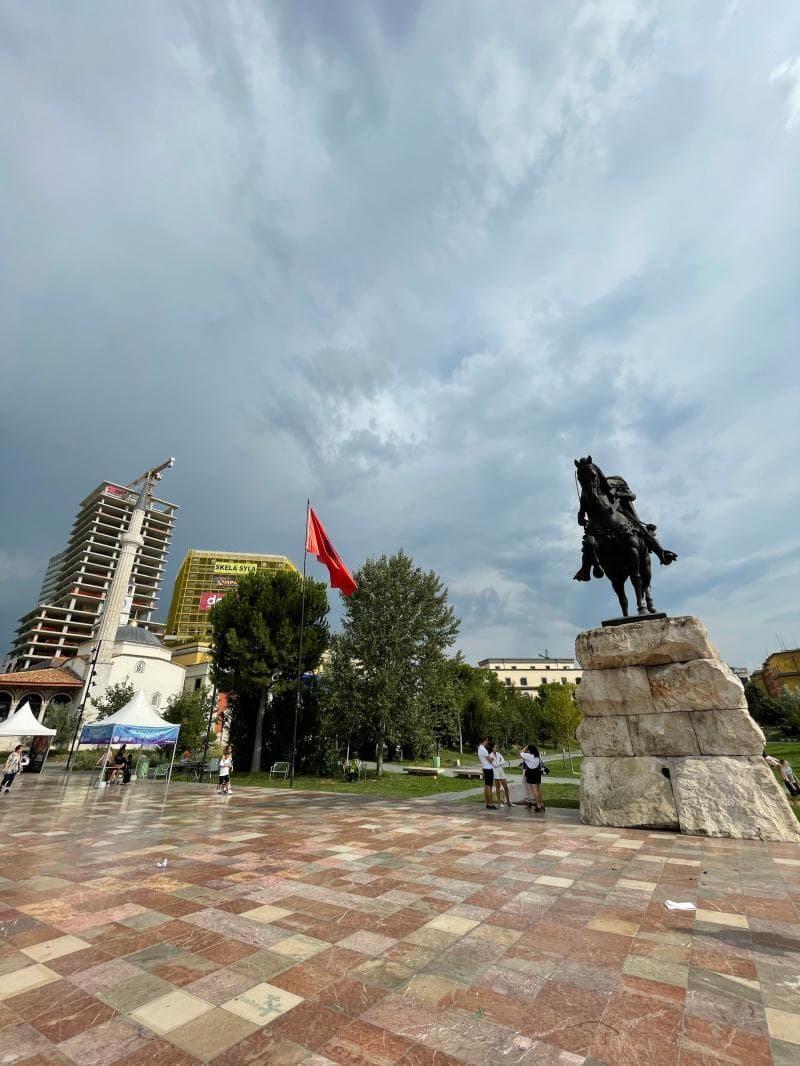
Discover Albanian Flag Plaza, a powerful symbol of national pride located within Skanderbeg Square in Tirana, Albania. Explore its history and cultural significance.
Overview
At the very heart of Tirana, Albania's vibrant capital, lies Skanderbeg Square – an expansive pedestrian zone serving as the city's symbolic and geographical core. Within this grand plaza, the Albanian Flag Plaza stands as a poignant focal point, embodying the nation's profound pride and identity. This dedicated space prominently features the revered national flag, providing a powerful visual representation of Albania's history and spirit. The square itself, named after the legendary national hero Gjergj Kastrioti Skanderbeg, is a vast, open area where history, culture, and modern life converge, making it a central gathering place for locals and a must-visit for travelers seeking to understand the Albanian soul.
Its strategic location means it's surrounded by many of Tirana's most significant cultural and architectural landmarks, acting as a gateway to exploring the city's rich heritage. The Albanian Flag Plaza, a distinct part of this urban tapestry, draws attention to the powerful symbolism of the double-headed eagle and the vibrant red field, elements deeply ingrained in the country's narrative.
History & Cultural Background
Skanderbeg Square has undergone significant transformations throughout history, reflecting the various chapters of Albania's past. While the square's current form was largely redeveloped and inaugurated in 2017, its origins trace back to the early 20th century. During the Albanian monarchy and communist eras, the square saw different architectural influences and even hosted a statue of Joseph Stalin, later replaced by the monument to Skanderbeg.
The square is named after Gjergj Kastrioti Skanderbeg, a 15th-century nobleman who valiantly resisted the Ottoman Empire. He is celebrated as Albania's national hero, a figure akin to a 'King Arthur' or 'William Tell', whose legacy is intrinsically linked to the nation's fight for independence. His equestrian statue proudly dominates the square, serving as a constant reminder of his enduring spirit.
The Albanian flag, displayed prominently at the Albanian Flag Plaza, is a potent national emblem. Its design – a black double-headed eagle on a bold red field – was adopted by Skanderbeg as his seal during his resistance against the Ottomans. The red background symbolizes bravery, courage, and the blood shed by generations defending their homeland, while the black double-headed eagle represents sovereignty, vigilance, and the unity of Albanians. Its two heads are often said to symbolize the east and west, or the north and south, reflecting Albania's historical position and guarding the country from all directions. This flag has been a symbol of national pride and independence since 1912 and was restored to its original design after the fall of communism.
What Makes It Special
The Albanian Flag Plaza stands out not just for its symbolic significance but also for its seamless integration into the broader design of Skanderbeg Square. The entire square, a testament to modern urban planning, is paved with natural stones sourced from every region of Albania, creating a unique texture and connecting every part of the country to its capital's heart. This stone pavement forms a shallow pyramid, with the highest point at its center, subtly drawing the eye towards key features like the Skanderbeg Monument and, by extension, the Albanian Flag Plaza.
The flag's striking red and black colors make it instantly recognizable and a powerful visual statement within the expansive open space. The double-headed eagle, a motif deeply rooted in Albanian heraldry and history, evokes a sense of ancient lineage and enduring strength. The plaza ensures this vital national symbol is presented with the reverence it commands, allowing visitors to appreciate its design and the deep meaning it holds for the Albanian people.
Stories, Fun Facts & Local Details
For Albanians, the national flag is not merely a piece of fabric; it's a living symbol of their identity and resilience. Displaying the flag at the Albanian Flag Plaza within Skanderbeg Square is a powerful daily affirmation of their hard-won independence and national unity. The square itself functions as a 'public living room' for Tirana's residents. Here, children scoot across the vast expanse, elders engage in lively conversations on benches, students meet for coffee, and artists rehearse in the open air. This vibrant, everyday energy brings the plaza to life, especially during national celebrations like Independence Day (November 28-29), when the flag takes center stage amidst fireworks and festivities.
A fascinating detail about the double-headed eagle is its ancient roots, with its origins often linked to the Byzantine Empire and its adoption by Skanderbeg further solidifying its place in Albanian culture. The eagle's two heads watching both east and west reflect Albania's historical position at the crossroads of different civilizations, constantly vigilant against external threats. This emblem is so ingrained that it's often incorporated into Albanian art, jewelry, and fashion, showcasing a continuous thread of national pride.
Visitor Perspective
As a visitor to the Albanian Flag Plaza, you're immediately struck by the grandeur of Skanderbeg Square and the emotional weight carried by the national flag. The plaza offers an excellent vantage point to absorb the bustling activity of the square and to reflect on Albania's rich history. It's a perfect spot for photography, capturing the iconic flag against the backdrop of historic buildings and the majestic Skanderbeg Monument.
The entire square is designed to be a 'people-first' space, inviting exploration and relaxation. You can stroll across the unique stone mosaic, pause by the shallow reflecting pools that help cool the area in summer, or simply sit on a bench and observe the flow of daily life. The proximity to key landmarks like the National History Museum, Et'hem Bey Mosque, and the Clock Tower means that a visit to the Flag Plaza is often part of a broader, immersive experience into Tirana's past and present, offering a profound sense of connection to Albania's enduring national spirit.
Coordinates: 19.8189, 41.3275
View on Google Maps💬 How Travelers Describe This Place
Based on community votes
Beautiful
623Interesting
545Unique
343Must See
302Photogenic
20
Traveler Stories
Discover memorable experiences shared by travelers who have visited this place.
No traveler stories yet.
Be the first traveler to share what made this place memorable.

Tour
By
Spot
Discover amazing places around the world. Your journey starts here.
Explore
© 2026 TourBySpot. All rights reserved.