Skanderbeg Monument
Tirana, Albania
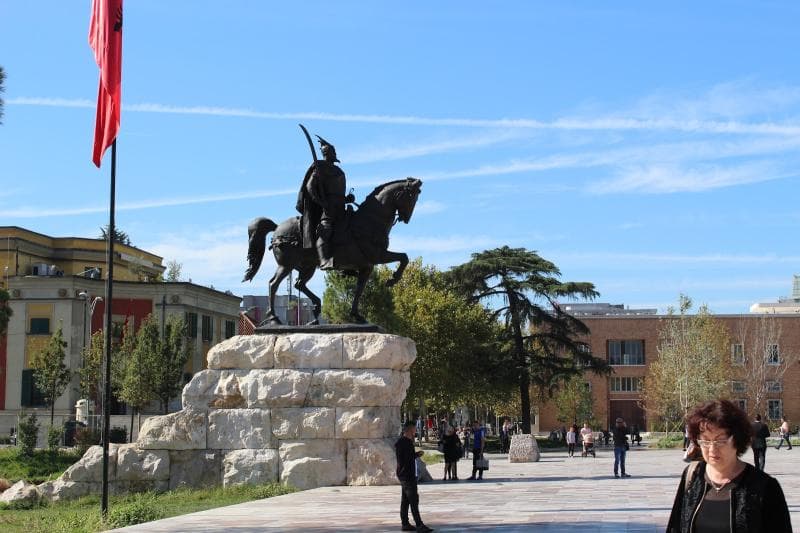
Explore the Skanderbeg Monument in Tirana, Albania, a tribute to national hero Gjergj Kastrioti Skanderbeg. Discover its history, cultural impact, and what makes this iconic statue in Skanderbeg Square so special.
Overview
At the very heart of Tirana, Albania, stands the magnificent Skanderbeg Monument, an imposing equestrian statue that serves as the focal point of the expansive Skanderbeg Square. This bronze masterpiece commemorates Gjergj Kastrioti Skanderbeg, the 15th-century nobleman and military leader revered as Albania's national hero. More than just a statue, it embodies the spirit of Albanian independence, resilience, and unity, constantly reminding visitors and locals of a pivotal era in the nation's history.
The monument's strategic placement in Skanderbeg Square means it is surrounded by many of Tirana's most important cultural and governmental buildings, including the National Historical Museum, the Et'hem Bey Mosque, and the Palace of Culture. It's an unmissable landmark, dominating the square and drawing the eye with its powerful depiction of a mounted warrior.
History & Cultural Background
The Skanderbeg Monument was unveiled in January 1968, coinciding with the 500th anniversary of Skanderbeg's death. Designed by a trio of prominent Albanian sculptors—Odhise Paskali, Andrea Mano, and Janaq Paço—the statue stands an impressive 11 meters (36 feet) tall, including its stone pedestal. Its creation was a monumental artistic and national endeavor, replacing an earlier statue of Joseph Stalin in the square, a powerful symbolic shift from Soviet-era political imagery to a figure deeply rooted in Albanian national identity.
Gjergj Kastrioti Skanderbeg (1405–1468) earned his heroic status by leading a courageous resistance against the expanding Ottoman Empire for 25 years. Originally taken as a hostage by the Ottomans and trained as a military officer, he famously deserted and returned to his homeland, uniting Albanian principalities under his banner. The Ottomans themselves called him 'İskender Bey', meaning 'Lord Alexander,' recognizing his military prowess by comparing him to Alexander the Great.
What Makes It Special
The Skanderbeg Monument's significance lies not only in its artistic merit but also in its profound symbolic weight. It captures Skanderbeg on horseback, cloak dramatically thrown back, and sword raised high, a clear image of a leader in action. This classic European equestrian formula was adapted to portray a figure remembered less as a king and more as an enduring symbol of resistance and national pride.
The monument serves as a constant reminder of Albania's historical struggles for independence. It represents bravery, loyalty, wisdom, and the unification of the Albanian nation, qualities that resonate deeply with Albanians even today. Its sheer scale ensures it commands attention, making it an undeniable focal point in Tirana's bustling central square.
Stories, Fun Facts & Local Details
For Albanians, Skanderbeg is often likened to legendary figures such as King Arthur or William Tell, embodying the ultimate national hero. His image is so ingrained in the national consciousness that his face graces the 5000 Leke banknote, the largest denomination in Albania. Historically, Skanderbeg is considered by some historians to be among the four greatest generals and strategists of the world, alongside Alexander the Great, Julius Caesar, and Napoleon Bonaparte, a testament to his military genius in defending his homeland.
The square itself, redesigned significantly in 2017, holds its own fascinating details. It is paved with stones sourced from all regions where Albanians live, creating a symbolic mosaic of national unity under the watchful gaze of Skanderbeg. This redesign even earned the square the prestigious 2018 European Prize for Urban Public Space. The monument stands proudly amidst this modern, yet historically rich, urban space, witnessing countless public gatherings, celebrations, and the daily life of Tirana.
Visitor Perspective
Visiting the Skanderbeg Monument offers a powerful connection to Albania's identity. As you approach, the towering figure on horseback immediately impresses, inviting contemplation of the history it represents. It's a natural starting point for exploring Tirana, providing both a geographical and cultural anchor for your visit. From its base, you can take in the surrounding architectural marvels of Skanderbeg Square, all of which tell their own stories of Albania's past and present. The monument is not just a photo opportunity; it's an invitation to delve into the 'Albanian soul' and understand the resilient spirit of the nation.
The monument and the square around it are a vibrant hub of activity, where you can observe daily life, participate in public events, or simply sit and appreciate the atmosphere. Look closely at the details of the sculpture, the flowing cape, the raised sword, and the determined posture, each element contributing to the narrative of heroism and defiance. It’s a truly central experience that encapsulates much of what makes Tirana and Albania unique.
Coordinates: 19.8186, 41.3277
View on Google Maps💬 How Travelers Describe This Place
Based on community votes
Interesting
551Unique
547Beautiful
336Photogenic
298Must See
219
Traveler Stories
Discover memorable experiences shared by travelers who have visited this place.
No traveler stories yet.
Be the first traveler to share what made this place memorable.

Tour
By
Spot
Discover amazing places around the world. Your journey starts here.
Explore
© 2026 TourBySpot. All rights reserved.