Opera House
Tirana, Albania
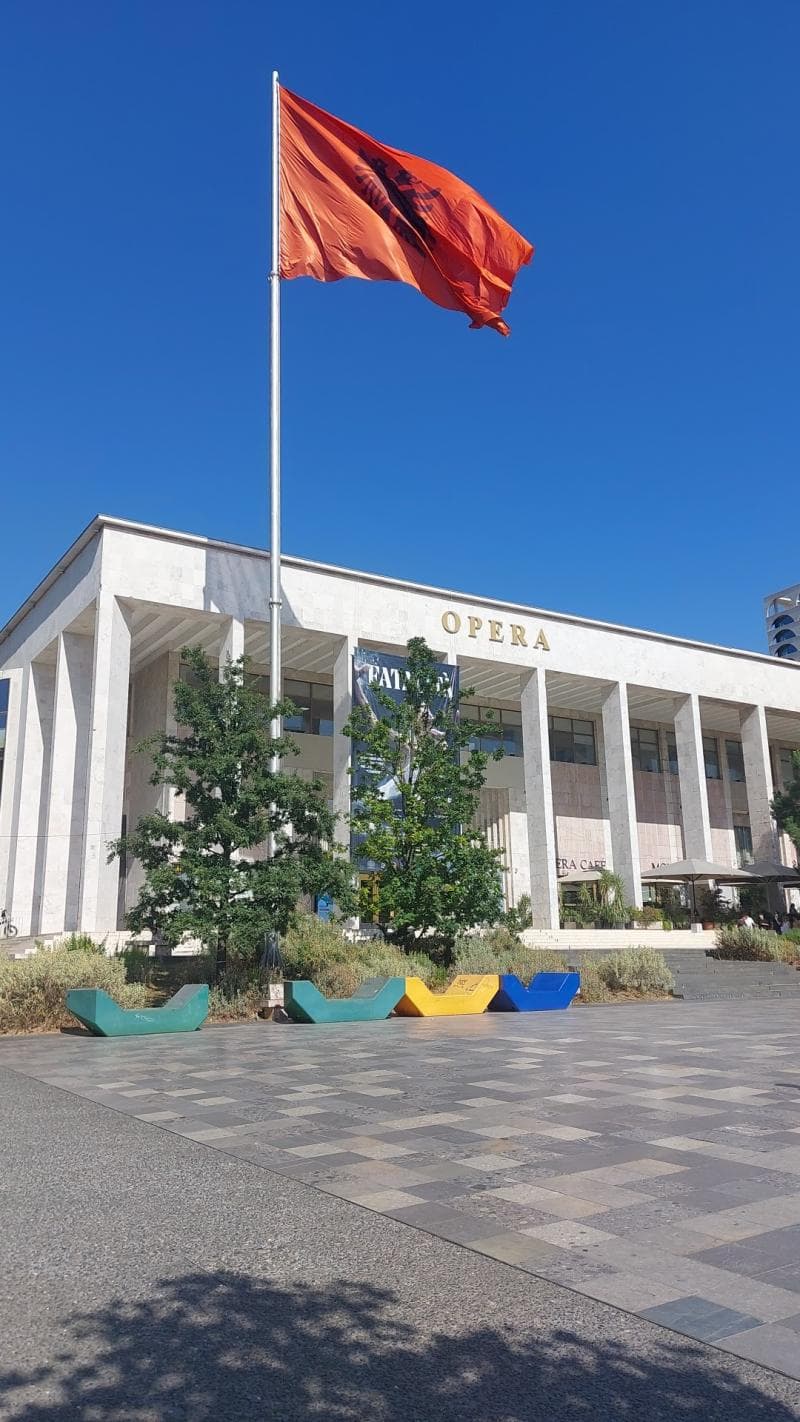
Discover the National Theatre of Opera and Ballet, Tirana's cultural heart, in Skanderbeg Square, Albania. Explore its history, architecture, and performances.
Overview
Nestled within the vibrant heart of Skanderbeg Square in Tirana, Albania, stands the National Theatre of Opera and Ballet, often simply referred to by locals and travelers as the 'Opera House'. This magnificent institution is not merely a building but the highest seat of performing arts in Albania, playing a pivotal role in the nation's cultural and artistic life. It serves as the primary stage for professional Albanian performing arts, housing the country's leading opera, ballet, and symphonic ensembles.
Its prominent location on Skanderbeg Square, Tirana's central and most significant public space, makes it an unmissable landmark for anyone exploring the capital. More than just a venue for performances, the Opera House is a symbol of Albania's rich cultural heritage and its ongoing artistic renaissance.
History & Cultural Background
The story of the National Theatre of Opera and Ballet (Teatri Kombëtar i Operas dhe Baletit - TKOB) began on November 29, 1953, marking a significant milestone in the development of Albanian performing arts. Initially, the institution operated from the building of the University of Arts (then the Academy of Music and Arts). However, a defining move in 1966 saw it establish its permanent home within the grandeur of the Palace of Culture, where it continues to thrive today.
The Palace of Culture itself holds a fascinating history. Its construction commenced in 1959, reportedly commemorating a visit by the then Soviet leader Nikita Khrushchev, and was officially opened in 1963. This architectural landmark, which also houses the National Library, became a central hub for Tirana's burgeoning arts scene, filling a crucial void as there had previously been no dedicated venue for such performances. The architectural style of the Opera House within the Palace of Culture exhibits influences from Soviet-era designs, yet presents a grand neoclassical facade that radiates elegance. From its inception, the theatre has been instrumental in showcasing works by both international and Albanian composers, fostering the growth of local talent, and shaping Albania's unique cultural identity.
What Makes It Special
What truly sets Tirana's Opera House apart is its multifaceted role as a guardian and promoter of Albanian and international artistic traditions. It is unique in that it integrates opera, ballet, a national symphony orchestra, and a folk ensemble under one organizational roof. This blend of classical European performing arts with the vibrant heritage of Albanian traditional music and dance offers a distinct cultural experience. The repertoire spans from timeless works by global masters like Verdi, Puccini, and Tchaikovsky, to the pioneering creations of Albanian composers such as Prenkë Jakova, whose 'Mrika' was the first Albanian operatic premiere in 1959.
The theatre underwent an extensive and transformative renovation between 2017 and 2020, with some sources indicating works continued until 2021. This rehabilitation project modernized its stage technology, acoustics, rehearsal facilities, and public spaces, all while diligently preserving its historic essence. Today, with a main auditorium capable of seating approximately 800 spectators, the National Theatre of Opera and Ballet is acclaimed as one of the most distinguished opera theaters in the Balkans, boasting international acoustic standards.
Stories, Fun Facts & Local Details
The Opera House is steeped in local charm and intriguing details. One interesting anecdote highlights the foundational role of the Albanian Philharmonic, established in 1950, which included the choir, symphony orchestra, opera singers, and ballet troupe that would eventually form the TKOB. The very first performance under the TKOB banner was the Russian opera 'Rusalka' by A. Ş. Dargomyzhskij on November 27, 1953. The first Albanian operetta, 'Agimi' by Kristo Kono, followed in 1955.
For the curious traveler, the theatre's location within the Palace of Culture means it shares a site with a building originally erected on the grounds of Tirana's Old Bazaar, Pazar i Vjetër, a testament to the city's continuous evolution. While its performances are world-class, the ticketing system has been noted by some visitors as being quite traditional, often requiring in-person reservation and payment, as online services might not be available. This can be seen as a charming, albeit sometimes logistically challenging, glimpse into local operational norms. When evening falls, the building becomes particularly captivating, beautifully illuminated and adding a majestic glow to Skanderbeg Square.
Visitor Perspective
Experiencing a performance at Tirana's Opera House offers more than just a show; it's an immersive cultural journey. Even if you don't attend a performance, the building itself is a striking piece of architecture, worth admiring as you stroll through Skanderbeg Square. The square acts as a dynamic forecourt, often bustling with life, cafes, and other significant landmarks surrounding the theatre.
Attending a show provides an opportunity to connect deeply with Albania's artistic soul. The comfortable seating and the impressive quality of the performances, featuring both local and international talent, promise a delightful evening. While purchasing tickets may require a visit to the venue itself, the effort is rewarded with an authentic and high-caliber cultural experience. The National Theatre of Opera and Ballet stands as a welcoming beacon for art enthusiasts, contributing significantly to Tirana's appeal as a cultural destination and offering a unique window into the country's vibrant performing arts scene.
Coordinates: 19.81971, 41.32908
View on Google Maps💬 How Travelers Describe This Place
Based on community votes
Must See
684Beautiful
363Photogenic
302Unique
250Interesting
88
Traveler Stories
Discover memorable experiences shared by travelers who have visited this place.
No traveler stories yet.
Be the first traveler to share what made this place memorable.

Tour
By
Spot
Discover amazing places around the world. Your journey starts here.
Explore
© 2026 TourBySpot. All rights reserved.