Underground Bunkers
Tirana, Albania
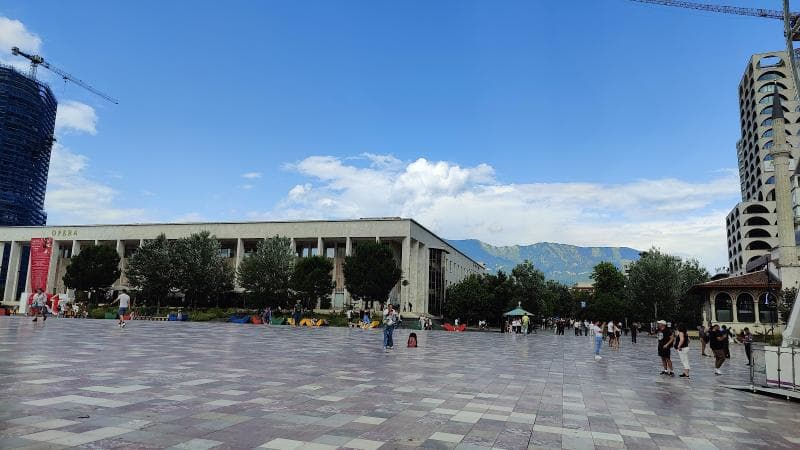
Explore Tirana's Bunk'Art 2, an underground bunker museum near Skanderbeg Square. Discover Albania's communist past, secret police, and Cold War paranoia.
Overview
Nestled just steps from Tirana's vibrant Skanderbeg Square, deep beneath the bustling streets, lies Bunk'Art 2, a former nuclear bunker now transformed into a powerful museum. This unique underground space offers a chilling, immersive journey into Albania's communist past, providing a profound look at the paranoia, surveillance, and repression that characterized the regime of dictator Enver Hoxha. It stands as a stark reminder of a dark era, yet also as a testament to the country's resilience and its commitment to confronting its history.
Opened to the public in 2016, Bunk'Art 2 focuses specifically on the history of the Albanian Ministry of Internal Affairs from 1912 to 1991, with a strong emphasis on the notorious Sigurimi, the secret police. Visitors navigate through a labyrinth of 24 underground rooms, exploring original equipment, documents, photographs, and multimedia installations that vividly portray the mechanisms of political persecution and life under intense state control.
History & Cultural Background
The story of Bunk'Art 2 is intrinsically linked to Albania's extraordinary 'bunkerization' program. Driven by Enver Hoxha's extreme isolationist paranoia, fearing invasion from all sides – NATO, the Warsaw Pact, Yugoslavia, and even China – Albania embarked on an unprecedented construction spree of concrete bunkers between the 1960s and 1980s. It's estimated that over 170,000 such structures were built across the country, making Albania one of the most fortified nations per capita.
Bunk'Art 2 itself was one of the last major bunker projects commissioned by Hoxha, constructed between 1981 and 1986. Codenamed 'Objekti Shtylla' (Pillar Object), this particular bunker was designed to shelter officials from the Ministry of Internal Affairs in the event of a chemical or nuclear attack. Its reinforced concrete walls, up to 2.4 meters thick, were meant to withstand immense force. However, like the vast majority of Albania's bunkers, it was never used for its intended defensive purpose.
Following the fall of communism in 1991, these bunkers lay dormant, symbols of a regime that had completely sealed itself off from the outside world. The transformation of this specific bunker into a museum is part of a broader initiative to repurpose these monuments of paranoia into educational and cultural spaces, allowing current and future generations to understand the impact of totalitarian rule.
What Makes It Special
What makes Bunk'Art 2 profoundly special is its ability to transport visitors directly into the oppressive atmosphere of communist Albania. Unlike traditional museums, the setting itself is a historical artifact, offering an authentic and visceral experience. Walking through the cold, concrete corridors, one can almost feel the weight of state secrecy and constant surveillance.
The museum's focus on the Ministry of Internal Affairs and the Sigurimi distinguishes it, delving into the meticulous and brutal tactics of the political police. It reconstructs the stories of surveillance, psychological pressure, arbitrary arrests, interrogations, and persecution that affected over 100,000 Albanians between 1945 and 1991. The exhibits often use original artifacts, personal testimonies, and multimedia displays to humanize the often-abstract concepts of state repression.
The dramatic entrance, which features a mock pillbox bunker above ground, is a modern addition signaling the site's new purpose. Inside, some rooms are preserved as they were, such as a suite for the Minister of Internal Affairs, while others are repurposed for exhibitions and art installations, blending historical education with artistic interpretation.
Stories, Fun Facts & Local Details
During the peak of the 'bunkerization' program, Albania had an estimated one bunker for every four to five citizens, an astonishing figure for a nation of its size. The construction was a massive drain on the country's resources, diverting funds from essential services like housing and infrastructure, and unfortunately led to numerous work accidents among the soldiers involved in their building.
A poignant detail about Bunk'Art 2 is that its dramatic entrance, the concrete dome, was intentionally left damaged. After the fall of the communist regime, some individuals attacked the dome, seeing it as a symbol of oppression. The curators chose to retain this damage as a visible part of the bunker's post-communist history and its painful transition.
While the bunker was intended for use by the Ministry of Internal Affairs, its original access was from within the Ministry building itself, maintaining its secrecy. The current entrance and exit for the museum were specially created during its conversion, allowing public access to this once-hidden world.
Visitor Perspective
Visiting Bunk'Art 2 is often described as a profoundly moving and educational experience. It offers a crucial understanding of Albania's complex past, providing context for the country's present identity. The underground setting, with its dimly lit corridors and preserved rooms, creates an intense atmosphere that enhances the historical narrative.
Many visitors find the exhibits to be incredibly impactful, particularly those detailing the human cost of the regime's brutality. The museum presents a balanced view, acknowledging the positive aspects of the era like improvements in health services and women's emancipation, while unflinchingly exposing the darker realities of surveillance and political repression.
Being centrally located and easily accessible from Skanderbeg Square, Bunk'Art 2 is a convenient and essential stop for anyone exploring Tirana's city center. It's recommended to allocate at least 1 to 1.5 hours to thoroughly explore the museum and absorb its powerful message. The cool, constant temperature underground also makes it a pleasant escape during warm Tirana days.
Coordinates: 19.819167, 41.326667
View on Google Maps💬 How Travelers Describe This Place
Based on community votes
Must See
717Photogenic
618Interesting
449Beautiful
335Unique
22
Traveler Stories
Discover memorable experiences shared by travelers who have visited this place.
No traveler stories yet.
Be the first traveler to share what made this place memorable.

Tour
By
Spot
Discover amazing places around the world. Your journey starts here.
Explore
© 2026 TourBySpot. All rights reserved.