Pedestrian Plaza
Tirana, Albania
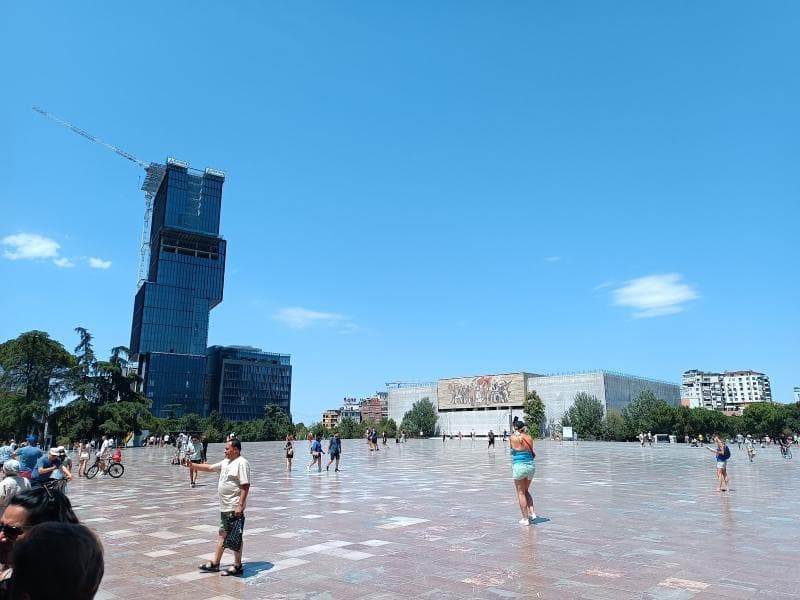
Explore Skanderbeg Square, Tirana, Albania's vibrant pedestrian plaza. Discover its rich history, iconic landmarks, and unique design as the city's cultural heart.
Overview
At the very heart of Tirana, Albania's vibrant capital, lies Skanderbeg Square, a grand public space that has been transformed into a sprawling pedestrian plaza. Named after Albania's national hero, Gjergj Kastrioti Skanderbeg, this expansive area serves as the city's symbolic and geographic core, covering approximately 40,000 square meters. Its redesign in 2017 made it one of the largest pedestrian zones in the Balkans, offering a welcoming, car-free environment for both locals and visitors alike. The square is framed by significant landmarks that collectively tell the story of Albania's past and present, including the National Historical Museum, the Palace of Culture, the Et'hem Bey Mosque, the Clock Tower, and the National Opera.
History & Cultural Background
The history of Skanderbeg Square is a microcosm of Albania's complex journey. Its origins can be traced back to 1917, when a public square was established. Following Tirana's designation as the capital in 1920, various city plans, including those by Italian architects like Armando Brasini and Florestano Di Fausto, shaped its development. During the communist era, the square was designed to host large political rallies, featuring monumental buildings and even statues of figures like Joseph Stalin and Enver Hoxha, which were later removed. The equestrian statue of Skanderbeg, erected in 1968, has remained a central fixture, commemorating the 15th-century national hero who valiantly defended the country against the Ottoman Empire. The square has undergone several transformations, reflecting the political and social shifts of the nation, from a roundabout dominated by cars to its current pedestrian-focused design.
What Makes It Special
The current iteration of Skanderbeg Square, completed in 2017, is the result of an international architecture competition won by the Belgian firm 51N4E in collaboration with Albanian artist Anri Sala. This visionary redesign transformed the space into a human-centered pedestrian area. The square is uniquely designed as a gentle, low-pitched pyramid. The surface is paved with over 130,000 tiles made from 30 different types of stones, all sourced from various regions across Albania. This choice of material not only reactivated local quarries but also symbolically unifies the nation. The slight slope allows water to flow into a shallow reflecting pool, creating captivating dry and wet patches and offering a cooling effect in summer, especially with its numerous fountains. A green belt of twelve distinct gardens surrounds the central plaza, providing shade and an ecological transition from the bustling city.
Stories, Fun Facts & Local Details
One of the most compelling aspects of the Pedestrian Plaza is its profound symbolism. The collection of stones from every corner of Albania represents the unity and diversity of the Albanian people. When standing at the 'tip' of the gently sloping pyramid, visitors find themselves elevated to eye level with the monumental buildings that frame the square, fostering a sense of equality and a new perspective on the past. The square also features an innovative underground car park, cleverly hiding vehicles and further prioritizing the pedestrian experience. It's a place where local life unfolds authentically: children on scooters, elders engaging in lively conversations, and students gathering, truly embodying a 'public living room' for Tirana's residents. The mosaic on the facade of the National Historical Museum, titled 'The Albanians,' offers a powerful visual narrative of the country's history, from ancient times to the communist era.
Visitor Perspective
For visitors, the Pedestrian Plaza at Skanderbeg Square is more than just a landmark; it's an immersive cultural experience. It serves as an ideal starting point for exploring Tirana, with many of the city's key attractions just steps away. Travelers can enjoy leisurely strolls across its unique stone mosaic, pause by the shallow pools to cool their feet on a warm day, or simply relax on one of the benches and observe the rhythm of daily Albanian life. The square is a vibrant hub for cultural and social activities, frequently hosting concerts, festivals, and open-air exhibitions, making it a dynamic space where history and modern life converge. Whether admiring the iconic Skanderbeg Monument, exploring the surrounding museums, or simply savoring a coffee at a nearby cafe, the square offers a unique blend of historical reflection and contemporary energy.
Coordinates: 19.81833, 41.32833
View on Google Maps💬 How Travelers Describe This Place
Based on community votes
Interesting
898Photogenic
667Beautiful
618Must See
449Unique
308
Traveler Stories
Discover memorable experiences shared by travelers who have visited this place.
No traveler stories yet.
Be the first traveler to share what made this place memorable.

Tour
By
Spot
Discover amazing places around the world. Your journey starts here.
Explore
© 2026 TourBySpot. All rights reserved.