Clock Tower
Tirana, Albania
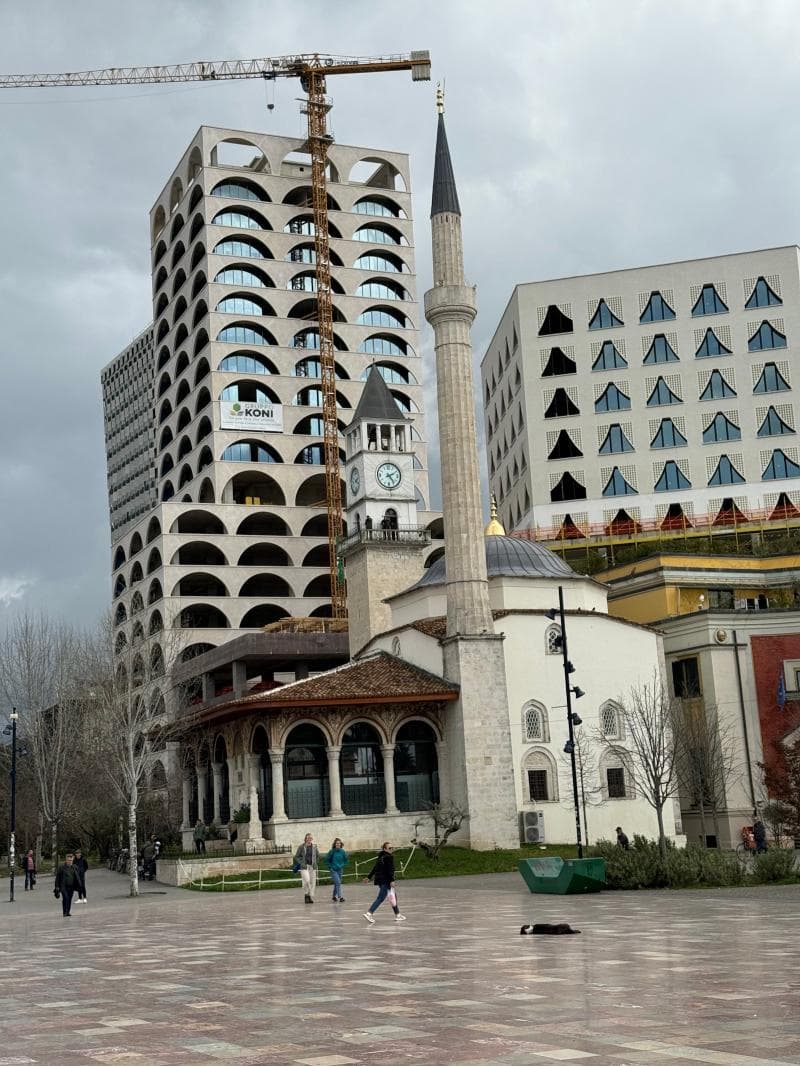
Discover Tirana's iconic Clock Tower (Kulla e Sahatit) in Skanderbeg Square, an Ottoman-era monument offering panoramic city views and rich history in Albania.
Overview
Standing proudly in the heart of Tirana's expansive Skanderbeg Square, the Clock Tower, locally known as Kulla e Sahatit, is an enduring symbol of Albania's capital. This Ottoman-era monument is more than just a timekeeper; it is a cultural heritage site and a prominent feature of the city's emblem, offering a fascinating glimpse into Tirana's rich past. As you explore the vibrant square, its elegant stone structure provides a constant, historical point of reference, inviting curious travelers to discover its stories.
Originally built in the early 19th century, the Clock Tower has witnessed centuries of transformation, from Ottoman rule to modern-day Tirana. It stands majestically beside the Et'hem Bey Mosque, forming a distinctive architectural ensemble that has long defined the spiritual and civic heart of the city. For those seeking an unparalleled perspective of Tirana's dynamic cityscape, a climb to its observation platform reveals breathtaking panoramic views, making it a must-visit landmark for any traveler.
History & Cultural Background
The construction of the Tirana Clock Tower began in 1822, with its completion generally cited around 1830. Its inception is credited to Haxhi Et'hem Bey, a significant figure who also completed the nearby Et'hem Bey Mosque, along with contributions from the city's wealthy families and local residents. This collective effort underscores its importance to the community from its very beginning. The tower's original clock mechanism was assembled by the skilled watchmaker Ismail Tufina, whose family proudly maintained it for over 150 years, until 1973. This continuous stewardship highlights the deep-rooted connection between the tower and the city's local craft traditions.
Over its lifetime, the Kulla e Sahatit has undergone several significant changes and restorations. In 1928, a new German clock mechanism was installed, marking a modernization phase for the tower. The tower also suffered damage during World War II but was meticulously repaired and became operational again in July 1946. During the communist era, a red star was temporarily placed atop the tower, and in 1974, an electric mechanism from China replaced the traditional one. A comprehensive restoration completed in 2010 has preserved its authenticity and ensured its continued role as a cherished cultural monument.
What Makes It Special
What truly sets Tirana's Clock Tower apart is its dual role as both a historical relic and a living part of the city's identity. At 32.5 to 35 meters tall, it was once the highest building in Tirana until the 1970s, commanding the city's skyline and serving as a crucial orientation point for residents and visitors alike. Its architecture, a blend of Ottoman styles, is characterized by a square base, a sturdy stone lower section, and a lighter, open upper floor, distinguishing it from surrounding modern structures.
The tower is officially recognized as a cultural monument, having received its first designation in 1948, a testament to its profound historical and cultural value. Its close proximity to the Et'hem Bey Mosque creates a unique architectural pairing, symbolizing the harmonious coexistence of religious and civic life in Tirana's past. This ensemble represents a tangible link to the city's foundational narrative and its evolution over the centuries.
Stories, Fun Facts & Local Details
The Clock Tower holds many intriguing stories and local details. Imagine a time when its bell, originally imported from Venice, was the primary indicator of time for the entire city, ringing out the hours and shaping the rhythm of daily life for Tirana's inhabitants. The Tufina family's dedication to maintaining the clock mechanism for generations speaks to a bygone era of skilled craftsmanship and community responsibility. Their removal by the communist regime in 1973 marks a poignant moment in the tower's history, reflecting broader societal shifts.
Climbing the tower is an experience in itself. The narrow, spiral staircase, consisting of approximately 90 stone steps, transports visitors back in time with each ascent. It's easy to picture the many generations who have traversed these very steps, each with their own reasons for reaching the top – perhaps to simply tell the time, to stand watch, or later, to admire the expanding city. The resilience of the tower, having been damaged and repaired multiple times, mirrors the determination and spirit of Tirana itself.
Visitor Perspective
For the modern traveler, visiting the Clock Tower offers a profound connection to Tirana's soul. The modest entrance fee, typically around 200 Albanian Lek, provides access to an unforgettable experience. While the climb up the approximately 90 steps can be a little demanding, it is undoubtedly rewarding. The staircase is narrow and some steps can be uneven, so comfortable shoes are highly recommended.
Upon reaching the observation platform, visitors are greeted with unparalleled 360-degree views of Skanderbeg Square and the broader Tirana cityscape, extending to the surrounding mountains. It's a perfect vantage point for photography, especially during the softer light of morning or late afternoon. From here, you can truly appreciate the square's layout and the juxtaposition of historical landmarks with Tirana's vibrant contemporary energy. It's a peaceful moment of reflection above the bustling city, allowing you to absorb the capital's unique blend of history and modernity.
Coordinates: 19.8197, 41.3277
View on Google Maps💬 How Travelers Describe This Place
Based on community votes
Must See
717Photogenic
618Interesting
449Beautiful
335Unique
22
Traveler Stories
Discover memorable experiences shared by travelers who have visited this place.
No traveler stories yet.
Be the first traveler to share what made this place memorable.

Tour
By
Spot
Discover amazing places around the world. Your journey starts here.
Explore
© 2026 TourBySpot. All rights reserved.