Nymphenburg Palace
Munich, Germany
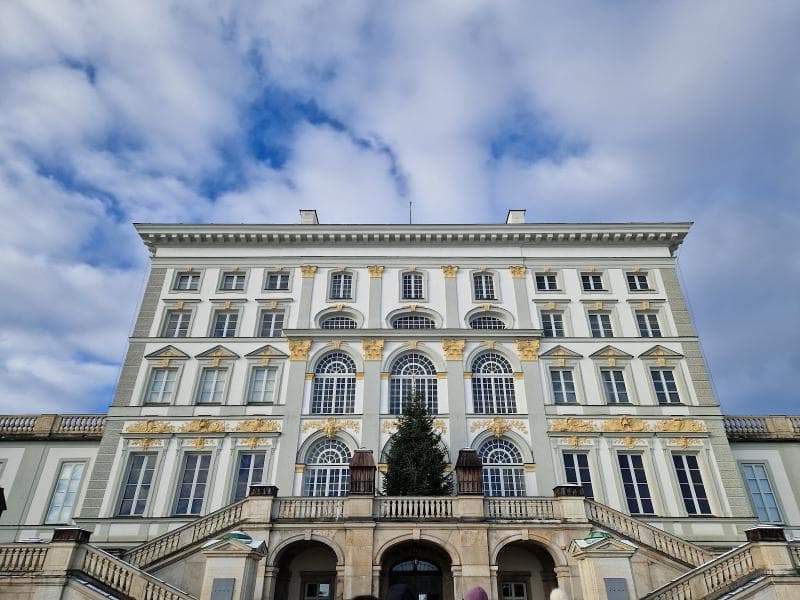
Explore Nymphenburg Palace in Munich, Germany. Discover its Baroque beauty, vast gardens, and royal history as a Wittelsbach summer residence.
Overview
Nymphenburg Palace, or Schloss Nymphenburg, is a magnificent Baroque palace situated in Munich, Germany. It served as the principal summer residence for the former rulers of Bavaria from the House of Wittelsbach and is recognized as one of Europe's premier royal palaces. With a frontal width of 632 meters, it even surpasses Versailles in this dimension. The palace complex, combined with its expansive park, offers a captivating journey through history, art, and nature, making it a must-visit destination for any curious traveler to Munich.
Visitors can explore the opulent interiors of the central palace, wander through the vast landscaped gardens, and discover several smaller, exquisite park palaces, each with its own unique charm. The estate also houses significant museums, including the Marstallmuseum, which displays an impressive collection of royal coaches and sleighs, and the Museum of Nymphenburg Porcelain.
History & Cultural Background
The foundation of Nymphenburg Palace dates back to 1664, commissioned by the electoral couple Ferdinand Maria and Henriette Adelaide of Savoy. It was intended as a gift and a joyous celebration of the birth of their long-awaited son and heir, Max Emanuel.
Initially, the Italian architect Agostino Barelli designed the palace as a cubic pavilion, which was largely completed by 1675. However, it was under Elector Max Emanuel (reigned 1680-1726) that Nymphenburg acquired its present-day dimensions. Architect Henrico Zuccalli oversaw the addition of two offset pavilions on each side of the existing structure, linked by galleries, significantly expanding the complex.
Subsequent rulers, including Karl Albrecht (later Emperor Charles VII), continued to enhance the palace and its grounds. The Rococo splendor seen today in the Great Hall, a masterpiece by Johann Baptist Zimmermann and François Cuvilliés the Elder, and the charming Amalienburg hunting lodge, also designed by Cuvilliés, were added during the 18th century. The Nymphenburg Porcelain Manufactory, founded by Elector Maximilian III Joseph in 1747, moved into its current quarters at the front of the palace during his reign.
What Makes It Special
Nymphenburg Palace stands out for its sheer scale and the harmonious blend of architectural styles. Its impressive width alone makes it a grand spectacle. The interiors showcase a remarkable evolution of design, from the early Baroque origins to the lavish Rococo embellishments of the Great Hall, adorned with celestial frescoes.
Beyond the main palace, the expansive park is a masterpiece of landscape design, covering 229 hectares. It evolved from a French formal garden into an English landscape garden, featuring a grand canal, cascades, fountains, statues, and several charming park palaces: Amalienburg, Badenburg, Pagodenburg, and Magdalenenklause. Each offers a unique architectural and historical experience, from a rococo hunting lodge to a bathing house and an oriental-inspired pavilion.
The Marstallmuseum, housed in the former court stables, is another highlight, showcasing a world-class collection of opulent coaches and sleighs used by Bavarian royalty, including the coronation coach of King Ludwig II.
Stories, Fun Facts & Local Details
Nymphenburg holds many fascinating stories within its walls and grounds. It was the birthplace of the legendary 'Mad' King Ludwig II of Bavaria in 1845, the monarch responsible for building the fairytale Neuschwanstein Castle.
Interestingly, despite being a major tourist attraction, a small part of the palace continues to be a residence for the head of the House of Wittelsbach, currently Franz, Duke of Bavaria, maintaining a living connection to its royal past.
The palace's name, 'Schloss Nymphenburg,' translates to 'Palace of the Nymphs,' a fitting title given the mythological themes prevalent in its art and the serene, natural beauty of its park. The park itself is not just a manicured garden; it's home to a surprising array of wildlife, including beavers and deer.
For a truly unique experience during the warmer months (late March to October), visitors can enjoy gondola rides on the central canal, offering a picturesque view of the palace from the water.
Visitor Perspective
Nymphenburg Palace is managed by the Bavarian Administration of State Palaces, Gardens, and Lakes, ensuring its preservation and accessibility. It is generally open daily, with seasonal variations in hours, particularly for the park palaces, which close during winter (mid-October to March).
Planning a visit of at least two to two and a half hours is recommended to explore the palace, but a full day can easily be spent enjoying the extensive grounds and all its attractions. While the park is free to enter, tickets are required for the palace interiors and museums. Online booking for timed entry tickets is advisable to avoid queues, and audio guides are available for a richer experience.
Currently, parts of the palace, such as the Lacquer Cabinet, may be undergoing restoration, so it's always good to check the official website for the latest information on accessibility and closures.
Coordinates: 11.5036, 48.1581
View on Google Maps💬 How Travelers Describe This Place
Based on community votes
Beautiful
950Must See
858Unique
287Interesting
231Photogenic
86
Traveler Stories
Discover memorable experiences shared by travelers who have visited this place.
No traveler stories yet.
Be the first traveler to share what made this place memorable.
Things to see at Nymphenburg Palace



Tour
By
Spot
Discover amazing places around the world. Your journey starts here.
Explore
© 2026 TourBySpot. All rights reserved.