Hall Of Mirrors
Munich, Germany
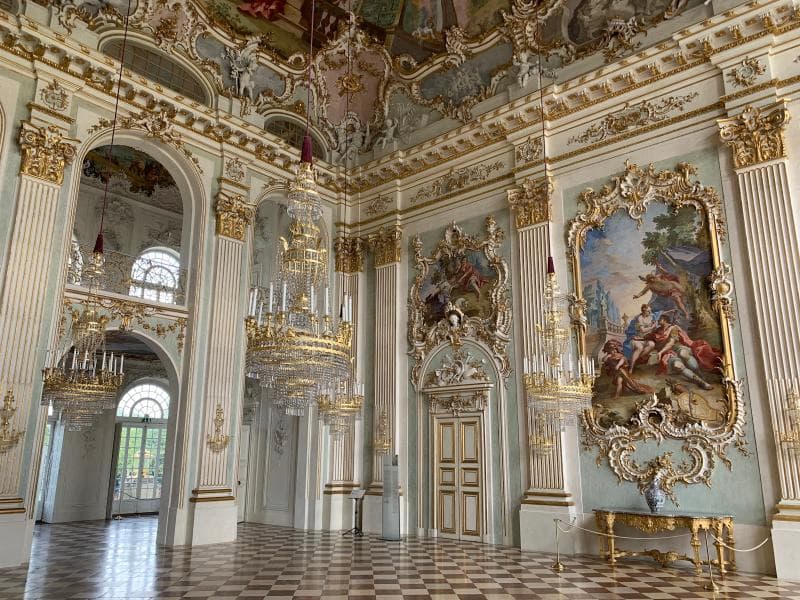
Explore the exquisite Hall of Mirrors at Amalienburg, a Rococo masterpiece within Nymphenburg Palace Park in Munich, Germany. Discover its history, unique design, and royal tales.
Overview
Deep within the expansive grounds of Nymphenburg Palace Park in Munich, Germany, lies a captivating treasure: the Hall of Mirrors. This exquisite space is the focal point of the Amalienburg, an elaborate hunting lodge and pleasure palace that stands as a testament to the opulence and refined taste of the 18th century. Often regarded as a masterpiece of European Rococo architecture, the Hall of Mirrors is a symphony of light, reflection, and intricate artistry, drawing visitors into a world of courtly elegance and leisurely pursuits. [3, 14, 17]
History & Cultural Background
The Amalienburg was commissioned by Elector Karl Albrecht of Bavaria, who would later become Holy Roman Emperor Charles VII, for his beloved wife, Maria Amalia of Austria. [3, 4, 9, 14] Constructed between 1734 and 1739, this elegant pavilion served as a 'maison de plaisance' – a charming retreat from the rigid formalities of court life at the main Nymphenburg Palace. [7, 14] It was a private sanctuary where the royal couple and their guests could indulge in hunting parties, intimate gatherings, and various forms of entertainment, embracing a contemporary trend for informal relaxation. [7, 9, 14] The design was entrusted to the renowned architect François de Cuvilliés the Elder, whose vision brought forth one of the most significant examples of Rococo art in Bavaria. [3, 7, 8, 14]
What Makes It Special
The Hall of Mirrors, or 'Spiegelsaal', is the undisputed highlight of the Amalienburg. It is a circular room with a flat dome, strategically positioned at the heart of the pavilion. [8, 9, 14] What makes this space truly enchanting is the ingenious use of mirrors. They are meticulously placed between the windows, creating a seamless interplay of real and reflected light that seemingly dissolves the walls and blurs the boundaries between the lavish interior and the surrounding parkland. [3, 7, 9, 16] This illusion evokes an ethereal atmosphere, making one feel as if they are in an open-air pavilion. [9] The Hall of Mirrors is predominantly adorned in the Bavarian national colors of silver and blue, a distinctive choice that adds to its unique charm. [3, 4, 9, 16] Delicate silver-plated carvings, exquisite stucco work by Johann Baptist Zimmermann, and the ethereal ceiling frescoes depicting an 'Eden-like landscape' complete this visual spectacle, connecting the lodge's purpose to its artistic execution. [7, 14]
Stories, Fun Facts & Local Details
Beyond its stunning aesthetics, the Amalienburg holds several intriguing details. The pavilion’s overall design, including the Hall of Mirrors, revolved around the theme of hunting, reflecting its primary function as a hunting lodge. [9, 14] For instance, a platform with an ornate lattice on the roof served as a raised hide for pheasant hunting, allowing the Electress and her guests to engage in this royal pastime. [3, 7, 16] The stucco sculpture in the central niche of the eastern facade features Diana, the goddess of the hunt, surrounded by putti, hounds, and hunting equipment, reinforcing the building's purpose. [3, 7] Inside, adjacent to the Hall of Mirrors, you'll discover other charming rooms, including the Electress's Rest Room, the Blue Cabinet, the Pheasant Room, and an unexpectedly elaborate kitchen. This kitchen features blue and white Delft tiles, some of which were famously laid in the wrong order by workers, and showcase Chinese-style motifs of flowers and birds, an exotic touch for the time. [3, 4, 9, 16]
Visitor Perspective
The Amalienburg, with its breathtaking Hall of Mirrors, is one of several 'park palaces' nestled within the vast Nymphenburg Palace Park and is an essential part of the Nymphenburg experience. [5, 8, 13, 17] Visitors can explore this Rococo gem and immerse themselves in a bygone era of royal leisure. It is important to note that the park palaces, including the Amalienburg, are typically open seasonally, usually from April to mid-October, and close during the winter months. [5, 13] Access to the Amalienburg requires an entry fee, which can often be purchased as part of a combination ticket for the broader Nymphenburg Palace complex. [4, 5, 13] An audio guide is highly recommended to fully appreciate the historical context and intricate details of the Hall of Mirrors and the other rooms within the Amalienburg. [5, 13]
Coordinates: 11.5036, 48.1581
View on Google Maps💬 How Travelers Describe This Place
Based on community votes
Must See
797Interesting
695Unique
396Beautiful
286Photogenic
22
Traveler Stories
Discover memorable experiences shared by travelers who have visited this place.
No traveler stories yet.
Be the first traveler to share what made this place memorable.

Tour
By
Spot
Discover amazing places around the world. Your journey starts here.
Explore
© 2026 TourBySpot. All rights reserved.