Pagodenburg
Munich, Germany
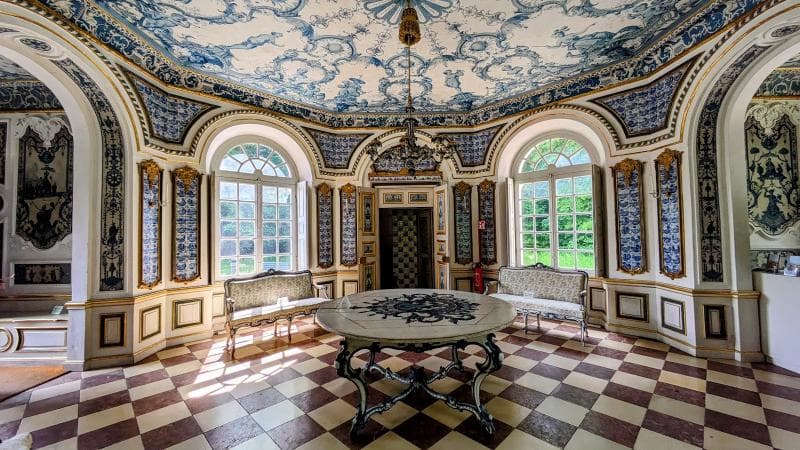
Discover the Pagodenburg, a unique 18th-century Chinoiserie tea house within Nymphenburg Palace Park in Munich, Germany. Explore its exotic blue and white interiors and learn its royal history.
Overview
Tucked away within the expansive and beautifully landscaped Nymphenburg Palace Park in Munich, Germany, lies the charming Pagodenburg. This exquisite, octagonal, two-story pavilion is much more than a mere garden folly; it is a captivating testament to 18th-century European fascination with East Asian art and culture. Conceived as a tranquil retreat, it served as a 'maison de plaisance' and a tea house, offering the Wittelsbach court a delightful escape from the rigid formalities of palace life. The Pagodenburg is a jewel of 'Chinoiserie', an artistic style reflecting Chinese motifs and aesthetics, which was highly fashionable during its era.
As one of four notable 'park castles' found within the Nymphenburg grounds – alongside the Amalienburg, Badenburg, and Magdalenenklause – the Pagodenburg provides a unique glimpse into the leisure activities and aesthetic sensibilities of Bavarian royalty. Located north of the main canal, its intimate scale and intricate detailing stand in stark contrast to the grandeur of the main Nymphenburg Palace, inviting visitors into a world of refined elegance and exotic fantasy.
History & Cultural Background
The Pagodenburg was commissioned by Elector Max Emanuel and constructed between 1716 and 1719, under the architectural direction of Joseph Effner. Its creation marks a significant moment in European decorative arts, embodying the then-popular Chinoiserie style. This artistic movement, prevalent in the 17th and 18th centuries, saw European designers incorporating elements inspired by Chinese and East Asian art into their works, often with a playful and imaginative interpretation. The term 'Pagodenburg' itself, referring to a 'pagoda castle', reflects this trend, hinting at the structure's exotic influences.
Originally intended as a place for the aristocracy to relax after engaging in outdoor pursuits like 'Mailspiel' – a historical lawn game akin to golf or croquet – the Pagodenburg offered a serene environment for rest and social gatherings. It was one of the first structures built in the Nymphenburg Palace Park, setting a precedent for the creation of other 'pleasure palaces' that dotted the vast landscape.
What Makes It Special
The Pagodenburg's distinctiveness lies primarily in its captivating interiors. The ground floor welcomes visitors into a striking blue and white color scheme, reminiscent of Chinese porcelain. Here, the walls are adorned with over 2,000 vibrant Dutch Delft tiles, interspersed with decorative ceiling paintings that blend ornamental and figural elements, alluding subtly to China's famed porcelain production.
Ascending to the upper floor, one discovers a collection of exquisitely designed, compact rooms that deepen the exotic allure. The 'Chinese Drawing Room' features authentic Chinese wallpaper and lustrous black-grounded lacquer painting, creating a truly foreign ambiance. Nearby, the 'Chinese Cabinet' presents a complementary aesthetic with its rich red-based lacquerwork. Even the 'Boudoir', despite its European Regency-style decoration, gains an exotic character from its unusual shape. These interiors, meticulously furnished by Johann Anton Gumpp and Johann Adam Pichler, represent a masterpiece of 18th-century Chinoiserie, making the Pagodenburg a uniquely preserved example of this artistic trend.
Stories, Fun Facts & Local Details
Imagine the Elector and his guests, after an invigorating round of 'Mailspiel' on the lawns, retreating to the Pagodenburg for refreshments and conversation. This small palace was designed as a personal haven, a place where the strict etiquette of the main palace could be temporarily set aside in favor of relaxed enjoyment.
A notable testament to its enduring historical value is the extensive restoration work it underwent. After nine years of painstaking effort and a cost of 2 million Euros, the Pagodenburg was meticulously restored and reopened to the public in 2003. This massive undertaking included the delicate process of securing and restoring original East Asian paper wallpapers, which were threatened by acids from the underlying wooden panels. This dedicated preservation ensures that its unique beauty can be appreciated for generations to come.
Visitor Perspective
Visiting the Pagodenburg offers a truly immersive experience into a bygone era of royal leisure and cross-cultural artistic exchange. As you wander through its compact yet elaborately decorated rooms, you can almost hear the hushed conversations and clinking tea cups of the Bavarian court. The intricate details of the Dutch tiles and the exotic lacquerwork encourage close observation, revealing the extraordinary craftsmanship of the period.
The Pagodenburg is accessible with either an overall 'Nymphenburg' ticket or a specific 'Parkburgen' ticket, which can be purchased at the palace ticket office. It is typically open to visitors daily from April through October 15, between 9 AM and 6 PM. However, it closes for the winter season, from October 16 to March, so planning your visit accordingly is advisable to fully appreciate this hidden gem within Munich's grand Nymphenburg Palace Park.
Coordinates: 11.5036, 48.1581
View on Google Maps💬 How Travelers Describe This Place
Based on community votes
Unique
953Must See
695Interesting
658Photogenic
69Beautiful
22
Traveler Stories
Discover memorable experiences shared by travelers who have visited this place.
No traveler stories yet.
Be the first traveler to share what made this place memorable.

Tour
By
Spot
Discover amazing places around the world. Your journey starts here.
Explore
© 2026 TourBySpot. All rights reserved.