Main Palace
Munich, Germany
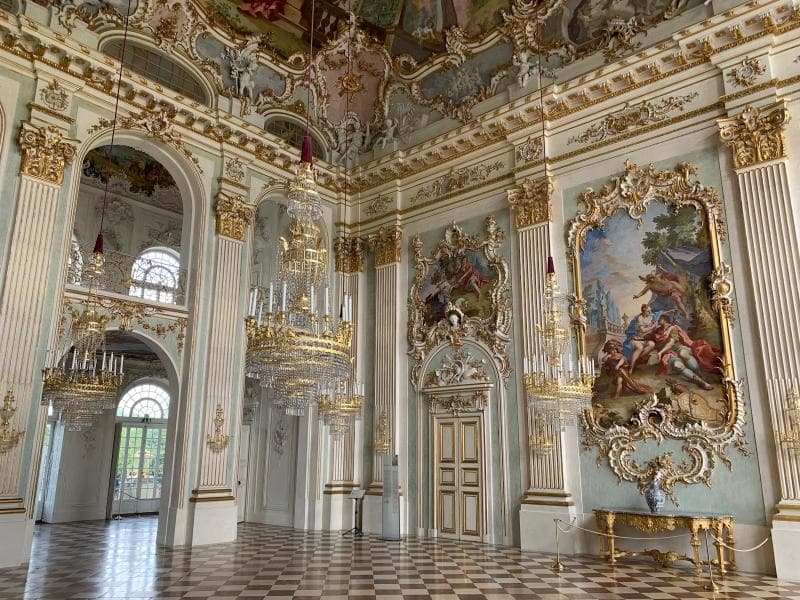
Explore the Main Palace of Nymphenburg Palace in Munich, Germany. Discover Baroque grandeur, the Hall of Beauties, and royal history.
Overview
The Main Palace, the magnificent heart of the vast Nymphenburg Palace complex in Munich, Germany, stands as a grand testament to Bavarian royal history. This impressive Baroque edifice served for centuries as the primary summer residence for the Wittelsbach electors and kings, offering a regal escape from the city's hustle and bustle. Its commanding architecture and opulent interiors provide a vivid glimpse into the lives of Bavaria's former rulers.
As the central focal point of the entire Nymphenburg ensemble, the Main Palace is surrounded by expansive gardens, canals, and other charming pavilions, creating a harmonious blend of art, nature, and architectural prowess. Visitors are drawn to its richly decorated state rooms, significant historical artifacts, and the sheer scale of its design, which once rivaled even Versailles in frontal width.
History & Cultural Background
The origins of the Main Palace trace back to a deeply personal event: the long-awaited birth of heir Max Emanuel in 1662. Elector Ferdinand Maria and his wife, Henriette Adelaide of Savoy, commissioned the palace in 1664 as a celebratory gift, initially designed as a modest Italianate country residence by architect Agostino Barelli.
Over the centuries, what began as a cubic pavilion evolved dramatically. Under Max Emanuel, who became elector in 1679, the palace underwent significant expansion. Architects like Enrico Zuccalli added flanking pavilions connected by galleries, transforming the structure into a grand Baroque complex. Later, Joseph Effner, a student of French masters, further refined its design, introducing French Rococo elements and redesigning the central pavilion. This continuous evolution under successive rulers like Elector Maximilian III Joseph, who enriched its Rococo decoration, ensured the palace remained a stylistic and cultural beacon, reflecting changing tastes from Baroque to Rococo and Neoclassicism.
What Makes It Special
Stepping inside the Main Palace is like journeying through centuries of royal splendor. The undisputed highlight is the 'Steinerner Saal' or Stone Hall, a breathtaking, three-story ceremonial hall that once served as the vibrant center of court life. Adorned with magnificent Rococo stucco work and vibrant ceiling frescoes by Johann Baptist Zimmermann, depicting Helios in his chariot, it is a masterpiece of Bavarian Rococo art.
Beyond the grandeur of the Stone Hall, visitors can explore the richly furnished royal apartments, which showcase original Baroque decorations. A particularly captivating feature is King Ludwig I's 'Gallery of Beauties'. This collection of 36 portraits, commissioned by the king, features women from various social strata, capturing the diverse beauty of the era. The Main Palace also holds a poignant historical space: the birth room of the 'Fairytale King' Ludwig II, adding another layer of intrigue and connection to Bavarian royalty.
Stories, Fun Facts & Local Details
The Main Palace is steeped in tales. The 'Gallery of Beauties' itself tells fascinating stories. Among the painted faces are figures like Lola Montez, the Spanish dancer who was King Ludwig I's controversial mistress, and Helene Sedlmayr, a shoemaker's daughter whose striking beauty earned her a place alongside nobility. These portraits offer a glimpse into the king's personal fascination with beauty, transcending social hierarchy.
Another delightful anecdote connects the palace to a young Wolfgang Amadeus Mozart. In 1763, the prodigy performed for Elector Max Emanuel at a grand palace gala, adding a musical note to the palace's illustrious past. The palace's expansive park, which today is a beloved public space, was first opened to the general public in 1792 by Elector Karl Theodor, transforming a royal preserve into a communal oasis for all to enjoy.
Visitor Perspective
Visiting the Main Palace offers an immersive experience into Bavarian history and art. While the entire Nymphenburg complex is vast, touring the Main Palace itself is a manageable and enriching experience, typically taking around 25 minutes. It provides a focused insight into the courtly life of the Wittelsbachs.
Audio guides are available and highly recommended to fully appreciate the historical context and artistic details of each room. While individual tickets for the palace are available, many visitors opt for combination tickets that also include access to the nearby Marstallmuseum (Carriage Museum) and the charming park palaces. The Main Palace's central location within the Nymphenburg grounds makes it a natural starting point for exploring this magnificent historical site in Munich. Free Wi-Fi is available in the ticket office area and on the square in front of the main palace, making it convenient for visitors to plan their visit or share their experiences.
Coordinates: 11.5036, 48.1581
View on Google Maps💬 How Travelers Describe This Place
Based on community votes
Interesting
836Photogenic
797Unique
255Must See
231Beautiful
86
Traveler Stories
Discover memorable experiences shared by travelers who have visited this place.
No traveler stories yet.
Be the first traveler to share what made this place memorable.

Tour
By
Spot
Discover amazing places around the world. Your journey starts here.
Explore
© 2026 TourBySpot. All rights reserved.