Badenburg
Munich, Germany
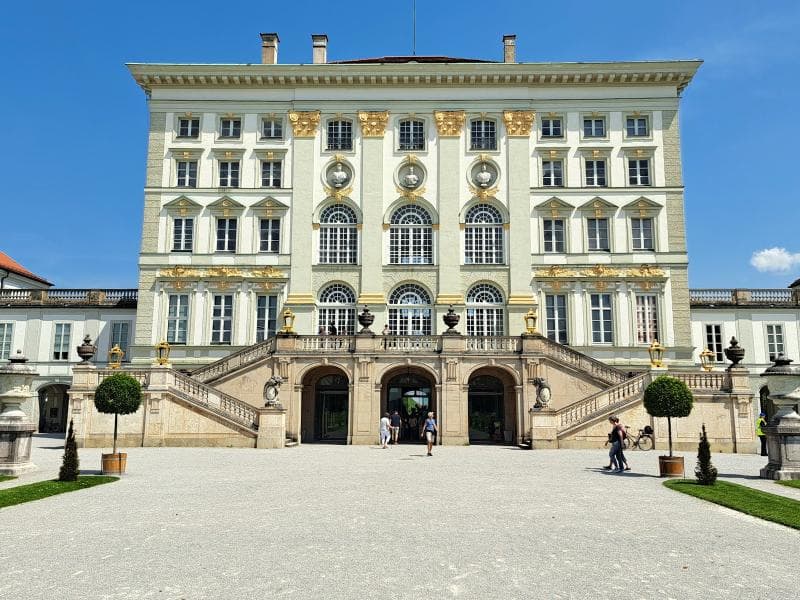
Discover Badenburg, the historic royal bathhouse with Europe's first heated indoor pool, nestled in Nymphenburg Palace Park, Munich, Germany.
Overview
Tucked away within the sprawling and picturesque Nymphenburg Palace Park in Munich, Germany, lies the Badenburg, a charming and historically significant bathhouse. This architectural gem, designed by Joseph Effner between 1718 and 1722, stands as a testament to the luxurious leisure of Bavarian royalty. Situated at the southeastern end of the tranquil Badenburg Lake, it was conceived as a private retreat for Elector Maximilian II Emanuel, a place for relaxation and indulgence away from the main palace's formal demands. The Badenburg is renowned for housing what is considered Europe's first heated indoor swimming pool of modern times, a marvel of 18th-century engineering and design.
Far from being a simple bathing facility, the Badenburg is a miniature palace, featuring not only its famous bathing hall but also a magnificent two-story banqueting hall, an Elector's Apartment, and various other rooms. Its lavish interiors, adorned with intricate stucco work, vibrant ceiling frescoes, and exquisite Chinese wallpaper, reflect the opulent tastes of the Baroque era. As one of the notable 'park palaces' within the vast Nymphenburg grounds, it offers a unique glimpse into the private life and sophisticated recreational pursuits of the Wittelsbach court.
History & Cultural Background
The Nymphenburg Palace complex, the summer residence of the Bavarian rulers, began its life in 1664. Over decades, it expanded to include several smaller, specialized structures known as 'park palaces' within its extensive gardens. The Badenburg was a key addition to this ensemble, constructed between 1718 and 1722 under the direction of Joseph Effner for Elector Maximilian II Emanuel. Its creation was part of a broader European trend among royalty and nobility to build private pleasure palaces, offering intimate spaces for leisure and entertainment.
The concept of the bathhouse, though novel in its heated indoor form in 18th-century Europe, drew inspiration from ancient traditions. The design of the Badenburg subtly incorporates influences from Roman, Greek, and Islamic bathing cultures, where bathhouses served not only for physical cleanliness but also as social and ritualistic spaces. For the Bavarian court, the Badenburg provided an exclusive, private environment where the Elector and his esteemed guests could partake in the then-uncommon luxury of year-round bathing. This blend of historical influences with contemporary comfort made the Badenburg a truly pioneering structure of its time.
What Makes It Special
The most compelling feature that distinguishes the Badenburg is its revolutionary heated indoor swimming pool, widely recognized as the first of its kind in modern Europe. Imagine the sheer novelty and extravagance of such a facility in the early 18th century, allowing royalty to swim comfortably regardless of the Munich weather. The bathing basin itself is substantial, measuring 8.70 by 6.10 meters and deep enough for swimming, and was lined with fine Dutch tiles. This advanced amenity underscores the Wittelsbach court's commitment to luxury and innovation.
Beyond its innovative bath, the Badenburg's artistic and architectural details are equally captivating. The two-story banqueting hall boasts elaborate stucco decorations, a heavy marble floor, and a grand vaulted fresco, showcasing the artistic prowess of the era. The Elector's Apartment features exotic Chinese wallpaper, a fashionable import that added a touch of distant allure to the Baroque interiors. The entire structure is a harmonious blend of practical utility and aesthetic grandeur, a 'house of baths' that a contemporary observer in 1792 praised as 'the finest baths imaginable' and 'a veritable artistic masterpiece'.
Stories, Fun Facts & Local Details
One fascinating aspect of the Badenburg is the story behind its luxurious bathing facilities. Elector Max Emanuel, a keen enthusiast of grand projects, commissioned this private bathhouse to ensure his personal comfort and that of his guests. It was a place where the court nobility could escape the summer heat or simply indulge in the pleasure of swimming and socializing in a setting of unparalleled splendor.
A contemporary travel description from 1792 lauded the Badenburg, suggesting that no visit to Nymphenburg would be complete without experiencing its delights. The observer particularly highlighted the impressive size of the pool, noting that it was large enough for comfortable swimming, with a gallery available for onlookers. This detail paints a vivid picture of court life, where even bathing could be a social event, observed by companions. The presence of Chinese wallpaper, with its painted monkey scenes, in the Elector's apartment also reflects the burgeoning European fascination with chinoiserie during the 18th century, adding an exotic flair to this German baroque masterpiece.
Visitor Perspective
For today's traveler, the Badenburg offers a serene and insightful experience within the extensive Nymphenburg Palace Park. While it's a short walk or leisurely stroll from the main palace, the journey through the manicured gardens to Badenburg Lake is part of its appeal.
Visitors can explore the lavish interiors, marvel at the artistic details, and descend to the basement to view the historic bathing basin, often from a viewing platform. It provides a tangible connection to the private world of Bavarian electors and a rare glimpse into 18th-century royal bathing culture. The Badenburg is typically open to visitors from April to mid-October, from 9 AM to 6 PM daily, and is closed during the winter months. Admission is often covered by a combination ticket that includes access to Nymphenburg Palace and its other park palaces, making it a valuable stop for those interested in history, architecture, and the luxurious past of Bavaria.
Coordinates: 11.5036, 48.1581
View on Google Maps💬 How Travelers Describe This Place
Based on community votes
Must See
836Beautiful
797Photogenic
695Interesting
396Unique
286
Traveler Stories
Discover memorable experiences shared by travelers who have visited this place.
No traveler stories yet.
Be the first traveler to share what made this place memorable.

Tour
By
Spot
Discover amazing places around the world. Your journey starts here.
Explore
© 2026 TourBySpot. All rights reserved.