Marstallmuseum
Munich, Germany
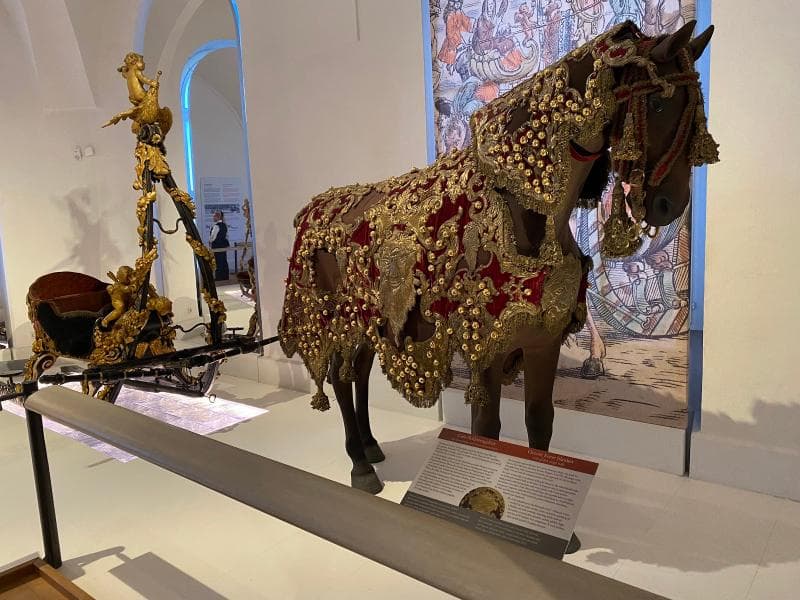
Explore the Marstallmuseum at Nymphenburg Palace in Munich, Germany. Discover a stunning collection of royal carriages, sleighs, and equestrian history of the Wittelsbach dynasty.
Overview
Tucked within the grand complex of Nymphenburg Palace in Munich, Germany, the Marstallmuseum, or 'Museum of Carriages and Sleighs,' offers a captivating journey into the opulent world of Bavarian royalty. Housed in the former court stables, this world-renowned museum showcases an extraordinary collection of royal coaches, carriages, and sleighs, alongside exquisite equestrian equipment belonging to the Wittelsbach dynasty. It's a testament to the court's travel and representational culture spanning three centuries, providing a unique glimpse into the lavish lifestyle and power of Bavaria's former rulers.
History & Cultural Background
The history of exhibiting the Wittelsbach family's impressive collection of vehicles dates back to the first half of the 19th century. The first Marstallmuseum was established in 1923, located in the former Court Riding School in central Munich. However, this original site was largely destroyed during air raids in 1944. Fortunately, the precious collection had been transferred to Nymphenburg Palace by the end of 1939. The present Marstallmuseum officially opened its doors in 1950, finding its permanent home in the historical 'Riding Stables' within the southern Cavaliers' Building of Nymphenburg Palace. This building, completed around 1740 under Elector Karl Albrecht, was originally designed to stable the most valuable horses during the summer months, reflecting the significant role of equestrian culture in the Bavarian court.
What Makes It Special
The Marstallmuseum is distinguished by its sheer scope and the breathtaking artistry of its exhibits. It proudly ranks as one of the most important court stable museums globally, featuring over forty antique coaches, sleighs, and gala carriages. A standout masterpiece is the Coronation Coach of Emperor Karl VII, a magnificent example of French Rococo design from 1742, celebrated for its intricate craftsmanship and historical significance. Another major highlight is the collection of state vehicles belonging to the 'Fairytale King' Ludwig II, whose extravagant taste is evident in his elaborate coaches and sleighs. Beyond the grand vehicles, the museum also displays magnificent harnesses, fine riding accoutrements, and historical pictures that vividly portray courtly travel and ceremonial life. Additionally, a unique collection of Nymphenburg porcelain, spanning three centuries, is displayed on the upper floor of the Marstallmuseum, offering another layer of artistic and historical richness.
Stories, Fun Facts & Local Details
The museum is particularly evocative when considering the stories behind its exhibits. Imagine King Ludwig II, the visionary builder of Neuschwanstein Castle, preferring to travel by night in his exquisitely gilded sleighs, gliding through snowy Bavarian landscapes under the moonlight. These sleighs, adorned with cherubs and rich velvet, weren't just transport; they were mobile fantasies, reflecting his unique and often reclusive nature. The collection includes not only grand adult conveyances but also charming miniature carriages used by royal children, offering a glimpse into how early royalty began their regal lives. For a more hands-on experience, visitors can even try an interactive station where they can test their strength by lifting a replica sedan chair, connecting with the physical demands of historical travel. The museum also dedicates a section to the development of the Munich court stables and the people who worked there from the 16th to the early 20th century, adding a human element to the royal splendor.
Visitor Perspective
Visiting the Marstallmuseum is like stepping into a finely illustrated history book, brought to life with tangible artifacts. It's a place where the grandeur of Bavarian court life is not merely described but spectacularly displayed through a dazzling array of royal transport. Many travelers find it to be an unexpectedly enchanting and deeply immersive experience, often describing it as an 'overlooked part' of the Nymphenburg Palace complex that vividly brings history to life with pageantry and artistry. It provides a captivating counterpoint to the palace's interior rooms, offering a broader understanding of the Wittelsbach dynasty's influence and lifestyle. For anyone curious about European royal history, the evolution of transport, or simply appreciating exquisite craftsmanship, the Marstallmuseum promises a memorable and enlightening visit.
Coordinates: 11.5036, 48.1581
View on Google Maps💬 How Travelers Describe This Place
Based on community votes
Interesting
791Photogenic
514Unique
457Beautiful
252Must See
19
Traveler Stories
Discover memorable experiences shared by travelers who have visited this place.
No traveler stories yet.
Be the first traveler to share what made this place memorable.

Tour
By
Spot
Discover amazing places around the world. Your journey starts here.
Explore
© 2026 TourBySpot. All rights reserved.