Diocletian’s Palace
Split, Croatia
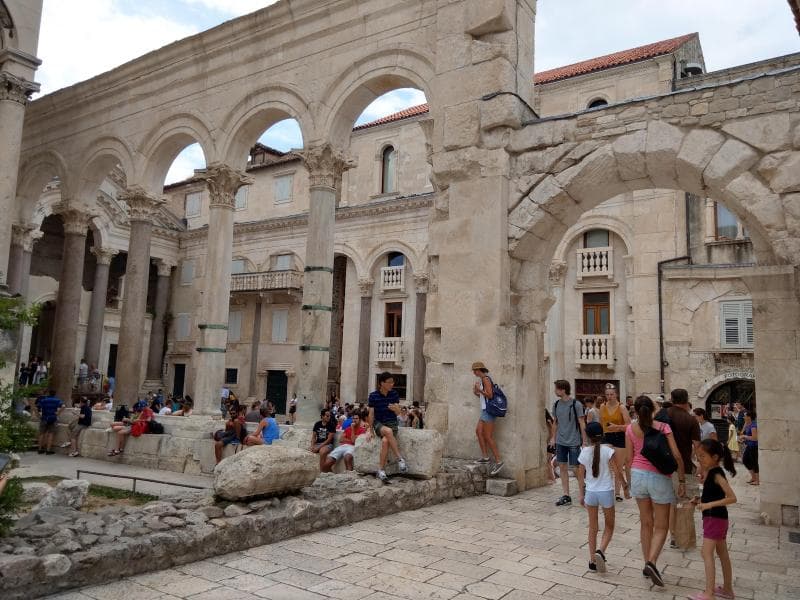
Explore Diocletian's Palace, a UNESCO World Heritage Site in Split, Croatia. Discover ancient Roman history woven into a vibrant, living city.
Overview
Diocletian's Palace, nestled in the heart of Split, Croatia, is far more than just an ancient ruin; it is a living monument to Roman imperial grandeur and urban evolution. This monumental complex, built by the Roman Emperor Diocletian at the turn of the 4th century AD, served as his lavish retirement residence. Recognized for its immense historical and architectural significance, it was inscribed as a UNESCO World Heritage Site in 1979. What truly sets Diocletian's Palace apart is its continuous habitation over seventeen centuries, transforming from an imperial palace into the vibrant historic core of modern-day Split.
History & Cultural Background
The story of Diocletian's Palace begins with Emperor Diocletian, a Dalmatian-born soldier who rose to power and ruled the Roman Empire from 284 to 305 AD. He is renowned for his administrative reforms, including the introduction of the Tetrarchy, a system of rule by four emperors. Uniquely among Roman emperors, Diocletian chose to abdicate his throne voluntarily in 305 AD, retiring to this magnificent palace he had commissioned. The palace was strategically constructed on a peninsula near his birthplace, the ancient Roman capital of Salona (modern-day Solin).
Built between approximately 295 and 305 AD, the complex was a formidable structure combining the features of a luxurious imperial villa with those of a fortified military camp, or 'castrum'. Its rectangular layout was defined by robust walls, up to 2 meters thick and 26 meters high, with defensive towers at the corners. The construction utilized exquisite materials: white limestone from the nearby island of Brač, fine marble imported from Greece, and granite columns brought from Egypt. The complex featured four monumental gates, named after metals: the Golden Gate (Porta Aurea) to the north, the Silver Gate (Porta Argentea) to the east, the Iron Gate (Porta Ferrea) to the west, and the Bronze Gate (Porta Meridionalis) to the south, which originally opened directly to the sea.
After Diocletian's death around 311-313 AD, the palace continued to function as an administrative center and occasional imperial residence. However, its most significant transformation occurred in the 7th century when refugees from the destroyed city of Salona sought shelter within its sturdy walls. These new inhabitants adapted the Roman structures to their needs, converting the emperor's octagonal mausoleum into the Cathedral of Saint Domnius and turning the imperial courtyard, the Peristyle, into a bustling public square. This organic urbanization process laid the foundation for the city of Split, creating a unique urban tapestry where Roman, medieval, and later architectural layers seamlessly intertwine.
What Makes It Special
Diocletian's Palace stands out globally as one of the best-preserved Roman imperial palaces. Its unparalleled uniqueness stems from the fact that it has been continuously inhabited since its early transformation in the 7th century. Today, approximately 3,000 people live, work, and conduct daily life within its ancient walls, making it a truly 'living museum' or a 'city within a palace'. This constant evolution means that Roman ruins are not merely archaeological exhibits but an integral part of modern urban fabric, housing residences, shops, cafes, and restaurants.
The palace's architectural legacy is also profound. Its 18th-century survey by Scottish architect Robert Adam, documented in his book 'Ruins of the Palace of the Emperor Diocletian at Spalatro in Dalmatia,' significantly influenced the Neoclassical architectural movement across Europe. Furthermore, the palace's substructures, or cellars, are exceptionally well-preserved and offer a remarkable glimpse into ancient Roman engineering and the original layout of the palace. The Cathedral of Saint Domnius, originally Diocletian's mausoleum, holds the distinction of being the oldest Catholic cathedral in the world still used in its original structure, a powerful symbol of historical continuity.
Stories, Fun Facts & Local Details
Diocletian's decision to retire voluntarily to his palace was a truly exceptional act for a Roman Emperor, highlighting his determination to live out his days in peace. Legend has it that when asked to return to rule, he famously replied, 'If you saw where I have settled, you would never ask me to return,' referring to his contented life in Split. The southern facade of the palace originally rose directly from the sea, and it is believed Diocletian had a special entrance allowing him to disembark from his ship directly into the palace's lower chambers.
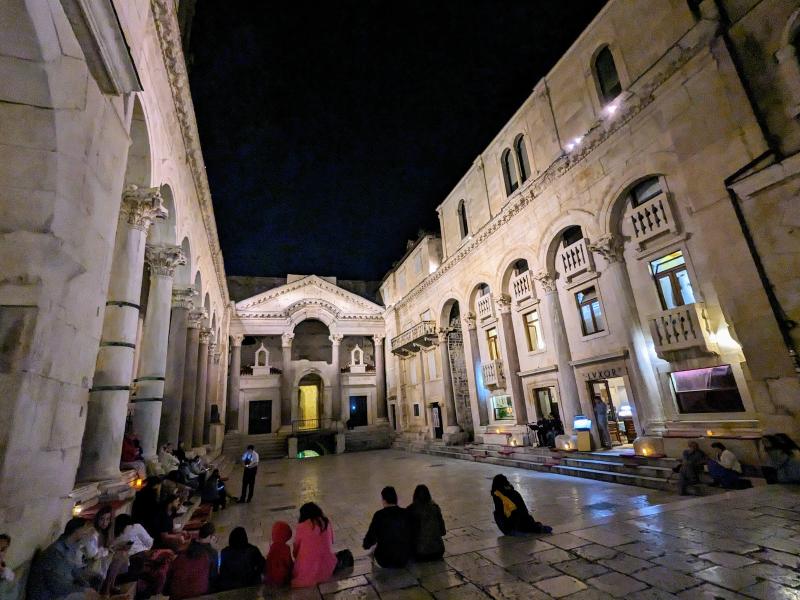
A fascinating detail within the palace are the Egyptian sphinxes, imported by Diocletian, who had a particular fascination with Egyptian culture. Several of these ancient granite sculptures, dating back to the reign of Pharaoh Thutmose III (14th century BCE), were brought to adorn his retirement home; a few still remain today. The palace's atmospheric Peristyle, the central imperial courtyard, now functions as a lively public square, often hosting cafes and cultural events, blurring the lines between past and present. For fans of popular culture, the palace's ancient walls, particularly its cellars, served as a filming location for the hit television series 'Game of Thrones,' lending it a contemporary allure. Within Split's culture, you might encounter the concept of 'fjaka,' a local term describing a blissful state of striving for nothing – a laid-back attitude that perfectly complements the ancient, yet lived-in, rhythm of the city.
Visitor Perspective
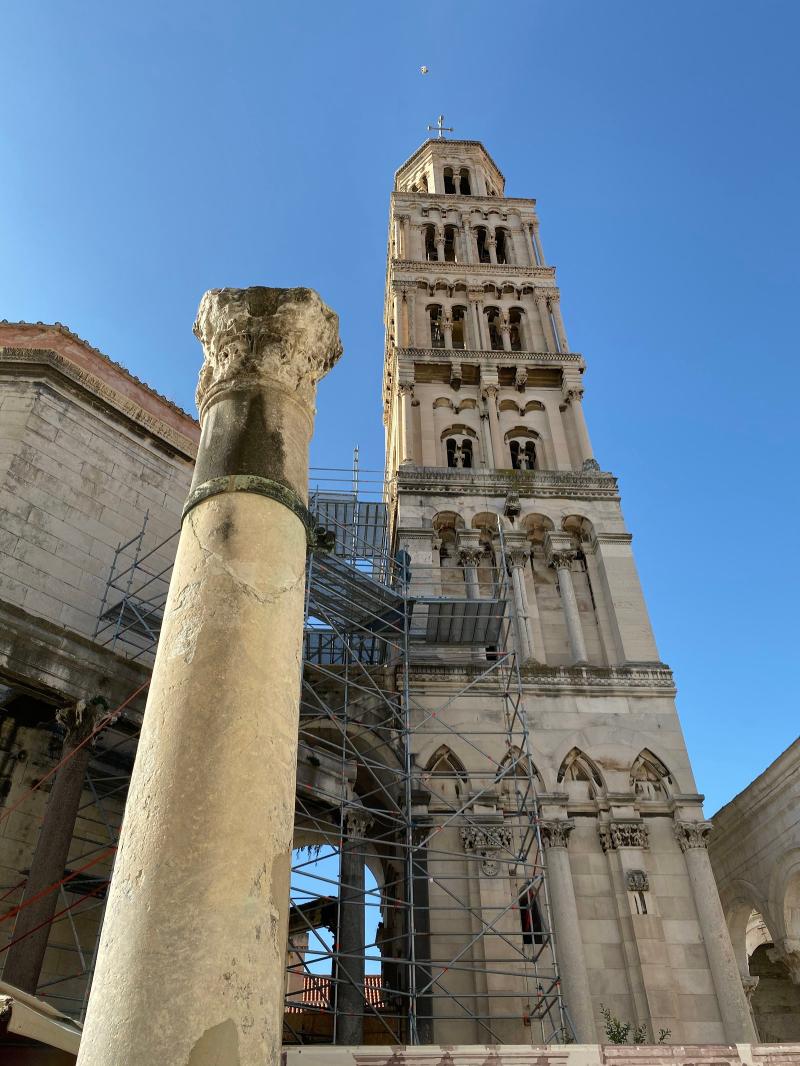
Exploring Diocletian's Palace is a truly immersive experience, as much of it is open public space. Visitors can wander freely through its ancient streets, courtyards, and gates, soaking in the unique atmosphere without an entrance fee. Key areas to discover include the majestic Peristyle, the heart of the palace, surrounded by ancient columns. From here, you can visit the Cathedral of Saint Domnius, originally Diocletian's mausoleum, and climb its medieval bell tower for breathtaking panoramic views of Split and the Adriatic Sea.
Other must-see sites are the Temple of Jupiter, featuring an ancient sphinx at its entrance, and the remarkably preserved underground cellars. These cellars not only offer a cool respite but also provide a vivid sense of the palace's original scale and design, and even hold significance for 'Game of Thrones' enthusiasts. While the main palace complex is freely accessible, certain interior attractions like the Cathedral, bell tower, cellars, and the Temple of Jupiter require a paid ticket for entry. To best experience the palace's magic and avoid the largest crowds, particularly during peak season, it is recommended to visit early in the morning or late in the evening. The blend of ancient ruins with bustling cafes, artisan shops, and local restaurants creates an unforgettable journey through time, allowing you to witness history living and breathing in the vibrant city of Split.
Coordinates: 16.4401, 43.5082
View on Google Maps💬 How Travelers Describe This Place
Based on community votes
Interesting
915Must See
211Unique
123Beautiful
74Photogenic
53
Traveler Stories
Discover memorable experiences shared by travelers who have visited this place.
No traveler stories yet.
Be the first traveler to share what made this place memorable.
Things to see at Diocletian’s Palace






Tour
By
Spot
Discover amazing places around the world. Your journey starts here.
Explore
© 2026 TourBySpot. All rights reserved.