Palace Walls
Split, Croatia
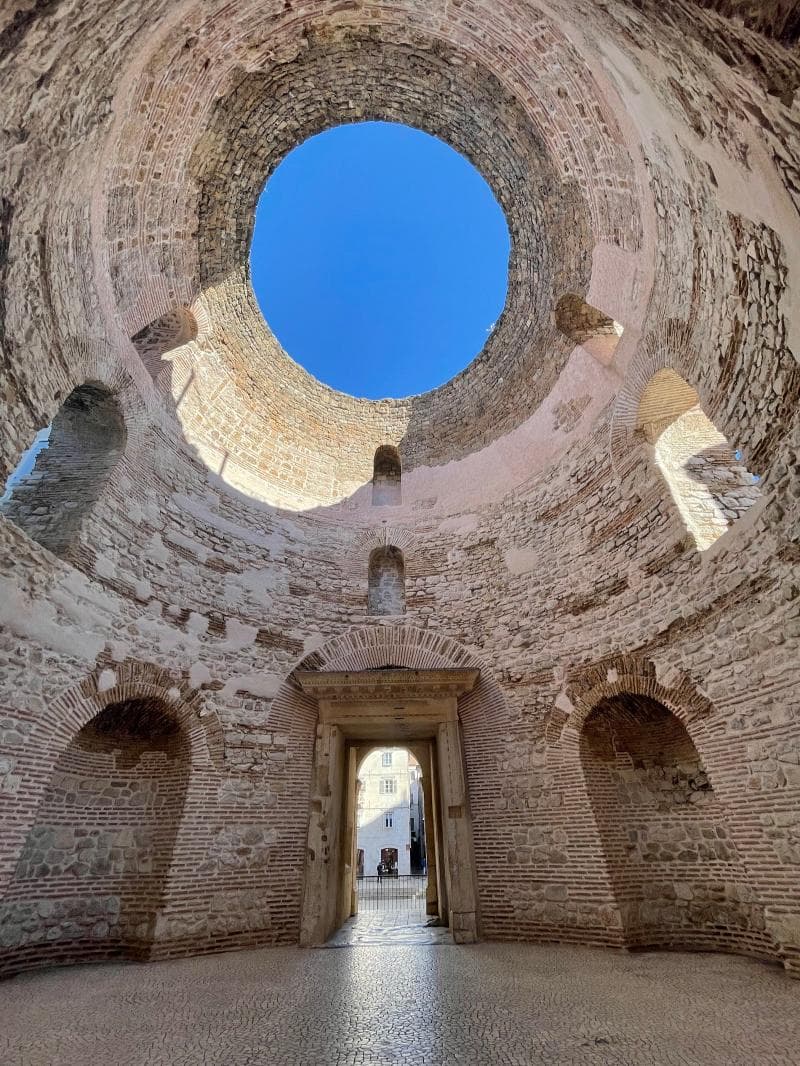
Explore the historic Palace Walls of Diocletian’s Palace in Split, Croatia, a living UNESCO site teeming with Roman history and culture.
Overview
Stepping into the Palace Walls of Diocletian’s Palace in Split, Croatia, is not merely visiting an ancient ruin; it's entering a vibrant, living city that has evolved within the very framework of a Roman emperor's retirement home. Designated a UNESCO World Heritage Site in 1979, this monumental structure is one of the best-preserved examples of Roman architecture globally, forming the historical heart of modern-day Split.
Unlike a traditional museum, the palace grounds are an integral part of daily life, bustling with residents, shops, cafes, and restaurants seamlessly integrated into 1,700-year-old walls. While the outer gates remain open 24/7, inviting curious travelers to wander freely, specific internal attractions like the Cathedral, Bell Tower, and the atmospheric Cellars offer deeper dives into its storied past, often requiring a small entrance fee.
History & Cultural Background
The story of the Palace Walls begins in the late 3rd century AD, when the Roman Emperor Diocletian, born near the ancient city of Salona, commissioned this grand complex as his retirement residence. Construction commenced around 295 AD and was largely completed by 305 AD, the year of his abdication. Designed as a hybrid of a luxurious imperial villa, a fortified military camp, and a miniature Greco-Roman town, the palace was initially encircled by robust walls and 16 defensive towers.
The walls themselves were a testament to Roman engineering, reaching heights of up to 72 feet on the Adriatic side and constructed from local limestone, marble, and tuff. Following Diocletian's death, the palace continued to function as an administrative and residential complex. A pivotal moment in its transformation occurred in the 7th century when, after Salona was destroyed by invading tribes, its inhabitants sought refuge within the sturdy palace walls. This influx of people marked the birth of Split as a continuously inhabited urban center, adapting and reshaping the Roman structures into a medieval and, eventually, a modern city.
What Makes It Special
What truly sets the Palace Walls apart is their extraordinary evolution from an emperor's private retreat to a vibrant, living urban fabric. Over 3,000 people still call these ancient walls home, making it a unique example of adaptive reuse on a grand scale. The architectural layers are a compelling narrative in themselves: Roman foundations support medieval houses, which in turn blend with later additions, all without feeling like a staged historical exhibit.
The palace's strategic design featured fortified walls on its land-facing sides, but a remarkably different southern facade. This side, facing the sea, was largely unfortified and boasted an elegant arcaded gallery, serving as a monumental porch and a private promenade for the emperor, a concept known as a Cryptoportico. Beneath the palace, the remarkably preserved subterranean cellars mirror the layout of the imperial apartments above, offering a unique glimpse into the original design and purpose of the Roman complex.
Stories, Fun Facts & Local Details
Emperor Diocletian holds a unique place in history as the only Roman emperor to voluntarily abdicate his throne and retire. Legend has it that after his retirement, he found immense satisfaction in tending his vegetable gardens, famously declaring that he preferred growing cabbages to the burdens of imperial power.
The Palace Walls have also captured the imagination of modern storytellers, serving as a prominent filming location for the popular television series 'Game of Thrones'. Fans will recognize the atmospheric underground cellars as Daenerys Targaryen's dragon dungeons, while the Golden Gate stood in for the city of Meereen. Adding to the palace's exotic flair are the ancient Egyptian sphinxes, brought from Egypt by Diocletian himself to adorn his grand residence. Though only a few remain, they serve as tangible links to the emperor's fascination with Egyptian culture. Perhaps one of the most ironic transformations within the walls is Diocletian's own mausoleum, which was later converted into the Cathedral of Saint Domnius, dedicated to a Christian martyr whom Diocletian himself persecuted.
Visitor Perspective
Exploring the Palace Walls is an immersive experience. There's no single 'entrance' ticket to the palace itself; its four gates—the Golden (North), Silver (East), Iron (West), and Brass (South)—are open to all, 24 hours a day, inviting you to step directly into history. Each gate offers a different introduction to the palace's labyrinthine alleys and squares. The Golden Gate, for instance, provides a grand processional approach, while the Brass Gate, near the Riva promenade, leads directly to the subterranean cellars.
While wandering the main thoroughfares like the Peristyle is free, many of the specific, well-preserved sites such as the Cathedral, its Bell Tower, the Temple of Jupiter, and the comprehensive underground Cellars do require individual admission fees. Prepare for uneven paving and occasional steps as you navigate this ancient yet bustling environment. Visiting early in the morning or late in the afternoon can offer a more tranquil experience, allowing for clearer photographs and a deeper appreciation of the palace's enduring charm, away from peak crowds.
Coordinates: 16.44, 43.50833
View on Google Maps💬 How Travelers Describe This Place
Based on community votes
Interesting
703Beautiful
521Photogenic
291Must See
157Unique
28
Traveler Stories
Discover memorable experiences shared by travelers who have visited this place.
No traveler stories yet.
Be the first traveler to share what made this place memorable.

Tour
By
Spot
Discover amazing places around the world. Your journey starts here.
Explore
© 2026 TourBySpot. All rights reserved.