Substructures
Split, Croatia
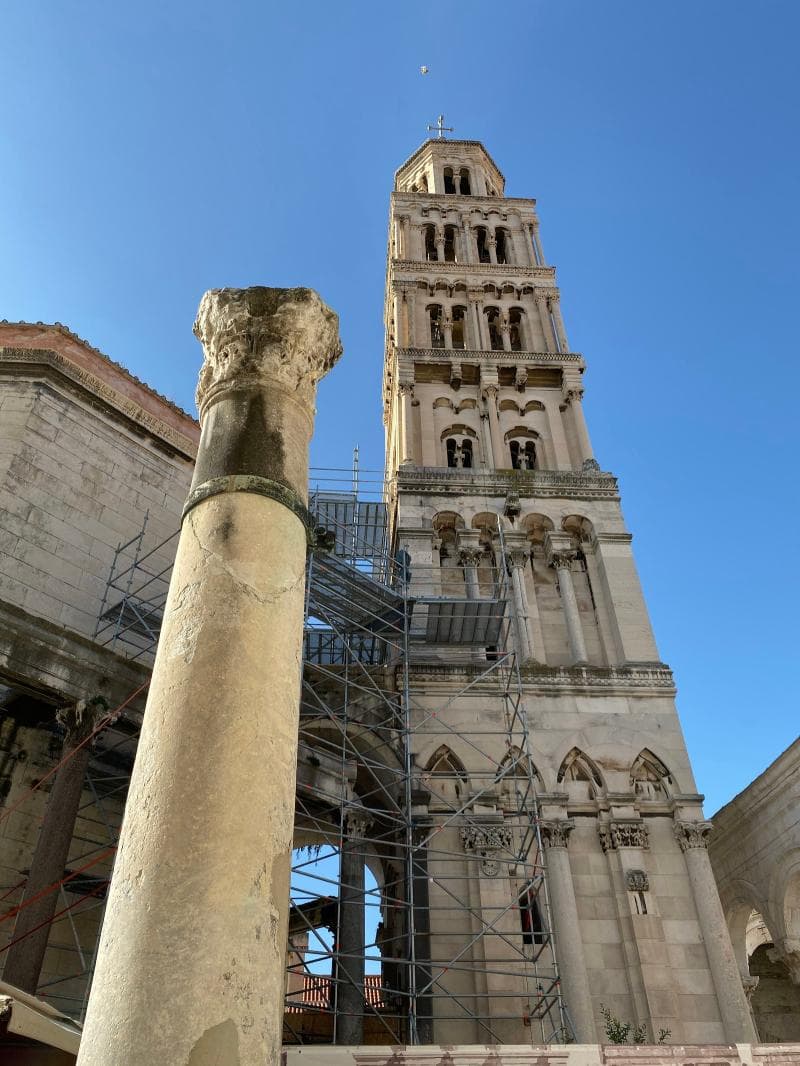
Explore the ancient Substructures beneath Diocletian's Palace in Split, Croatia. Discover Roman engineering, historical context, and 'Game of Thrones' filming locations in these preserved cellars.
Overview
Deep beneath the bustling heart of Diocletian's Palace in Split, Croatia, lies a remarkable testament to Roman engineering and imperial grandeur: the Substructures. Often referred to as the 'Cellars' or 'Basements,' these ancient vaulted halls are not merely an underground space but a perfectly preserved blueprint of Emperor Diocletian's private living quarters situated directly above. As you descend into their cool, atmospheric depths, you step back almost 1,700 years, tracing the very foundations of one of the world's most enduring Roman monuments.
The Substructures are one of the best-preserved ancient complexes of their kind globally, a key factor in Split's historical core being designated a UNESCO World Heritage site in 1979. Today, they serve as a unique cultural venue, hosting art exhibitions, theatrical performances, and even a vibrant market where local artisans showcase their crafts. Connecting the Riva waterfront to the palace's central Peristyle, these subterranean passages offer an unparalleled journey through time, revealing the architectural genius and daily life of Roman Spalatum.
History & Cultural Background
Constructed between 295 and 305 AD, the Substructures were an integral part of Emperor Diocletian's colossal retirement palace. Their primary architectural purpose was two-fold: to elevate the imperial apartments on the southern side of the palace to sea level, effectively compensating for the natural slope of the terrain, and to provide robust structural support. Beyond this foundational role, they also functioned as practical storage areas for the palace's provisions, including foodstuffs and wine.
As centuries passed and the Roman Empire waned, the Substructures underwent a dramatic transformation. During the early Middle Ages, parts of these halls were repurposed as residential spaces for the emerging city's inhabitants. However, as Split grew, the upper levels of the palace became densely populated, leading to the gradual filling of the Substructures with debris and waste from the dwellings above. This unwitting act of abandonment, ironically, contributed to their remarkable preservation, as the accumulated earth protected the ancient structures from decay and provided stability.
The rediscovery and restoration of these forgotten halls began in the mid-19th century, spearheaded by architect and conservationist Vicko Andrić. Extensive archeological work continued into the 20th century; the western halls were finally opened to the public in 1959, with the eastern sections following much later in 1996 after comprehensive conservation efforts.
What Makes It Special
- Architectural Mirror: What truly sets the Substructures apart is their uncanny resemblance to the imperial apartments that once stood directly above them. Their layout, rooms, and corridors faithfully mirror the original design of Diocletian's private residence, offering historians and visitors a unique 'negative' image of the lost upper floor. This insight has been invaluable in reconstructing the likely appearance and function of the emperor's living quarters.
- Preservation Paradox: The fact that these vast halls were used as a waste dump for centuries ultimately saved them. The layers of earth and rubble protected the ancient stonework from the elements and the ravages of time, preserving them to an extraordinary degree.
- Living History: Unlike many archaeological sites that are cordoned off, the Substructures are an active, breathing part of Split's contemporary life. They serve as a vibrant public thoroughfare, a marketplace for local crafts, and a venue for a diverse range of cultural events.
Stories, Fun Facts & Local Details
One of the most captivating aspects of the Substructures is their enduring connection to popular culture. Fans of the hit television series 'Game of Thrones' will recognize these ancient halls as a key filming location. The central hall famously served as Daenerys Targaryen's throne room in Meereen, where her dragons were kept. Imagining the Mother of Dragons walking these very passages adds a layer of modern mystique to their ancient charm.
During the Middle Ages, local lore surrounding the dark, subterranean spaces led to popular beliefs that they were 'Grote' or dungeons where Emperor Diocletian tortured Christians. While historically inaccurate, this perception highlights the awe and perhaps fear the forgotten spaces inspired. Among the archaeological findings within the Substructures is a well-preserved remnant of a large press, believed to have been used for producing wine or olive oil, offering a tangible glimpse into the practical aspects of palace life and early medieval industry.
Visitor Perspective
A visit to the Substructures offers a captivating blend of history, atmosphere, and local culture. Entry to the central, free-to-access hall is typically through the Bronze Gate (Porta Aenea) from the Riva promenade, or down a staircase from the Peristyle. This main artery is often lined with souvenir vendors, providing opportunities to purchase unique, locally made items.
For a deeper exploration, visitors can purchase tickets to access the extensive eastern and western halls, which are part of the Split City Museum. Wandering through these dimly lit, vaulted chambers, you can truly appreciate the scale and engineering prowess of the Roman builders. The cool, quiet air provides a welcome respite from the bustling streets above, allowing for moments of reflection on the passage of time and the layers of history beneath your feet. It's a journey that ignites the imagination, bringing to life the grandeur of Diocletian's era and the subsequent transformation of a Roman palace into the vibrant city of Split.
Coordinates: 16.4402, 43.5083
View on Google Maps💬 How Travelers Describe This Place
Based on community votes
Photogenic
722Interesting
698Must See
465Beautiful
276Unique
126
Traveler Stories
Discover memorable experiences shared by travelers who have visited this place.
No traveler stories yet.
Be the first traveler to share what made this place memorable.

Tour
By
Spot
Discover amazing places around the world. Your journey starts here.
Explore
© 2026 TourBySpot. All rights reserved.