Iron Gate
Split, Croatia
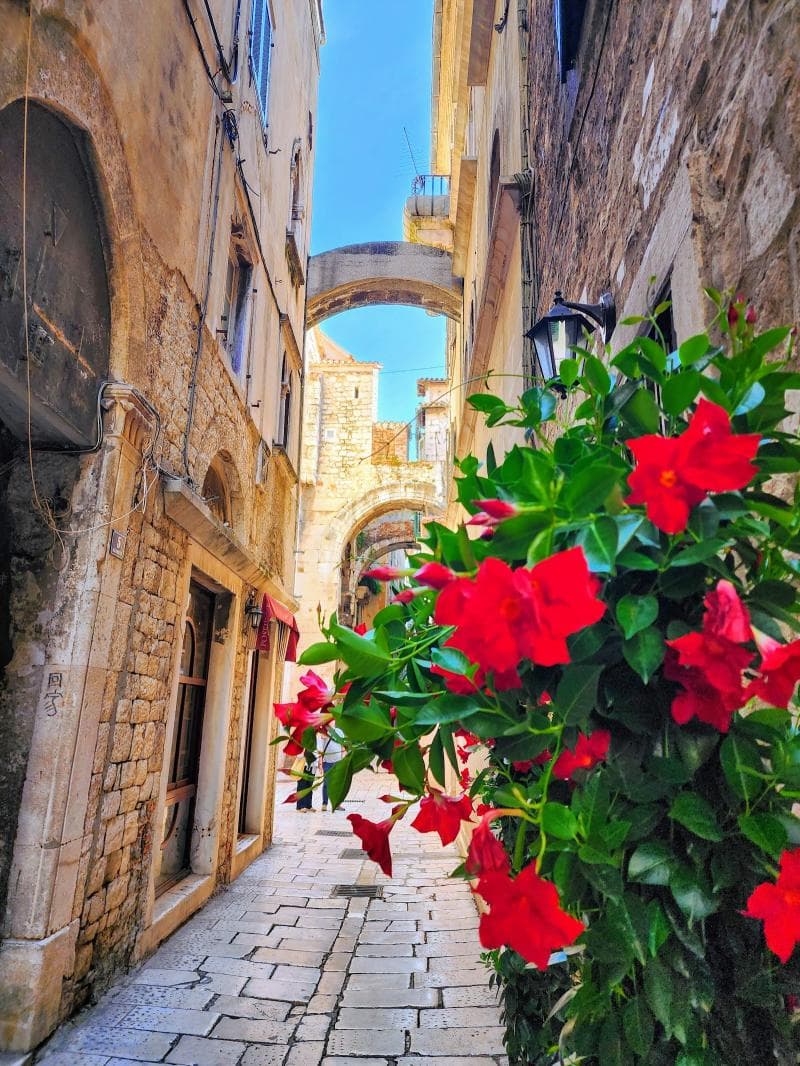
Explore Split's Iron Gate (Porta Ferrea) within Diocletian's Palace, a 17-century-old Roman entrance with a unique 24-digit clock and rich history.
Overview
Stepping through the Iron Gate, or Porta Ferrea as it was known in Latin, is like passing through a living portal into Split’s rich past. This impressive structure is one of the four principal entrances to Diocletian’s Palace, the monumental Roman imperial residence in Split, Croatia. Situated on the western side of the palace, it stands as a testament to seventeen centuries of continuous use, a remarkable feat among Roman architectural marvels. Locally, it's referred to as Željezna vrata, connecting the ancient Roman street plan within the palace walls to the vibrant medieval civic heart of Split, known today as Pjaca or People’s Square. Unlike its more ornate counterparts, the Iron Gate embodies practicality and enduring functionality, reflecting the city's organic evolution around its Roman core.
History & Cultural Background
The Iron Gate traces its origins back to the late 3rd and early 4th centuries AD, built as an integral part of Emperor Diocletian’s sprawling retirement palace, constructed between 295 and 305 AD. Originally a military entrance known as Porta Occidentalis, or the Western Gate, its primary purpose was defensive, featuring a sophisticated double-gate system designed to protect the imperial complex.
A fascinating glimpse into the shifting tides of history is evident in its decorative elements. During late antiquity, a relief of Nike, the Roman goddess of victory, adorned the lintel of the gate. However, with the rise of Christianity in the 5th century, this pagan symbol was removed and replaced by a Christian cross, marking a significant cultural and religious transition within the Roman Empire.
Further layers of history were added in the 6th century when a small church dedicated to St. Theodore was constructed directly above the gate. This church was later rebuilt and rededicated in the 11th century, becoming the Church of Our Lady of the Belfry, complete with an early pre-Romanesque bell tower – one of the oldest preserved on the Adriatic coast. Throughout the Middle Ages, the area surrounding the Iron Gate transformed into a bustling hub of activity, serving as a courthouse and later as a vibrant marketplace. The palace, including its gates, was recognized for its outstanding universal value and inscribed on the UNESCO World Heritage List in 1979.
What Makes It Special
What truly sets the Iron Gate apart is its uninterrupted functionality over millennia. It is the only one of Diocletian's Palace's four gates that has remained in continuous use from Roman times to the present day. This unbroken chain of existence means that every stone tells a story of adaptation and resilience. It’s a compelling example of how Roman structures were not merely preserved but actively lived in and integrated into the evolving urban fabric of Split.
Beyond its ancient Roman construction, the Iron Gate boasts unique medieval additions that capture the imagination. Above the archway, visitors will find a distinctive city clock, notable for having 24 digits instead of the conventional twelve, a charming and unusual feature that has served as a local landmark and meeting point for centuries. The presence of the Church of Our Lady of the Belfry, built right into the Roman defensive structure, further highlights the ingenious way medieval Split reused and repurposed ancient architecture, rather than demolishing it.
Stories, Fun Facts & Local Details
- The Tale of Two Symbols: The transformation of the gate's lintel from bearing the Roman goddess Nike to a Christian cross is a powerful, silent narrative of the empire's religious shift. It speaks volumes about the early Christian influence in the region.
- The 24-Hour Clock: This peculiar clock, perched high above the gate, is more than just a time-teller; it's a piece of Split's identity. Its 24-digit face is a conversation starter and a unique marker of this historical site.
- A Hub of Life: For centuries, the area within and around the Iron Gate has been a dynamic center of public life, hosting everything from a courthouse in the Middle Ages to lively bazaars. It vividly illustrates how the palace wasn't just a ruin, but a beating heart of a thriving city.
- Architectural Ingenuity: The original defensive system of outer and inner gates with a guarded space in between demonstrates Roman military engineering at its finest.
Visitor Perspective
For the curious traveler, the Iron Gate is more than just an architectural passage; it’s an immersive experience. As you walk through it, you are literally traversing layers of history. From one side, you can observe the precise, grid-like street planning of the Roman palace, while on the other, you emerge onto Pjaca, the bustling People's Square, which showcases the organic, medieval expansion of Split beyond its imperial origins.
While it might be easy to pass through this gate in mere seconds, taking a moment to appreciate its details provides a profound connection to the past. Notice the ancient stones, the adapted church overhead, and the unique clock – each element contributes to understanding how Diocletian's Roman residence seamlessly evolved into the vibrant, continuously inhabited core of modern Split. The Iron Gate truly offers a captivating glimpse into the enduring spirit of this remarkable Croatian city.
Coordinates: 16.43917, 43.50861
View on Google Maps💬 How Travelers Describe This Place
Based on community votes
Beautiful
873Interesting
477Unique
422Photogenic
157Must See
53
Traveler Stories
Discover memorable experiences shared by travelers who have visited this place.
No traveler stories yet.
Be the first traveler to share what made this place memorable.

Tour
By
Spot
Discover amazing places around the world. Your journey starts here.
Explore
© 2026 TourBySpot. All rights reserved.