Wat Si Saket
Vientiane, Laos
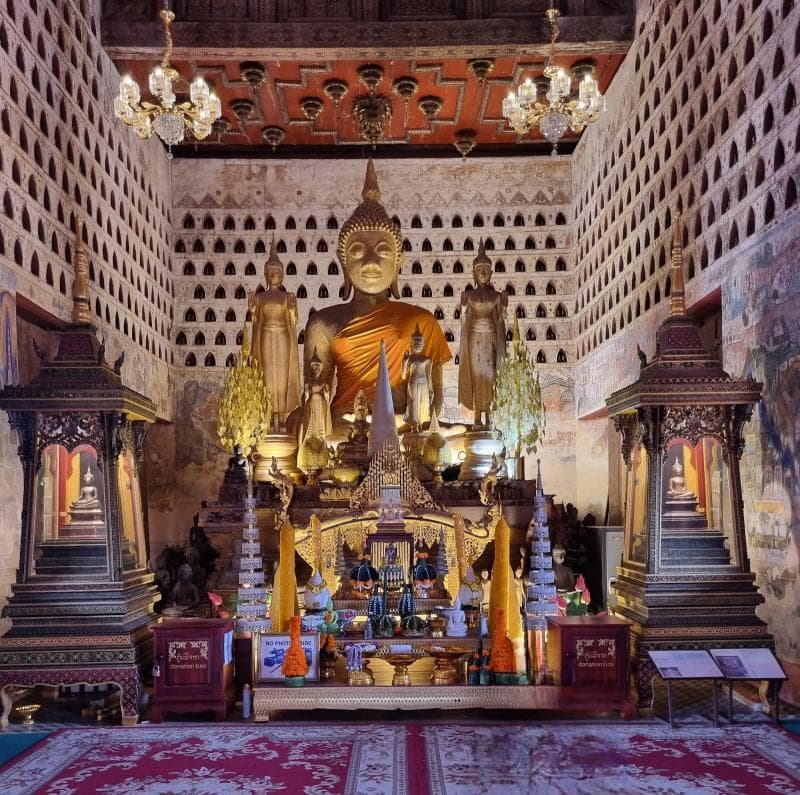
Explore Wat Si Saket, Vientiane's oldest surviving temple. Discover thousands of Buddha images, unique Lao-Siamese architecture, and its compelling history in Laos.
Overview
Wat Si Saket, nestled in the heart of Vientiane, Laos, stands as a profound testament to the nation's enduring spirit and rich cultural heritage. This venerable Buddhist temple is renowned as the oldest surviving temple in the city, a true marvel given Vientiane's turbulent history. Built in 1818 under King Anouvong, it serves not only as an active place of worship but also as a significant museum. Visitors are often captivated by its tranquil cloister walls, which house thousands of Buddha images, each telling a silent story of devotion and artistry. Located prominently on Lan Xang Road, opposite the Presidential Palace, Wat Si Saket offers a unique window into Lao Buddhism and architectural resilience. Its peaceful ambiance and historical depth make it an essential stop for any curious traveler.
History & Cultural Background
The origins of Wat Si Saket trace back to the early 19th century, with its construction initiated by King Anouvong between 1818 and 1824. The temple holds a singular place in Lao history primarily because of its miraculous survival during the devastating Siamese invasion of 1828, an event that saw much of Vientiane reduced to ruins. While countless other temples were destroyed, Wat Si Saket remained largely intact. Historians attribute this remarkable preservation to its unique architectural style, which significantly resembled contemporary Siamese (Thai) temples. This architectural affinity is believed to have led the invading Siamese army to spare the temple; some accounts suggest they used it as headquarters. The name 'Si' itself derives from the Sanskrit 'Sri,' prefixed to Wat Saket in Bangkok. Later, during the colonial era, the French government undertook restoration efforts in 1924 and 1930. Culturally, Wat Si Saket also served as a vital place where Lao lords traditionally swore allegiance to the king.
What Makes It Special
Wat Si Saket's distinctiveness is immediately apparent upon entering its serene grounds. The temple is most celebrated for its astounding collection of Buddha images, numbering between 6,800 and over 10,000. These sculptures, crafted from wood, stone, bronze, ceramic, and silver, represent various periods from the 16th to the 19th centuries. They are meticulously arranged in niches along the cloister walls, creating an overwhelming sense of sacred artistry. Architecturally, the temple is a captivating blend of early Bangkok-style and traditional Lao design, distinguished by its ornate five-tiered roof and surrounding terrace. This style is largely credited for its survival, making it a rare example of early 19th-century Lao Buddhist architecture. A poignant feature is the collection of damaged Buddha statues, some headless or missing limbs, deliberately preserved and displayed as a powerful memorial to the ravages of war. Beyond the Buddha images, visitors can admire a traditional drum tower, a small library building with a Burmese-style roof, and the floral ceiling within the 'sim' (ordination hall). The 'sim' also houses a significant Khmer-style Naga Buddha, believed to date back to the 13th century.
Stories, Fun Facts & Local Details
The stories woven around Wat Si Saket add layers of intrigue and cultural depth. One local legend recounts that during the 1828 Siamese invasion, dark clouds suddenly covered the skies above the temple. This supernatural event terrified the invading army, leading them to retreat, thus sparing the temple. The display of damaged Buddha statues, many without heads, is a deliberate and meaningful act by the Lao people. It serves as a stark reminder of war's atrocities and the importance of preserving cultural heritage, making the temple a symbol of national resilience. For travelers, an early morning visit offers a unique opportunity to witness local residents offering food to monks, praying, and making merit. This charming daily ceremony underscores the temple's role as a living spiritual center. Rooted in Lao tradition, adult men often undergo a period of temple training, showing respect to ancestors and delving into Buddhist teachings. Inside the 'sim', while now decaying, the interior walls once featured intricate Jataka murals, depicting stories from the Buddha's previous lives.
Visitor Perspective
Visiting Wat Si Saket offers more than a historical excursion; it provides a deeply immersive cultural experience within a tranquil setting. The temple grounds feature peaceful gardens that invite quiet contemplation. As an active monastery, visitors may observe monks going about their daily routines, enhancing the authentic spiritual atmosphere. To ensure a respectful visit, travelers must adhere to local customs: dress modestly (covering shoulders and knees), remove shoes before entering the main ordination hall, and maintain quiet. While photography is generally permitted in courtyards, it is often restricted inside the main hall. Wat Si Saket's central location in Vientiane makes it easily accessible, near the Presidential Palace and Haw Phra Kaew. The temple is typically open daily, generally from 8:00 AM to 12:00 PM and 1:00 PM to 4:00 PM. There is a modest entrance fee for foreign tourists, usually around 30,000 Lao Kip, which contributes to the temple's upkeep. A visit to Wat Si Saket is a journey through history, art, and the enduring heart of Lao Buddhism.
Coordinates: 102.61167, 17.96306
View on Google Maps💬 How Travelers Describe This Place
Based on community votes
Must See
958Unique
728Interesting
481Beautiful
382Photogenic
183
Traveler Stories
Discover memorable experiences shared by travelers who have visited this place.
No traveler stories yet.
Be the first traveler to share what made this place memorable.
Things to see at Wat Si Saket



Tour
By
Spot
Discover amazing places around the world. Your journey starts here.
Explore
© 2026 TourBySpot. All rights reserved.