Murals
Vientiane, Laos
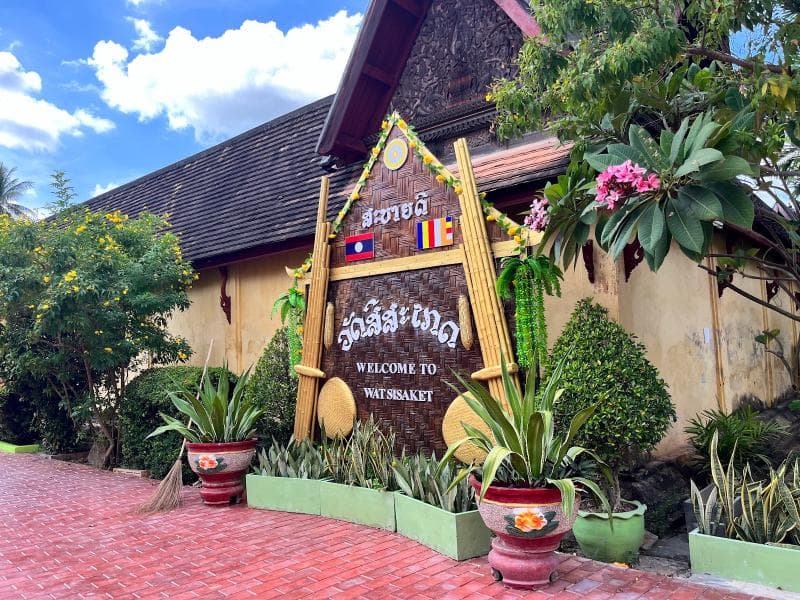
Explore the historic murals of Wat Si Saket in Vientiane, Laos, depicting ancient Buddhist tales and unique cultural narratives.
Overview
Stepping into Wat Si Saket in Vientiane, Laos, is like entering a tranquil portal to the past. While the entire temple complex is a marvel, the murals within its ordination hall, known as the 'sim', offer a particularly intimate glimpse into Lao Buddhist artistry and spiritual narratives. These vibrant, though sometimes delicate, paintings adorn the interior walls, providing a rich visual tapestry of Buddhist teachings and local traditions that have been preserved for centuries.
Wat Si Saket holds a unique place in Vientiane's history, being the oldest surviving temple in the city. Its ability to withstand the Siamese invasion of 1828, which devastated much of the capital, makes it an invaluable cultural and historical treasure. The murals, alongside the thousands of Buddha images housed within the temple's cloistered walls, serve as a testament to the enduring faith and artistic heritage of Laos.
History & Cultural Background
Wat Si Saket was commissioned by King Anouvong, the last monarch of the Lan Xang Kingdom, and completed in 1818. Its survival from the 1828 Siamese sacking of Vientiane is largely attributed to its architectural style, which bore a striking resemblance to Siamese temples of the era. This similarity possibly led the invading armies to use it as their headquarters, inadvertently preserving it from destruction.
The murals themselves primarily date from the 19th and early 20th centuries, with some sources suggesting creation periods spanning from 1820 to 1960. They cover approximately 400 square meters within the ordination hall and are considered among the oldest murals in the Lao People's Democratic Republic. These paintings are not merely decorative; they are deeply intertwined with Buddhist cosmology and local folklore, depicting a blend of religious teachings and cultural narratives that were significant to the Lao people of that era.
What Makes It Special
What sets the murals of Wat Si Saket apart is their rare narrative content and their historical resilience. Unlike many temple murals that focus solely on the life of Buddha, these murals tell stories from the Jataka tales, which recount the Buddha's previous incarnations. A particularly engaging narrative found here is the story of Prince Pookkharabat. This tale describes how the prince appointed an 'honest thief' as his chief minister and, with the aid of a magic fan, vanquished enemy armies. This specific story is an unusual choice for temple art, offering a glimpse into local interpretations and regional variations of Buddhist storytelling.
Furthermore, the murals represent a unique testament to the changing styles of Lao Buddhist mural painting across different periods, encapsulating various artistic influences over decades. Their very existence is a miracle, given the temple's tumultuous history and the harsh tropical climate. While murals once also graced the cloister walls, these have largely been lost to time and the elements, making the preserved interior murals even more precious.
Stories, Fun Facts & Local Details
The tale of Prince Pookkharabat, vividly illustrated on the walls, goes beyond typical religious parables. It's a story that speaks to moral rectitude and cleverness, offering a culturally specific moral lesson that resonated with the local populace. This particular Jataka is considered apocryphal by some, meaning it may not be part of the universally recognized canon but holds significant local importance and storytelling tradition in Laos and Northern Thailand.
Imagine the artists, painstakingly applying pigments to plaster, not just creating art, but preserving wisdom and legend for future generations. These murals would have served as visual aids for monks teaching the Dharma and as sources of contemplation for devotees. The meticulous details, from the facial expressions of characters to the intricate floral motifs, reflect the craftsmanship and spiritual devotion of the artisans from the 19th and 20th centuries.
Visitor Perspective
For the curious traveler, encountering the murals of Wat Si Saket is a profound experience. Upon entering the 'sim', visitors are enveloped by an atmosphere of antiquity and reverence. The eye-level paintings draw you in, inviting contemplation of the ancient narratives they convey. Though some sections show signs of deterioration – a natural consequence of age, climate, and the materials used – ongoing restoration efforts strive to preserve these invaluable artworks for future generations.
While photography inside the ordination hall is often prohibited to protect the delicate art and maintain the sanctity of the space, this restriction encourages visitors to truly immerse themselves in the moment, absorbing the details and spiritual weight of the paintings without distraction. Standing amidst these murals, surrounded by thousands of Buddha images in the temple's cloister, provides a powerful connection to Laos's rich spiritual traditions and its enduring artistic legacy. It's a quiet journey through time, revealing the heart of Lao Buddhism and the stories that have shaped its culture.
Coordinates: 102.61167, 17.96306
View on Google Maps💬 How Travelers Describe This Place
Based on community votes
Must See
965Interesting
743Photogenic
719Beautiful
629Unique
176
Traveler Stories
Discover memorable experiences shared by travelers who have visited this place.
No traveler stories yet.
Be the first traveler to share what made this place memorable.

Tour
By
Spot
Discover amazing places around the world. Your journey starts here.
Explore
© 2026 TourBySpot. All rights reserved.