Main Ordination Hall
Vientiane, Laos
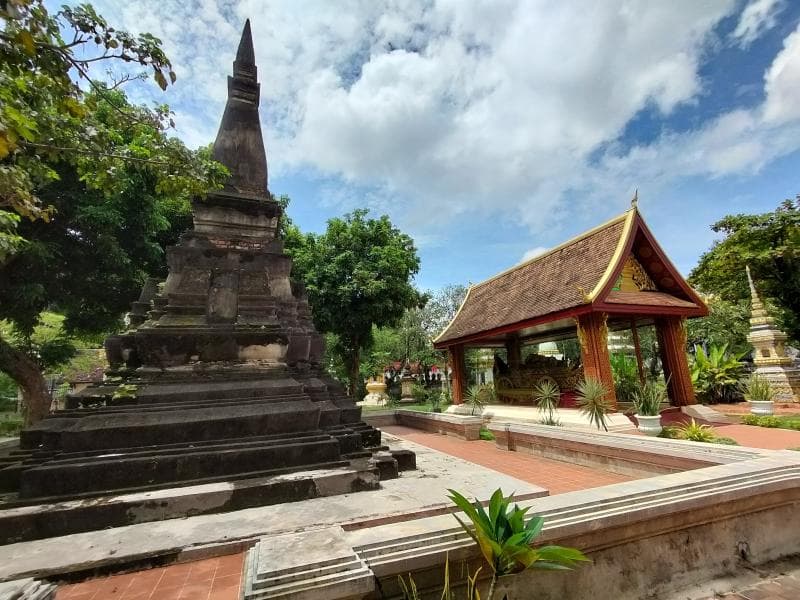
Explore the Main Ordination Hall of Wat Si Saket in Vientiane, Laos – a historic sanctuary with ancient Buddha statues, unique architecture, and preserved Jataka murals.
Overview
Nestled within the historic Wat Si Saket in Vientiane, Laos, the Main Ordination Hall, known locally as the 'sim' or Ubosot, stands as the spiritual heart of this revered Buddhist temple. This central edifice is not merely a structure but a profound repository of Lao history, culture, and religious devotion. Built in 1818 under the command of King Anouvong, the Main Ordination Hall, with its distinctive multi-tiered roof and surrounding colonnaded terrace, showcases a unique blend of Lao and Siamese architectural styles. It is a place of profound tranquility and contemplation, housing ancient Buddha statues and delicate murals that narrate centuries of spiritual heritage.
History & Cultural Background
The story of the Main Ordination Hall is intrinsically linked to Wat Si Saket itself, which is widely considered the oldest temple still standing in Vientiane. Commissioned by King Anouvong, the last monarch of the Kingdom of Vientiane, its construction in 1818 marked a significant period in Lao history. Uniquely, the temple was built in a style contemporary to Siamese Buddhist architecture, featuring an ornate five-tiered roof and a surrounding terrace. This particular architectural choice is believed to be the reason the Main Ordination Hall, and indeed the entire Wat Si Saket complex, remarkably survived the devastating Siamese invasion and sacking of Vientiane in 1828, which saw most other temples in the city destroyed. It stood as a silent witness to the city's destruction and subsequent rebirth, serving as a sanctuary and even as headquarters for the invading armies at one point. Later, during the French colonial period, the hall underwent restoration in 1924 and again in 1930, helping to preserve its architectural integrity and artistic treasures.
What Makes It Special
The Main Ordination Hall's distinctiveness lies in its survival and the treasures it holds. Its architecture, a harmonious blend of Lao and early Bangkok-Buddhist styles, sets it apart from many other temples in the region. The elegant multi-tiered roofs and detailed wooden carvings are a testament to the skilled craftsmanship of the early 19th century. Inside, the hall is a sacred space primarily reserved for monks, yet its beauty is accessible to all. The ceiling is adorned with intricate relief mouldings, while the interior walls are a canvas for hundreds of Buddha niches and captivating Jataka murals. These murals depict scenes from the Buddha's past lives, offering visual narratives of Buddhist teachings. Among the significant artifacts within is a slightly damaged Khmer-style Naga Buddha, believed to date from the 13th century, showcasing the cross-cultural artistic influences that have touched Laos over centuries. This statue, depicting the Buddha seated on a coiled cobra deity with its multi-headed hood as a shelter, is positioned prominently before the main seated Buddha, adding to the hall's spiritual gravitas.
Stories, Fun Facts & Local Details
One fascinating detail about the Main Ordination Hall is the specific Jataka tale depicted on its interior walls: the story of Prince Pookkharabat. This unusual choice recounts how the prince appointed an 'honest thief' as chief minister and, with the aid of a magic fan, defeated enemy armies. While the murals are now gracefully fading with age, they continue to tell this unique story to those who observe closely. It's also worth noting that the 'sim' is the traditional location where new monks take their vows, making it a place of initiation and profound spiritual commitment within the Buddhist faith. The hall's ability to survive the 1828 Siamese destruction made it a rare historical document itself, showcasing architectural styles that might otherwise have been lost. The prohibition of photography inside, primarily to protect the delicate, aging murals from flash damage, further emphasizes the preservation efforts and the sacred, timeless atmosphere of the space.
Visitor Perspective
For the curious traveler, stepping into the Main Ordination Hall offers a deeply moving experience. The serene ambiance, enhanced by the absence of modern distractions, allows for quiet reflection and an appreciation for the enduring spiritual traditions of Laos. Visitors are encouraged to dress modestly, covering their knees and shoulders, and to remove their shoes before entering, as a sign of respect. The hall's tranquil atmosphere, despite its central location in a busy city, provides a peaceful retreat. Observing the intricate architecture, the detailed murals, and the ancient Buddha images provides a tangible connection to the past and the rich cultural tapestry of Vientiane. It's a place to ponder the resilience of faith and culture, and to witness a living tradition where monks still perform their daily practices.
Coordinates: 102.61128212443398, 17.963132561369907
View on Google Maps💬 How Travelers Describe This Place
Based on community votes
Photogenic
958Unique
743Interesting
719Must See
629Beautiful
176
Traveler Stories
Discover memorable experiences shared by travelers who have visited this place.
No traveler stories yet.
Be the first traveler to share what made this place memorable.

Tour
By
Spot
Discover amazing places around the world. Your journey starts here.
Explore
© 2026 TourBySpot. All rights reserved.