Bell Tower
Vientiane, Laos
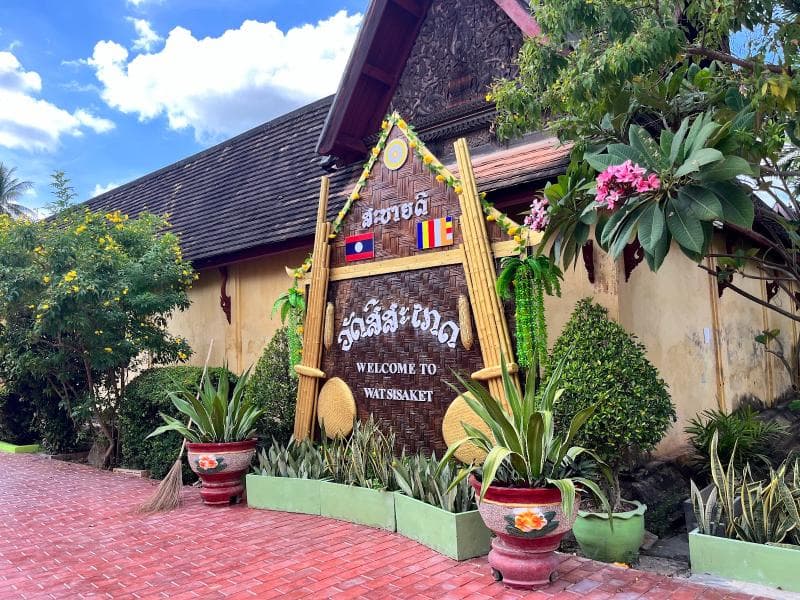
Discover the historic Bell Tower at Wat Si Saket in Vientiane, Laos – a resilient symbol of monastic life within the city's oldest surviving temple.
Overview
Nestled within the revered grounds of Wat Si Saket in Vientiane, Laos, stands a distinctive Bell Tower, often referred to as a Drum Tower. This architectural element is much more than a mere structure; it is a resonant symbol of daily monastic life and an integral part of one of Vientiane's most historically significant temples. Wat Si Saket itself holds the esteemed title of potentially being the oldest temple still standing in Vientiane, a testament to its enduring legacy.
The Bell Tower, with its unique design, contrasts slightly with traditional Lao temple architecture, reflecting the Siamese influence prevalent in Wat Si Saket's overall construction. Its presence contributes to the temple's tranquil atmosphere, inviting visitors to reflect on centuries of Buddhist practice and cultural heritage. As part of a complex famous for housing thousands of Buddha images, the tower serves as a subtle yet powerful reminder of the continuity of faith in the heart of Laos's capital.
History & Cultural Background
Wat Si Saket was commissioned in 1818 by King Anouvong, the last monarch of the Lan Xang Kingdom. Its construction predates the devastating Siamese invasion of Vientiane in 1828. During this tumultuous period, much of the city was razed, yet Wat Si Saket remarkably survived. Historians and cultural experts often attribute its preservation to its contemporary Siamese architectural style, which might have led the invading armies to spare it, perhaps even using it as their headquarters.
The Bell Tower, like other ancillary structures within the wat, would have been erected during this early 19th-century construction phase. Historically, such towers in Buddhist temples serve a crucial function: to signal monks for daily prayers, devotions, and meals. This practice underscores the rhythmic and disciplined life within the monastery, where the tolling of the bell marks the flow of time dedicated to spiritual pursuits. The tower's survival alongside the main temple means it shares in the wat's unique historical resilience.
What Makes It Special
The Bell Tower of Wat Si Saket stands out not just for its function but also for its subtle architectural character. While many parts of Wat Si Saket reflect a Siamese style, the Bell Tower is sometimes described as having a Chinese-style drum tower influence, adding another layer to the temple's blended aesthetic. Unlike Western bells that swing, the bells in Thai and Lao wats are typically fixed and struck from the outside with a wooden stick, starting slowly and gradually increasing in tempo.
Beyond its architecture, its significance lies in its role in the temple's unbroken spiritual tradition. The calls from the tower would have been a constant sound in Vientiane for over two centuries, guiding monastic life and echoing through the city. Its enduring presence contributes to Wat Si Saket being considered a rare and valuable example of early 19th-century Lao Buddhist architecture.
Stories, Fun Facts & Local Details
Imagine the pre-dawn quiet of Vientiane, broken only by the first solemn tolls from the Bell Tower, gently rousing the resident monks for their morning meditation and prayers. This age-old tradition continues today, connecting contemporary monastic life to centuries of spiritual practice. The tower's call also marks lunchtime, an important signal as monks traditionally do not consume solid food after noon.
While often overshadowed by the main ordination hall's thousands of Buddha images or the cloister's extensive collection, the Bell Tower is a 'must-see' feature mentioned in many travel guides, highlighting its understated yet important role. It is a piece of living history, a functional artifact that continues to serve its original purpose, offering a rare glimpse into the authentic rhythms of a Southeast Asian Buddhist monastery.
Visitor Perspective
For the curious traveler, the Bell Tower at Wat Si Saket provides a poignant connection to the temple's past and present. As you wander the serene grounds, noticing the ornate five-tiered roof of the main sim and the cloister walls adorned with countless Buddha figures, the tower stands as a reminder of the practical and spiritual elements that sustain such a sacred place.
Visitors can appreciate the tower as part of the overall architectural ensemble that allowed Wat Si Saket to survive when so much else was lost. It encourages contemplation on themes of resilience, continuity, and the enduring power of faith. While the tower itself is not typically entered, its external form and historical significance make it an essential stop for anyone seeking to understand the deep cultural and religious fabric of Vientiane and Laos. The temple complex is open daily, usually from 8:00 AM to 5:00 PM, allowing ample time for exploration and reflection.
Coordinates: 102.61167, 17.96306
View on Google Maps💬 How Travelers Describe This Place
Based on community votes
Must See
722Interesting
595Unique
358Photogenic
196Beautiful
19
Traveler Stories
Discover memorable experiences shared by travelers who have visited this place.
No traveler stories yet.
Be the first traveler to share what made this place memorable.

Tour
By
Spot
Discover amazing places around the world. Your journey starts here.
Explore
© 2026 TourBySpot. All rights reserved.