Cloister Walls
Vientiane, Laos
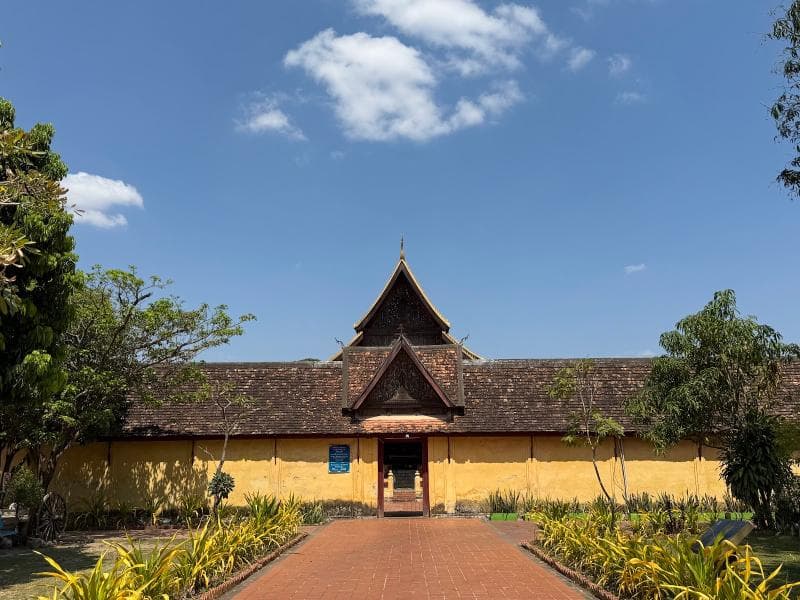
Explore the historic Cloister Walls of Wat Si Saket in Vientiane, Laos, home to thousands of Buddha images and a testament to enduring faith.
Overview
Nestled in the heart of Vientiane, Laos, the Cloister Walls of Wat Si Saket offer a profound glimpse into the country's rich spiritual and historical tapestry. This revered sub-spot within the ancient temple complex is not just a collection of old stone; it is a meticulously arranged sanctuary housing thousands of Buddha images, creating an awe-inspiring spectacle for any visitor. Wat Si Saket itself stands as the oldest surviving temple in Vientiane in its original form, a testament to resilience and faith. Commissioned by King Anouvong in the early 19th century, the temple, and particularly its cloister, serves as a quiet custodian of centuries of Buddhist devotion. Here, surrounded by venerable architecture, one discovers a unique 'open-air museum' dedicated to the Buddha.
History & Cultural Background
The story of Wat Si Saket, and by extension its magnificent Cloister Walls, begins with King Anouvong, the last monarch of the Kingdom of Vientiane, who ordered its construction around 1818, with completion by 1824. What makes this temple's survival remarkable is its architectural style. Unlike many traditional Lao temples of its era, Wat Si Saket was built with strong Siamese (Thai) influences. This architectural anomaly is widely believed to be the very reason it was spared from destruction when Siamese armies sacked Vientiane in 1828, razing most of the city's other structures. Its survival symbolically ties it to a poignant period in Lao history, including the earlier loss of the revered Emerald Buddha. Though restored by the French colonial government in the 1920s and 30s, the temple has largely retained its original character. Today, it functions not only as a significant historical site but also as an active monastery, where the traditions of Buddhist worship continue to thrive.
What Makes It Special
The undisputed highlight of Wat Si Saket, and its defining feature, is the double-tiered Cloister Walls. These walls, forming a square around the main ordination hall, are lined with thousands upon thousands of Buddha images. Estimates of the total number of images vary, but many sources suggest there are approximately 6,800 to over 10,000 statues and statuettes within the cloister and the temple complex. These sacred figures represent a vast timeline of Buddhist art, with some dating back as far as the 16th century, extending through the 19th century. They are crafted from a remarkable array of materials including wood, stone, bronze, ceramic, silver, and tin, each offering a unique artistic expression of devotion. The smaller images are typically housed in numerous niches carved into the walls, often arranged in pairs, while larger seated Buddha statues in various 'mudras' (hand gestures) are placed on shelves in front of these walls. This sheer density and variety transform the cloister into a living archive, a place where history, art, and faith converge.
Stories, Fun Facts & Local Details
One of the most poignant aspects of the Cloister Walls is the presence of numerous damaged Buddha images, some headless or broken. Rather than discarding them, the Lao people have intentionally preserved and displayed these statues as a stark reminder of the tumultuous history and conflicts the nation has endured. It is a powerful cultural statement, showcasing a commitment to preserving heritage and promoting peace, even through the scars of the past. Beyond the cloister, within the 'sim' (ordination hall), visitors can find ancient murals depicting Jataka tales, stories of the Buddha's previous lives. One particularly unusual mural illustrates the story of Prince Pookkharabat, who appointed an 'honest thief' as his chief minister. Outside, a 'Hang Hod,' a wooden trough shaped like a Naga serpent, plays a role in local traditions; during Lao New Year celebrations, water flowing through it is used for ceremonial cleaning of Buddha images, symbolizing purification. Culturally, Wat Si Saket holds deep significance: it is a tradition for Lao men reaching adulthood to undergo a period of training at a temple, often Wat Si Saket, to honor their parents and ancestors. This enduring practice underscores the temple's role as a vital center of spiritual education and community life.
Visitor Perspective
A visit to the Cloister Walls of Wat Si Saket is an immersive experience, inviting contemplation and respect. The atmosphere within the cloistered courtyard is notably peaceful and serene, a welcome respite from the city's gentle bustle. Walking through the shaded galleries, surrounded by the silent gaze of thousands of Buddha images, provides a unique opportunity to connect with Lao spiritual traditions and historical resilience. To ensure a respectful visit, travelers are encouraged to dress modestly, covering their shoulders and knees, and to remove their shoes before entering the main ordination hall. Maintaining a quiet demeanor enhances the spiritual ambiance for all. While photography is often permitted in the cloister, it is typically prohibited inside the main hall to protect ancient artwork. Many suggest visiting early in the morning or late in the afternoon to avoid the midday heat and larger crowds, allowing for a more intimate and reflective experience. Typically, a visit to Wat Si Saket, including its remarkable Cloister Walls, takes approximately one to one-and-a-half hours, offering ample time to appreciate its historical depth and artistic grandeur.
Coordinates: 102.611667, 17.963056
View on Google Maps💬 How Travelers Describe This Place
Based on community votes
Interesting
585Beautiful
550Photogenic
546Unique
56Must See
28
Traveler Stories
Discover memorable experiences shared by travelers who have visited this place.
No traveler stories yet.
Be the first traveler to share what made this place memorable.

Tour
By
Spot
Discover amazing places around the world. Your journey starts here.
Explore
© 2026 TourBySpot. All rights reserved.