Village Museum
Bucharest, Romania
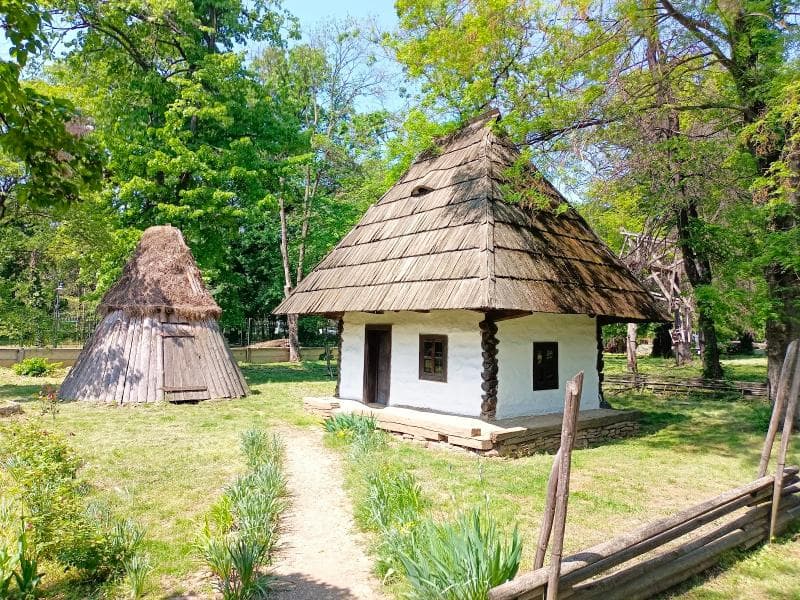
Discover the Dimitrie Gusti National Village Museum in Bucharest, Romania – an open-air museum showcasing centuries of authentic Romanian rural life.
Overview
Nestled within the verdant expanse of King Michael I Park in Bucharest, Romania, lies the Dimitrie Gusti National Village Museum, often simply known as the Village Museum. This remarkable open-air ethnographic museum offers a captivating journey into the heart of traditional Romanian rural life. Covering an impressive area of over 100,000 square meters, the museum showcases authentic buildings and artifacts that illustrate centuries of peasant existence, spanning from the 17th to the early 20th century.
Visitors can wander through a meticulously reconstructed village landscape, featuring houses, farmsteads, churches, workshops, and technical installations like watermills and windmills, all relocated from various ethnographic regions across Romania. It stands as a vibrant testament to the ingenuity, artistry, and enduring traditions of Romanian villagers, providing a unique escape from the urban bustle into a serene, historical setting.
History & Cultural Background
The concept of an open-air museum in Romania began to take shape in the late 19th century, with figures like Alexandru Odobescu proposing the display of folk architecture at international exhibitions in 1867. Later, in 1909, Alexandru Țzigara Samurcaș exhibited a peasant house in Bucharest, laying groundwork for a more comprehensive project.
The Village Museum itself was founded by the esteemed Romanian sociologist Dimitrie Gusti, along with members of the Bucharest Sociological School. After more than a decade of intensive field research, the museum was inaugurated on May 10, 1936, in the presence of King Carol II of Romania. Gusti envisioned it not merely as an ethnographic display, but as a 'social museum' dedicated to documenting the authentic daily life and environment of Romanian rural communities. This ambitious project placed it among the very first open-air museums in Europe and the world, showcasing a pioneering approach to preserving cultural heritage.
The initial collection comprised 33 authentic complexes, carefully disassembled from their original locations and reassembled in Bucharest. Over the decades, despite challenges including World War II and the communist era, the museum expanded significantly, now featuring hundreds of buildings and over 50,000 objects.
What Makes It Special
What truly sets the Dimitrie Gusti National Village Museum apart is its unparalleled authenticity and comprehensive scope. Each structure within the museum—be it a humble dwelling, a grand fortified church, or an intricate gate—was originally built by villagers in different regions of Romania. These buildings were then meticulously moved and reconstructed on the museum grounds using traditional methods, ensuring their historical integrity.
The museum provides a living encyclopedia of Romanian vernacular architecture, allowing visitors to compare and contrast diverse styles from various ethnographic areas such as Maramureș, Transylvania, Moldavia, Oltenia, Dobrogea, Muntenia, and Banat. From the towering carved gates of Maramureș to the reed huts of Dobrogea, each exhibit tells a unique regional story. Walking through its paths feels like stepping back in time, offering a profound sense of connection to the past three centuries of Romanian rural life and the creative spirit of its people.
Stories, Fun Facts & Local Details
One of the most fascinating aspects of the Village Museum's early days was its immersive approach. To fulfill Gusti's vision of a 'social museum', peasant families, sometimes even the original owners, were periodically invited to live in the relocated houses. These 'inhabitants' would bring their animals and practice traditional crafts, providing an unparalleled living history experience for visitors.
The iconic wooden church from Maramureș is not only a central piece of the museum's collection but is also integrated into its logo, symbolizing the profound spiritual and architectural heritage it preserves. Beyond its permanent displays, the museum is a dynamic cultural hub, regularly hosting traditional fairs, craft workshops, and folk festivals. These events allow contemporary artisans to demonstrate ancient skills, and visitors can even purchase authentic handmade rural creations. The museum's profound impact on Romanian culture is also evident in its rich documentary collection, comprising studies, sketches, and historical photographs, and even inspired a poem by the celebrated Romanian poet Marin Sorescu.
Visitor Perspective
A visit to the Dimitrie Gusti National Village Museum is an enriching experience that can easily fill several hours, or even an entire day. Its location within the beautiful King Michael I Park makes it a peaceful retreat, perfect for a leisurely stroll away from the city's hustle and bustle.
The museum is highly accessible, situated conveniently in Bucharest. It can be reached using various public transport options, including the metro (Aviatorilor station), tram line 41, and several bus routes, making it easy for both locals and tourists to visit. Clear signage in both English and Romanian accompanies each exhibit, offering detailed information about the structures' origins, history, and significance. For those seeking to truly understand the soul of Romania and its enduring rural traditions, the Village Museum offers an authentic and memorable journey through time and culture.
Coordinates: 26.076520825073963, 44.47232412720871
View on Google Maps💬 How Travelers Describe This Place
Based on community votes
Must See
839Interesting
445Photogenic
416Beautiful
289Unique
141
Traveler Stories
Discover memorable experiences shared by travelers who have visited this place.
No traveler stories yet.
Be the first traveler to share what made this place memorable.
Things to see at Village Museum



Tour
By
Spot
Discover amazing places around the world. Your journey starts here.
Explore
© 2026 TourBySpot. All rights reserved.