Temple Of Literature
Hanoi, Vietnam
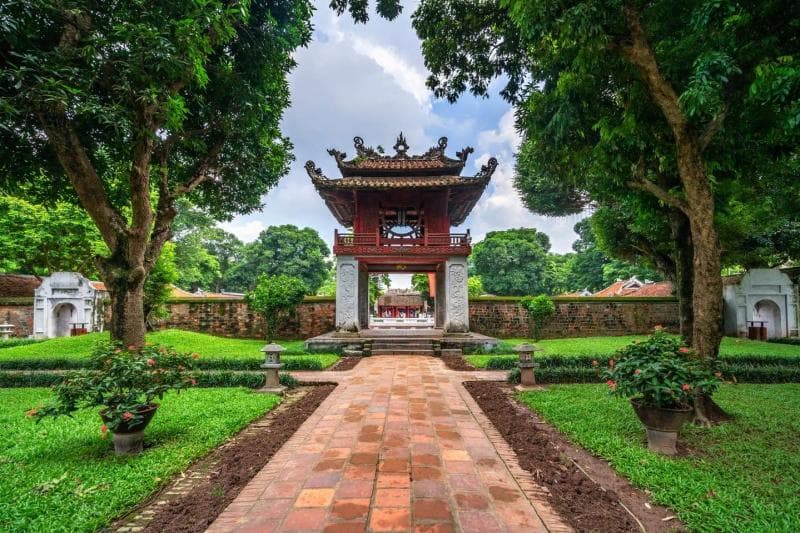
Discover the Temple of Literature in Hanoi, Vietnam – the country's first national university and a symbol of Confucian scholarship and rich cultural heritage.
Overview
The Temple of Literature, or Văn Miếu – Quốc Tử Giám as it is known locally, stands as a profound symbol of Vietnam's enduring dedication to education and scholarly pursuits. Nestled in the heart of Hanoi, this ancient complex is not merely a temple but Vietnam's first national university, a place where the nation's brightest minds were once cultivated. It offers a tranquil escape from the city's vibrant energy, inviting visitors to step back in time and explore a rich tapestry of history and culture. Dedicated to Confucius, sages, and scholars, the site embodies the Vietnamese reverence for learning, making it a cornerstone of the country's intellectual heritage.
History & Cultural Background
The story of the Temple of Literature begins in 1070, when Emperor Lý Thánh Tông ordered its construction to honor Confucius and his teachings. This act underscored the importance of Confucianism in shaping the societal and educational foundations of ancient Vietnam. Just six years later, in 1076, Emperor Lý Nhân Tông further cemented its legacy by establishing the Imperial Academy (Quốc Tử Giám) within the temple grounds. This marked the birth of Vietnam's first national university, initially serving as an exclusive learning center for the king's sons and aristocratic elite. Over centuries, the academy evolved, eventually opening its doors to talented commoners, fostering a meritocratic system for civil service examinations.
A particularly striking feature of its history is the tradition of the stone stelae. Beginning in 1484 under Emperor Lê Thánh Tông, 82 stone tablets, each mounted on the back of a carved stone turtle, were erected to record the names, birthplaces, and achievements of 1,306 doctoral graduates from royal examinations conducted between 1442 and 1779. These stelae are not only historical records but also symbolize wisdom and longevity, having been recognized by UNESCO in 2011 as a World Documentary Heritage. The site itself has undergone several restorations, notably in 1920, 1954, and 2000, ensuring its preservation for future generations.
What Makes It Special
The Temple of Literature stands out with its distinctive architectural layout, meticulously designed with five courtyards, each presenting unique features and a serene ambiance. The first courtyard, accessed through the Great Middle Gate, offers a peaceful transition. The second courtyard proudly features the iconic Khuê Văn Các, or Constellation of Literature Pavilion. Built in 1805, this elegant octagonal structure, with its four circular windows representing the four seasons, has become a cherished symbol of Hanoi and is even featured on the 100,000 Vietnamese đồng banknote.
Beyond its architectural beauty, what truly sets the Temple apart is its profound symbolic significance. It represents a continuous line of intellectual pursuit and reverence for education that has shaped Vietnamese identity for nearly a millennium. The 82 doctoral stelae, each on a stone turtle, serve as enduring testaments to the value placed on academic achievement and intellectual contribution to the nation. This complex is a physical embodiment of the ancient Vietnamese maxim: 'Hiền tài là nguyên khí quốc gia' – 'Talented people are the vital resources of a nation'.
Stories, Fun Facts & Local Details
The Temple of Literature is more than just a historical site; it's a living part of Vietnamese culture. A charming local detail is its appearance on the back of the 100,000 Vietnamese đồng banknote, signifying its national importance. During the lead-up to the Tết (Vietnamese New Year) celebration, calligraphists traditionally gather outside the temple to write wishes in Hán characters, offering these artworks as gifts or home decorations for special occasions.
Another heartfelt tradition involves students, particularly around examination seasons, who flock to the temple to pray for good luck and academic success. This practice highlights the enduring spiritual connection between the historical institution and contemporary educational aspirations. The Well of Heavenly Clarity (Thiên Quang Tỉnh) in the third courtyard, a large square pond, visually reflects the sky, symbolizing the quest for knowledge and the clarity of thought. The careful design, with specific gates like Dai Tai Mon (Gate of Attained Talent) and Thanh Duc Mon (Gate of Accomplished Virtue), further reinforces the deep philosophical underpinnings of the complex.
Visitor Perspective
Visiting the Temple of Literature offers a peaceful and insightful journey into Vietnam's past and its enduring values. To best experience its tranquility and beauty, arriving early in the morning, ideally by 8:00 AM, is highly recommended. This allows for cooler temperatures, softer light for photography, and a quieter atmosphere before the crowds arrive. It's also advisable to dress modestly, ensuring shoulders and knees are covered, as a sign of respect for this sacred and historical site.
A typical visit might last between 1.5 to 2 hours, offering ample time to stroll through the five courtyards, admire the ancient architecture, study the intricate stone stelae, and soak in the serene ambiance. The Temple is easily accessible from Hanoi's Old Quarter by taxi, ride-hailing apps, or public bus, making it a convenient and essential stop for any traveler seeking a deeper understanding of Vietnam's intellectual soul and cultural heritage. It truly provides a refreshing escape from the urban bustle, inviting quiet contemplation and appreciation for a nation built on the pursuit of knowledge.
Coordinates: 105.8356, 21.0286
View on Google Maps💬 How Travelers Describe This Place
Based on community votes
Beautiful
839Photogenic
445Must See
388Unique
289Interesting
141
Traveler Stories
Discover memorable experiences shared by travelers who have visited this place.
No traveler stories yet.
Be the first traveler to share what made this place memorable.
Things to see at Temple Of Literature



Tour
By
Spot
Discover amazing places around the world. Your journey starts here.
Explore
© 2026 TourBySpot. All rights reserved.