Khue Van Pavilion
Hanoi, Vietnam
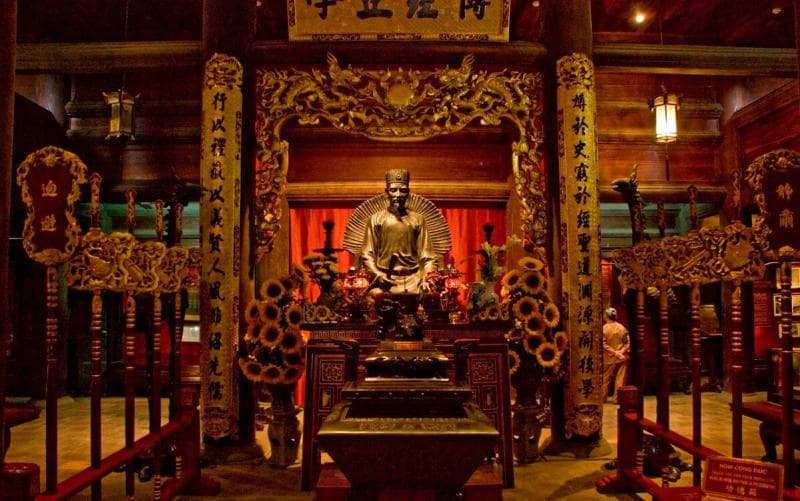
Explore Khue Van Pavilion, a symbol of Vietnamese scholarship within Hanoi's Temple of Literature. Discover its history, unique architecture, and cultural significance in Vietnam's capital.
Overview
Nestled within the serene grounds of the Temple of Literature in Hanoi, Vietnam, stands the elegant Khue Van Pavilion, a profound symbol of the nation's enduring reverence for scholarship and learning. Known in Vietnamese as Khuê Văn Các, this two-story architectural gem translates poetically to 'The Pavilion of the Constellation of Literature'. Its name references the Khue star, an ancient East Asian emblem of scholarly excellence, illuminating knowledge for generations. This iconic structure is not merely a historical relic; it is a living testament to Vietnam's intellectual heritage, frequently appearing on the city's official emblem and proudly displayed on the 100,000 VND banknote, making it instantly recognizable to Vietnamese people and visitors alike.
The pavilion serves as a gateway within the Temple of Literature complex, marking a transition from the outer courtyards to the inner sanctuaries, symbolizing a journey from the physical world to a realm of intellectual and moral cultivation. Its distinctive design and deep cultural roots make it a focal point for understanding the historical values placed on education in Vietnamese society.
History & Cultural Background
The Khue Van Pavilion was constructed in 1805 during the Nguyễn Dynasty under the reign of Emperor Gia Long. While the Temple of Literature itself dates back to 1070 as Vietnam's first national university and a center for Confucian worship and education, the pavilion was a later, yet highly significant, addition to the complex. Its original purpose was to serve as a gathering place for scholars to compose poetry, engage in literary discussions, and share knowledge. This tradition underscores a long-standing Confucian ideal in Vietnam, where education and moral virtue are considered the cornerstones of a harmonious society. The pavilion was built long after the establishment of the Temple of Literature and the Imperial Academy, showcasing a continued dedication to academic pursuits even centuries later.
What Makes It Special
What truly sets the Khue Van Pavilion apart is its distinctive architecture and rich symbolism. The pavilion is a red-lacquered wooden structure with a double-layered tiled roof, supported by sturdy wooden beams, creating an '8-roof' construction. It stands on four whitewashed stone stilts, with its upper floor featuring four circular windows that face the four cardinal directions. These circular windows, often described as resembling the shining Khue stars, are not just aesthetically pleasing; they embody profound philosophical meaning, representing the shining star of intelligence and knowledge. This design also incorporates the ancient concept of yin and yang, with the circular windows symbolizing the heavens (yang) and the square base of the pavilion representing the earth (yin), signifying a harmonious union and a quest for enlightenment from both heaven and earth. Intricate carvings adorn its four square brick columns, further enhancing its gracefulness. Positioned in the second courtyard of the Temple of Literature, near the Thien Quang Well, its reflection in the water adds to its artistic significance.
Stories, Fun Facts & Local Details
Beyond its historical and architectural grandeur, the Khue Van Pavilion holds a special place in the hearts of Vietnamese people. It is widely recognized as the symbol of Hanoi and is prominently featured on the city's emblem and the 100,000 VND banknote. This widespread representation highlights its deep cultural significance and its role as a national icon. The pavilion is a popular spot for significant life events; many students visit it before important exams, seeking inspiration and good fortune from the centuries-old scholarly spirit it embodies. It also serves as a favorite backdrop for graduation photos and wedding portraits, connecting new generations with Vietnam's rich educational legacy. The design of the Khue Van Pavilion is also noted for its versatility, allowing it to be easily adapted for various artistic and marketing applications, further cementing its presence in contemporary Vietnamese culture.
Visitor Perspective
Visiting the Khue Van Pavilion offers a tranquil and insightful experience within the bustling city of Hanoi. It is located at 58 Quoc Tu Giam Street, Dong Da District, Hanoi, and is easily accessible from Hanoi's Old Quarter. As part of the larger Temple of Literature complex, a visit to the pavilion means immersing oneself in a peaceful haven filled with stone paths, lotus ponds, and ancient trees that evoke a sense of timeless calm. The Temple of Literature is open daily, typically from 8:00 AM to 5:00 PM, though summer hours may extend. An entrance fee, usually around 70,000 VND for adults, grants access to the entire complex. To fully appreciate its beauty and capture stunning photographs, especially of the light passing through its round windows, an early morning visit is highly recommended to avoid crowds and enjoy the serene atmosphere.
Coordinates: 105.83556, 21.02861
View on Google Maps💬 How Travelers Describe This Place
Based on community votes
Photogenic
1.0kUnique
869Must See
416Interesting
309Beautiful
33
Traveler Stories
Discover memorable experiences shared by travelers who have visited this place.
No traveler stories yet.
Be the first traveler to share what made this place memorable.

Tour
By
Spot
Discover amazing places around the world. Your journey starts here.
Explore
© 2026 TourBySpot. All rights reserved.