Doctor Stelae
Hanoi, Vietnam
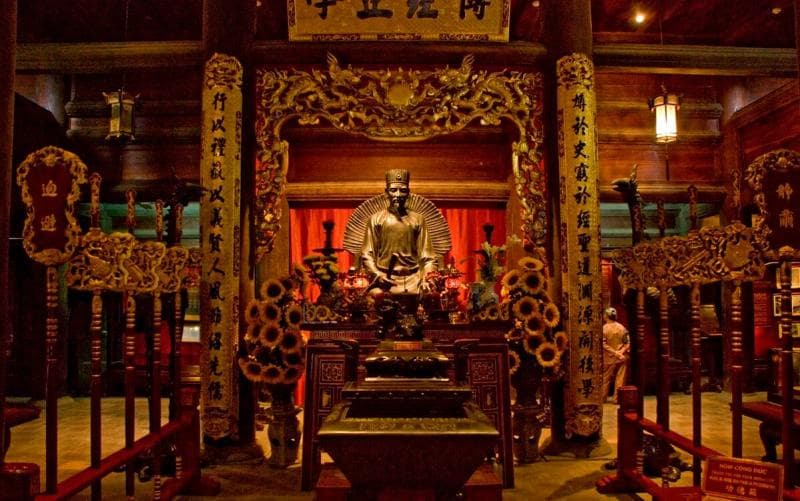
Explore the Doctor Stelae at Hanoi's Temple of Literature, a UNESCO-recognized collection honoring Vietnam's ancient scholars and educational legacy.
Overview
Nestled within the serene grounds of the Temple of Literature (Văn Miếu - Quốc Tử Giám) in Hanoi, Vietnam, lie the remarkable Doctor Stelae. These 82 meticulously carved stone tablets, each resting upon the back of a majestic stone turtle, stand as enduring testaments to Vietnam's profound reverence for education and scholarly achievement. Recognized by UNESCO as a 'Memory of the World' documentary heritage, these stelae offer a unique glimpse into the nation's intellectual past and its ancient system of mandarin examinations.
History & Cultural Background
The Temple of Literature, Vietnam's first national university, was established in 1070 during the Lý Dynasty to honor Confucius, sages, and scholars. The tradition of erecting Doctor Stelae began much later, in 1484, under the decree of King Lê Thánh Tông. His vision was not only to honor the accomplished scholars of his time but also to inspire future generations to pursue academic excellence. For nearly three centuries, until 1779, these stelae meticulously recorded the names, birthplaces, and achievements of individuals who successfully passed the rigorous triennial royal examinations. These examinations were the gateway to becoming a mandarin, a civil servant crucial to the imperial administration, underscoring the vital role of education in the socio-political structure of feudal Vietnam. The stelae, therefore, chronicle a significant period of Vietnamese intellectual history, spanning from 1442 to 1779 and covering 82 royal exams conducted by the Lê and Mạc dynasties.
What Makes It Special
The Doctor Stelae are far more than mere historical markers; they are unique cultural artifacts that embody a nation's core values. Their placement on the backs of stone turtles is highly symbolic, as the turtle is revered in Vietnamese culture as one of the four sacred creatures, representing longevity and wisdom. Each stele is a rich historical document, with ancient Chinese engravings that praise the reigning monarch, explain the purpose of the royal examinations, and detail the officials responsible for organizing them. The inscriptions provide an invaluable resource for understanding the evolution of Vietnamese education, culture, and sculpture. Their collective recognition by UNESCO in 2010/2011 as a 'Memory of the World' highlights their universal historical and cultural significance, distinguishing them as a rare and comprehensive collection of documentary heritage globally.
Stories, Fun Facts & Local Details
Among the 82 stelae preserved today, they collectively commemorate 1,304 doctoral laureates. One of the most famous and often quoted phrases engraved on these stelae, attributed to scholar Thân Nhân Trung on the 1442 exam stele, proclaims, 'The national talent is the important national resource.' This sentiment profoundly captures the essence of Vietnam's long-standing belief in the power of intellect for national prosperity. Traditionally, students would visit the Temple of Literature before their own examinations, touching the heads of the stone turtles for good luck. While this practice has been curtailed to preserve the ancient artifacts, some older turtles still bear the polish of countless hopeful touches. The artistic craftsmanship evident in the stelae, from the intricate dragon motifs to the calligraphy, further cements their status as 'stone history sets' and invaluable pieces of art.
Visitor Perspective
As you explore the Temple of Literature, you will find the Doctor Stelae thoughtfully arranged in the third courtyard, symmetrically lining both sides of the Thiền Quang well. Walking among these ancient monuments offers a profound sense of connection to Vietnam's past and its enduring academic spirit. The calm atmosphere provides an ideal setting for contemplation, allowing visitors to reflect on the dedication and intellect that these scholars represented. While fences are now in place to protect the stelae and their venerable turtle foundations from direct contact, their presence still evokes a powerful sense of history and inspiration. Observing these meticulously preserved records, one can truly appreciate the deep-rooted respect for knowledge that has shaped Vietnamese society for centuries. It's a humbling experience to witness such a tangible link to a rich intellectual heritage, making the Doctor Stelae a must-visit for any curious traveler in Hanoi.
Coordinates: 105.8356, 21.0286
View on Google Maps💬 How Travelers Describe This Place
Based on community votes
Photogenic
446Unique
152Interesting
33Must See
30Beautiful
16
Traveler Stories
Discover memorable experiences shared by travelers who have visited this place.
No traveler stories yet.
Be the first traveler to share what made this place memorable.

Tour
By
Spot
Discover amazing places around the world. Your journey starts here.
Explore
© 2026 TourBySpot. All rights reserved.