Ancient Gardens
Hanoi, Vietnam
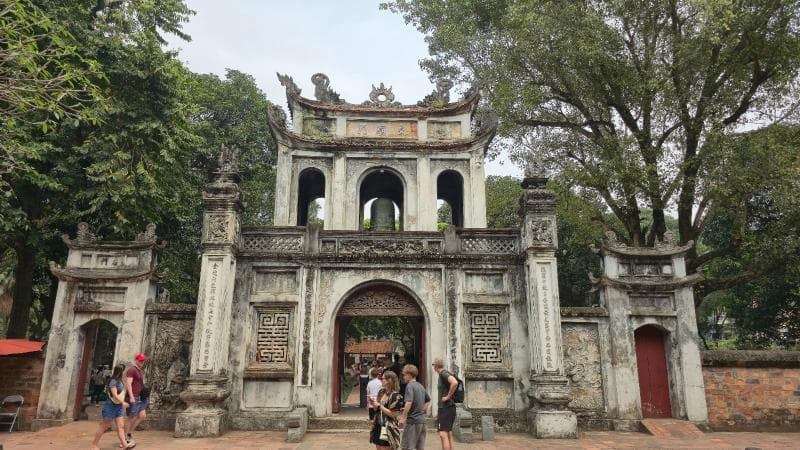
Explore the Ancient Gardens of the Temple of Literature in Hanoi, Vietnam's first university, a serene site honoring Confucian scholarship and history.
Overview
Nestled within the vibrant city of Hanoi, Vietnam, the Temple of Literature (Văn Miếu – Quốc Tử Giám) stands as a profound testament to the nation's enduring respect for education and scholarship. More than just a historical monument, it was Vietnam's first national university and a temple dedicated to Confucius, revered sages, and scholars. While there isn't a single sub-spot explicitly named 'Ancient Gardens', the entire complex is meticulously landscaped with serene, manicured green spaces, ancient trees, and tranquil ponds that form an integral part of its five distinct courtyards. These 'ancient gardens' are not confined to one area but are woven throughout the site, offering a peaceful escape from the bustling city outside its walls and enhancing its deeply spiritual and educational atmosphere.
History & Cultural Background
The Temple of Literature was originally founded in 1070 by Emperor Lý Thánh Tông, dedicated to honoring Confucius and promoting Confucian teachings. Just six years later, in 1076, Emperor Lý Nhân Tông established the Imperial Academy (Quốc Tử Giám) within its grounds, marking the birth of Vietnam's first national university. Initially, this esteemed institution was exclusively for the education of princes, aristocrats, and high-ranking officials' sons, but it later opened its doors to talented commoners. For over 700 years, until 1779, the Imperial Academy served as the pinnacle of Vietnamese education, shaping generations of scholars and mandarins.
A significant highlight of its history came in 1484 when Emperor Lê Thánh Tông ordered the creation of Doctoral Stelae. These 82 stone tablets, each resting on the back of a stone turtle, meticulously record the names and birthplaces of those who successfully passed the rigorous triennial royal examinations between 1442 and 1779. These stelae are not only unique architectural features but also a treasured heritage, recognized by UNESCO as a Memory of the World document, symbolizing the nation's profound respect for intellect and hard work.
What Makes It Special
The Temple of Literature is distinctive for its harmonious blend of traditional Vietnamese architecture and the natural beauty of its courtyards and 'ancient gardens'. The layout, inspired by Confucius' birthplace in Qufu, China, features five distinct courtyards, each with its own character and purpose. The first two courtyards, characterized by their serene, manicured lawns and ancient trees, served as peaceful spaces where scholars could relax and contemplate away from the city's hustle. The third courtyard houses the iconic Khue Van Cac, also known as the Pavilion of Constellation, an elegant structure built in 1805 that has become a symbol of Hanoi itself, representing literary excellence. Adjacent to it is the tranquil Well of Heavenly Clarity (Thiên Quang Tỉnh), a large, clear pond flanked by the revered Doctoral Stelae, reflecting both wisdom and longevity.
Stories, Fun Facts & Local Details
- Symbol of Hanoi: The Khue Van Cac, with its distinctive circular windows symbolizing the sun, moon, and celestial knowledge, is so culturally significant that it is featured on the 100,000 Vietnamese đồng banknote.
- Student Pilgrimage: Even today, the Temple of Literature remains a spiritual hub for academic success. Thousands of students, particularly during exam season, visit the temple to pray for good fortune and academic achievement, touching the stone turtles for luck.
- Ancient Paths: Historically, the central pathway running through the complex was reserved exclusively for the king, while administrative mandarins used the left path and military mandarins the right.
- Tet Calligraphy: Just before the Tết (Vietnamese New Year) celebration, calligraphists gather outside the temple to write wishes in Chữ Hán (Sino-Vietnamese characters), offering these artistic pieces as gifts or home decorations.
- Symbolic Turtles: The stone turtles supporting the doctoral stelae symbolize longevity and wisdom, reflecting the enduring value placed on education and intellectual contribution in Vietnamese culture.
Visitor Perspective
Visiting the Temple of Literature is akin to stepping back in time and experiencing the profound tranquility and intellectual spirit that has permeated this site for centuries. The 'ancient gardens' throughout the five courtyards provide a serene backdrop, making the experience exceptionally peaceful. Travelers can wander through shaded pathways, admire the architectural details, and absorb the quiet atmosphere, which stands in stark contrast to the lively streets of Hanoi. It's a journey through Vietnam's intellectual past, offering a unique opportunity to understand the traditions and values that have shaped the nation.
For the best experience, it's advisable to visit early in the morning or late in the afternoon to avoid larger crowds and enjoy the site's peaceful ambiance. Modest dress is recommended, especially when entering sacred areas, to show respect for this significant cultural institution. Expect to spend about 1.5 to 2 hours exploring the complex, allowing ample time to appreciate its beauty and historical importance fully.
Coordinates: 105.83537512448191, 21.027372221236536
View on Google Maps💬 How Travelers Describe This Place
Based on community votes
Must See
934Beautiful
276Photogenic
152Unique
30Interesting
16
Traveler Stories
Discover memorable experiences shared by travelers who have visited this place.
No traveler stories yet.
Be the first traveler to share what made this place memorable.

Tour
By
Spot
Discover amazing places around the world. Your journey starts here.
Explore
© 2026 TourBySpot. All rights reserved.