Great Middle Gate
Hanoi, Vietnam
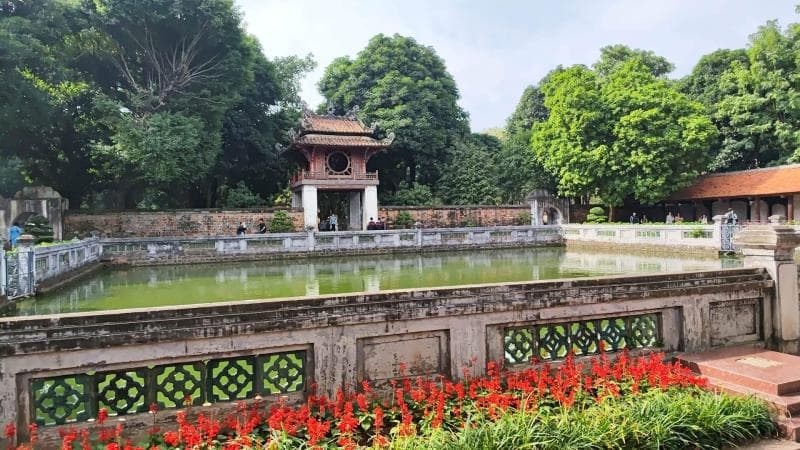
Explore the Great Middle Gate (Đại Trung Môn) at Hanoi's Temple of Literature, Vietnam's first national university. Discover its history, symbolism, and cultural significance as a portal to knowledge.
Overview
Stepping into the Temple of Literature in Hanoi is like journeying back in time to the heart of Vietnam's scholarly past. Among its ancient pathways and serene courtyards, the Great Middle Gate, known locally as Đại Trung Môn, stands as a significant threshold. It is the second gate encountered after the main Văn Miếu Gate, serving as a crucial architectural and symbolic divider within this esteemed complex. This gate introduces visitors to the central, tranquil courtyards where scholars once sought knowledge and inspiration. The Temple of Literature itself, founded in 1070 by Emperor Lý Thánh Tông, was originally dedicated to Confucius before becoming Vietnam's first national university, the Imperial Academy, in 1076. Today, it remains a powerful symbol of the nation's enduring respect for education and intellectual pursuit, drawing visitors and local students alike.
History & Cultural Background
The Great Middle Gate is an integral part of the Temple of Literature, a site deeply rooted in Vietnam's rich educational history. Emperor Lý Thánh Tông established the temple in 1070 to honor Confucius, revered for his teachings on morality and governance. Just six years later, Emperor Lý Nhân Tông founded the Imperial Academy (Quốc Tử Giám) within the complex, transforming it into the country's premier institution for training mandarins and scholars. The Great Middle Gate, like much of the temple's architecture, reflects the aesthetic and structural principles of the Lê dynasty, prevalent from the 15th to the 17th centuries. While the entire complex has undergone various renovations and updates throughout its history, including a significant rebuilding of its portico area in the early 20th century, the core design and cultural significance of structures like the Great Middle Gate have been carefully preserved.
What Makes It Special
The Great Middle Gate is distinguished by its classic tripartite design, featuring three distinct compartments built upon a raised brick foundation. Its roof, characterized by a red, shoe-shaped tiled style, is typical of ancient communal houses and reflects traditional Vietnamese architecture. What truly sets this gate apart, however, are its symbolic flanking gates: the 'Talent' (Đạt Tài or Đại Tài) Gate to one side and the 'Virtue' (Thành Đức) Gate to the other. These smaller gates were traditionally used by commoners and students, signifying that true scholarly achievement requires both talent and moral integrity. The central, larger gate was historically reserved for royalty and important officials, highlighting the hierarchical respect embedded in ancient Vietnamese society. The passage through these gates was not merely physical; it was a symbolic journey, mentally preparing scholars for the rigorous studies and examinations within the Imperial Academy.
Stories, Fun Facts & Local Details
A charming and profound detail often found adorning the Great Middle Gate is the symbol of a carp or fish. This imagery is linked to a captivating local legend where gods annually host a competition for fish; any fish strong enough to leap over the tallest waves and cross a waterfall is transformed into a dragon. This powerful metaphor served as a constant reminder to students of the Imperial Academy: only through strenuous, persistent effort and dedication could they hope to excel in their studies, pass demanding exams, and achieve the esteemed status of a knowledgeable scholar or government official. The very bricks beneath one's feet upon entering this area were sometimes sourced from Bat Trang village, a famous traditional ceramic village in the Red River Delta, adding another layer of local craftsmanship to the site's rich tapestry. The quiet, tree-lined courtyards immediately following the gate were designed as places where scholars could relax and contemplate, away from the city's hustle.
Visitor Perspective
For visitors today, passing through the Great Middle Gate offers a moment of transition and reflection. It marks the entry into the first of the temple's five courtyards, known for its peaceful ambiance, ancient trees, and meticulously manicured lawns. This serene environment provides a stark contrast to the bustling streets of Hanoi just outside, allowing for an immediate sense of calm and historical immersion. As you walk through, you can almost hear the echoes of ancient scholars discussing texts and preparing for their rigorous examinations. The Great Middle Gate is not just an architectural element; it's a gateway to understanding Vietnam's profound cultural veneration of learning and the journey of thousands of students who once walked these very paths seeking knowledge and enlightenment. It's a place where history feels alive, inviting contemplation on the values that have shaped Vietnamese society for centuries.
Coordinates: 105.8356, 21.0286
View on Google Maps💬 How Travelers Describe This Place
Based on community votes
Must See
981Photogenic
921Beautiful
617Unique
357Interesting
147
Traveler Stories
Discover memorable experiences shared by travelers who have visited this place.
No traveler stories yet.
Be the first traveler to share what made this place memorable.

Tour
By
Spot
Discover amazing places around the world. Your journey starts here.
Explore
© 2026 TourBySpot. All rights reserved.