Dai Thanh Sanctuary
Hanoi, Vietnam
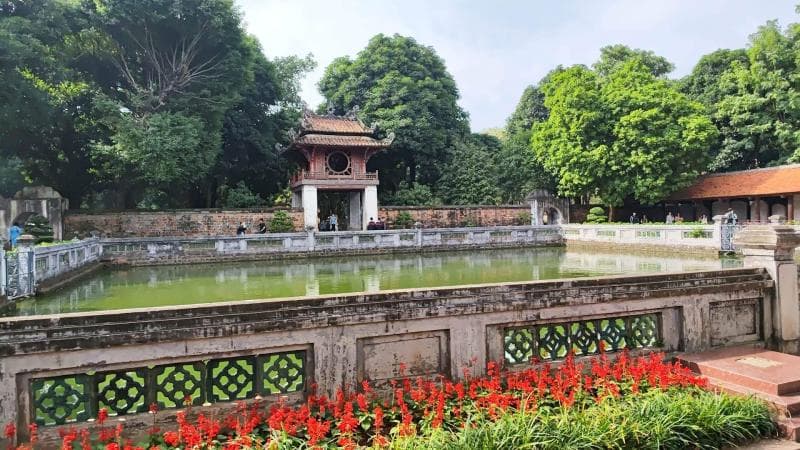
Explore Dai Thanh Sanctuary, the spiritual heart of Hanoi's Temple of Literature, dedicated to Confucius and scholarship in Vietnam.
Overview
Nestled within the venerable Temple of Literature in Hanoi, Vietnam, the Dai Thanh Sanctuary, also known as the House of Great Ceremony or the Sanctuary of Great Success, stands as the spiritual core of this historic complex. It represents the profound reverence for scholarship and wisdom deeply embedded in Vietnamese culture. This sacred space is primarily dedicated to the worship of Confucius, the revered Chinese philosopher, alongside his four most brilliant disciples and other significant Confucian sages.
Situated beyond the elaborately adorned Dai Thanh Mon (Gate to Great Synthesis or Success), the sanctuary forms a central part of the Temple of Literature's fourth courtyard. It serves as the principal worship area, inviting visitors and, notably, students, to offer prayers for enlightenment and academic achievement.
History & Cultural Background
The Temple of Literature (Văn Miếu - Quốc Tử Giám) itself boasts a rich history, dating back to 1070 when it was established by Emperor Lý Thánh Tông to honor Confucius. This initiative marked the beginning of a profound cultural shift, emphasizing Confucian ideals across Đại Việt.
Just six years later, in 1076, under the reign of Emperor Lý Nhân Tông, the Imperial Academy (Quốc Tử Giám) was founded within these very grounds, solidifying its status as Vietnam's first national university. For centuries, Confucianism profoundly influenced Vietnam's educational system and governmental structure, with the Temple of Literature serving as its intellectual heart.
The Dai Thanh Sanctuary, in particular, embodies this enduring legacy of respect for Confucian values and scholarly pursuit. Despite the passage of time and various historical challenges, the architectural integrity and cultural significance of the sanctuary, like the wider Temple complex, have been meticulously preserved through numerous restorations.
What Makes It Special
The Dai Thanh Sanctuary holds a unique position as the main devotional area within the Temple of Literature, making it the spiritual heart of the entire site. It is here that Confucius, along with his principal disciples—Mencius, Yan Hui, Zengshen, and Zisi/Zongzi—are venerated, creating a powerful atmosphere of respect and contemplation.
A notable feature is the central compartment dedicated specifically to Confucius, whose statue is oriented to face South. This orientation adheres to the ancient concept of 'Thánh nhân Nam diện nhi trị,' meaning 'a saint turns his face to the South to rule the nation,' a symbolic gesture of wisdom and governance. The interior is adorned with statues, altars, bronze ritual items, and intricate decorations, all contributing to its solemn ambiance.
Connected by a smaller passage, the sanctuary runs parallel to the Great House of Ceremony, reflecting a carefully planned architectural layout. The presence of traditional elements like antique lanterns and vibrant red columns further enhances its unique aesthetic, offering a glimpse into historical Vietnamese design and spiritual practice.
Stories, Fun Facts & Local Details
The Dai Thanh Sanctuary is not just a relic of the past; it remains a living testament to Vietnam's enduring respect for education. A particularly heartwarming sight is the steady stream of students who visit, especially during examination periods, to offer incense and earnest prayers for good luck and academic success.
It's also a popular spot for graduating students, often seen in their traditional 'áo dài' attire, capturing their graduation photos here. This tradition highlights how the sanctuary continues to symbolize academic achievement and is deeply woven into the fabric of contemporary Vietnamese life. The meticulously crafted bronze incense pots, sometimes embellished with intricate dragon motifs, are not merely decorative but serve as significant traditional artifacts.
Visiting the sanctuary offers a contemplative journey, as the entire layout of the Temple of Literature is designed to guide one away from the hustle of the outside world toward a deeper sense of knowledge and inner reflection. The symbolic orientation of Confucius's statue, facing south to 'rule the nation,' provides a fascinating insight into ancient philosophical beliefs and their lasting influence on Vietnamese culture.
Visitor Perspective
For any traveler, stepping into the Dai Thanh Sanctuary offers an immediate sense of tranquility and spiritual calm, providing a welcome escape from the vibrant energy of Hanoi's streets. It's a place where one can pause and reflect deeply on the enduring Confucian values that shaped Vietnamese society and marvel at the nation's profound commitment to education.
The atmosphere encourages quiet contemplation, allowing visitors to connect with centuries of scholarly heritage. As a sign of respect for its sacred nature, visitors are kindly requested to dress modestly and appropriately when entering the sanctuary and other holy areas within the complex. This hallowed space beautifully demonstrates how history, culture, and the aspirations for future generations, particularly in academic excellence, converge in one timeless location.
Coordinates: 105.8356, 21.0286
View on Google Maps💬 How Travelers Describe This Place
Based on community votes
Beautiful
685Interesting
472Must See
446Unique
399Photogenic
92
Traveler Stories
Discover memorable experiences shared by travelers who have visited this place.
No traveler stories yet.
Be the first traveler to share what made this place memorable.

Tour
By
Spot
Discover amazing places around the world. Your journey starts here.
Explore
© 2026 TourBySpot. All rights reserved.