Saint-Michael And Saint-Gudula Cathedral
Brussels, Belgium
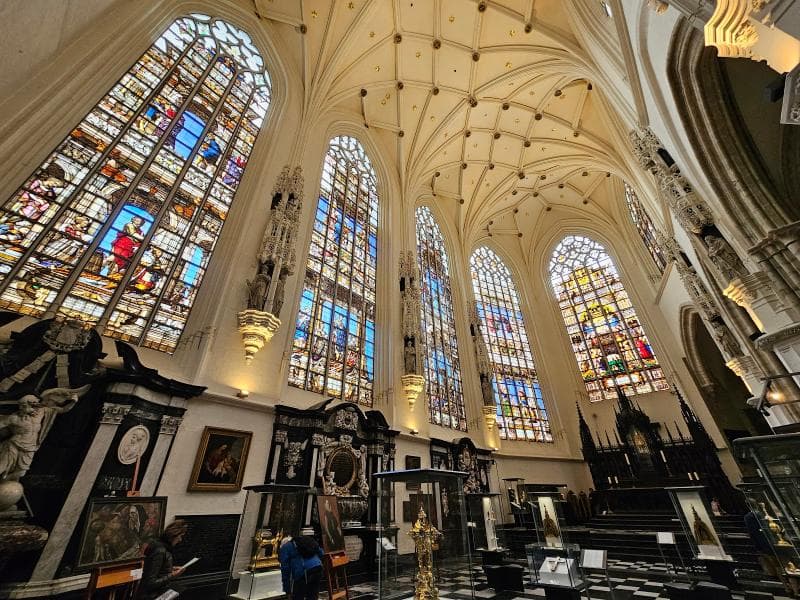
Explore the majestic Saint-Michael and Saint-Gudula Cathedral in Brussels, Belgium. Discover its rich history, stunning Brabantine Gothic architecture, and cultural significance.
Overview
Nestled in the heart of Brussels, Belgium, the Saint-Michael and Saint-Gudula Cathedral stands as a magnificent testament to centuries of history, faith, and architectural evolution. Dedicated to Saint Michael and Saint Gudula, the cherished patron saints of the city, this Roman Catholic cathedral is not merely a place of worship but a vibrant historical landmark. It serves as the co-cathedral of the Metropolitan Archdiocese of Mechelen–Brussels, holding significant spiritual and national importance. Renowned as a prime example of Brabantine Gothic architecture, its construction journey began with modest Romanesque foundations in the 11th century and culminated in its current grand Gothic form by the early 16th century. The cathedral's imposing facade, featuring two towering spires, makes it an unmissable part of the Brussels skyline and a central point for understanding the city's rich past.
History & Cultural Background
The origins of the Saint-Michael and Saint-Gudula Cathedral are deeply rooted in Brussels' early history. The site originally hosted a small chapel dedicated to Saint Michael as early as the 9th century, strategically located on Treurenberg Hill, a significant crossroads for ancient trade routes. This humble chapel was later replaced by a more substantial Romanesque church in the 11th century. A pivotal moment in its history occurred in 1047 when the relics of Saint Gudula, a local saint from Brabant, were transferred to the church, leading to its dual dedication and solidifying its role in the city's spiritual life. The ambitious project to transform the Romanesque structure into the Gothic masterpiece we see today commenced in 1226 under the patronage of Henri I, Duke of Brabant. Over nearly three centuries, skilled artisans and architects meticulously crafted the cathedral, finally completing its main construction around 1519. Despite its ancient lineage, the church was only formally elevated to the status of a cathedral in 1962. The cathedral's interior bears the marks of history, having been subjected to damage during periods of religious turmoil, including sackings by French revolutionaries and iconoclast Protestants, which led to a 'soberer' decorative style. It was officially designated a historic monument in 1936, safeguarding its future for generations to come.
What Makes It Special
The Saint-Michael and Saint-Gudula Cathedral is celebrated for its distinctive Brabantine Gothic style, a regional interpretation of Gothic architecture characterized by its impressive scale and intricate detailing. Its most striking features include the twin, 64-meter-high towers, which, though originally planned to be even taller, command attention and contribute significantly to Brussels' architectural identity. The use of light-colored Gobertange stone in its construction gives the cathedral a luminous quality, especially under the Belgian sun. Inside, visitors are captivated by the grandeur of its stained glass windows, some dating back to the 16th century. Noteworthy among these is 'The Last Judgment,' a magnificent piece designed by Bernard van Orley and created by Jan Haeck. The interior also houses a richly carved Baroque pulpit from 1699 and 17th-century oak confessionals, showcasing exquisite craftsmanship. The modern, imposing organ, boasting over 4,000 pipes, fills the vast space with majestic sounds. Beneath the choir lies an ancient archaeological crypt, offering a glimpse into the 11th-century Romanesque foundations of the building. Beyond its architectural and artistic merits, the cathedral holds a unique position as the national church of Belgium, often hosting significant royal events such as weddings, state funerals, and the annual 'Te Deum' ceremony on Belgian National Day.
Stories, Fun Facts & Local Details
For locals, the cathedral is affectionately known simply as 'St. Gudula' or 'Sainte Gudule,' highlighting the strong connection the city feels to its female patron saint. The ground it stands on, Treurenberg Hill, literally translates to 'Mount of Sorrows,' a name that hints at the area's historical significance and perhaps its past as a prison or a place of contemplation. The cathedral's bells hold their own fascinating stories: the south tower houses a substantial 49-bell carillon installed in 1966. Of these, seven can ring, with several named after members of the Belgian Royal Family, including Fabiola, Philippe, Astrid, and Laurent. The north tower, in contrast, contains a single, massive bourdon bell named Salvator, cast in 1638. Nature also finds a home here; since 2004, a pair of peregrine falcons has chosen the cathedral towers as their nesting site, with their incubation often viewable via live cameras, offering a unique blend of ancient history and contemporary wildlife. Another intriguing detail can be found on the floor of the south transept: a meridian line, etched in 1836 by Adolphe Quetelet, the director of Brussels' first observatory, which once defined the city's prime meridian. The cathedral also carefully preserves a collection of religious artifacts, known as its 'treasure,' within the magnificent Chapel of the Blessed Sacrament of the Miracle, including ancient reliquaries and artworks.
Visitor Perspective
Visiting the Saint-Michael and Saint-Gudula Cathedral offers a profound journey through Belgian history and spirituality. The cathedral is open to the public most days, with varied hours, providing ample opportunity for exploration. While general entry to the main nave is free, some specific areas, such as the Treasury, the Crypt, and guided tours of the towers, may require a small fee. For those seeking deeper insights, volunteer guides offer free tours, and specialized paid tours are also available. The cathedral prides itself on being accessible, offering a specific entrance for visitors with reduced mobility. Its central location makes it easily reachable, just a short and pleasant walk from Brussels' iconic Grand Place, or conveniently accessible via public transport like the metro or train. When exploring this sacred space, visitors are kindly requested to maintain a respectful demeanor, observe quiet, and dress appropriately, honoring its ongoing role as an active place of worship. The cathedral provides a serene and enriching experience, inviting contemplation amidst its timeless beauty and historical grandeur.
Coordinates: 4.36028, 50.84778
View on Google Maps💬 How Travelers Describe This Place
Based on community votes
Interesting
712Must See
513Beautiful
482Photogenic
288Unique
62
Traveler Stories
Discover memorable experiences shared by travelers who have visited this place.
No traveler stories yet.
Be the first traveler to share what made this place memorable.
Things to see at Saint-Michael And Saint-Gudula Cathedral



Tour
By
Spot
Discover amazing places around the world. Your journey starts here.
Explore
© 2026 TourBySpot. All rights reserved.