Crypt
Brussels, Belgium
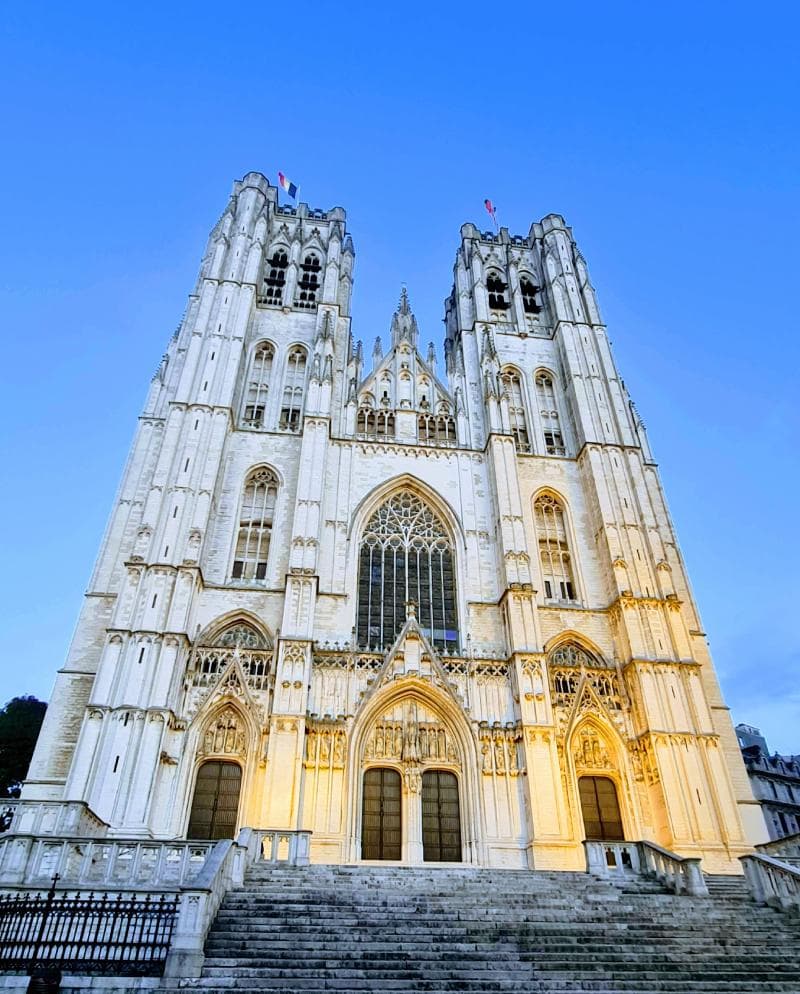
Explore the ancient Romanesque Crypt beneath Saint-Michael and Saint-Gudula Cathedral in Brussels, Belgium. Discover 11th-century foundations and rich history.
Overview
Deep beneath the awe-inspiring Gothic architecture of the Saint-Michael and Saint-Gudula Cathedral in Brussels, Belgium, lies a hidden gem of immense historical significance: the Crypt. This ancient subterranean space, an 11th-century Romanesque crypt, forms the very foundation upon which the current grand cathedral stands. It offers a rare journey back in time, revealing the architectural and spiritual beginnings of one of Belgium's most important religious sites. The Crypt is not merely a collection of old stones; it is a meticulously preserved archaeological site that provides a tangible link to Brussels' early medieval past. It is considered by many to be the oldest visitable place in central Brussels, predating much of what visitors see above ground. Access to this profound historical layer often requires a special appointment or is part of select guided tours, ensuring a more intimate and reflective experience for those who venture below the bustling city streets and the soaring cathedral nave.
History & Cultural Background
The history of the site where the Saint-Michael and Saint-Gudula Cathedral now stands stretches back much further than its Gothic facade suggests. In the 9th century, a humble oratory dedicated to Saint Michael occupied this very spot on Treurenberg Hill. This early religious presence set the stage for the significant developments that followed. By 1047, Count Lambert II of Leuven replaced this small chapel with a more substantial Romanesque church. This marked a pivotal moment, as Count Lambert II orchestrated the transfer of the relics of Saint Gudula to this new church, elevating its status and granting it the dual dedication to Saint Michael and Saint Gudula that it holds to this day.
For centuries, the Romanesque church served as a vital spiritual center. However, as Brussels grew in prominence, a grander structure was envisioned. Construction of the present Gothic cathedral began in the 13th century, built directly over and around its Romanesque predecessor. The Crypt, therefore, represents the sacred ground of that earlier Romanesque church. Its historical importance was dramatically reaffirmed during extensive restoration work between 1983 and 2000. These archaeological excavations brought to light the remarkably well-preserved Romanesque foundations and, crucially, rediscovered the Crypt itself. Among its ancient stones, visitors can find the sarcophagus of Duke John II of Brabant, who passed away in 1312, connecting the space directly to the region's noble past.
What Makes It Special
What truly sets the Crypt apart is its exceptional ability to transport visitors to another era. Unlike many ancient structures where only fragments remain, here, the foundations of the 11th-century Romanesque church are preserved with remarkable integrity. Walking through the Crypt allows for a direct engagement with the architectural roots of the cathedral and the city itself. It provides an unparalleled glimpse into the earliest phases of religious architecture in Brussels, showcasing a stark contrast to the towering Gothic grandeur above.
The Crypt's walls themselves are storytellers, adorned with ancient drawings, names, and inscriptions in Latin, offering silent testament to the countless individuals who passed through this sacred space over centuries. The very act of descending into this underground realm, moving from the light-filled Gothic edifice to the solemn, ancient crypt, is a powerful experience. It highlights the layers of history that underpin the modern city and the continuous evolution of faith and architecture. The late 20th-century rediscovery of these Romanesque remains during restoration work was a significant archaeological event, solidifying the Crypt's status as a crucial historical landmark.
Stories, Fun Facts & Local Details
One of the most compelling narratives embedded within the Crypt's history is its initial purpose: to house the revered relics of Saint Gudula. This act, in 1047, was instrumental in shaping the identity of the church and, by extension, Brussels itself, as Saint Gudula became one of the city's patron saints. The Crypt thus became a focal point of veneration and pilgrimage long before the Gothic cathedral dominated the skyline.
Another fascinating detail lies in how these ancient structures are integrated into the modern-day cathedral experience. During recent restorations, some sections of the Romanesque foundations and the Crypt were made partly visible through transparent floor panels within the main cathedral, offering tantalizing glimpses to those above. This thoughtful integration allows visitors to appreciate the deep historical layering even without a full descent into the Crypt. The continuity of worship and architectural evolution on this site, from a 9th-century oratory to an 11th-century Romanesque church, and finally to a 13th-century Gothic cathedral that only gained cathedral status in 1962, underscores a rich and unbroken spiritual lineage.
Visitor Perspective
For the curious traveler, a visit to the Crypt is a profoundly moving experience that offers a different dimension to understanding the Saint-Michael and Saint-Gudula Cathedral. While the main cathedral is freely accessible, exploring the Crypt usually requires a pre-arranged appointment, often facilitated through organizations like Church and Tourism Brussels. This ensures a more controlled and respectful visitation, allowing for a deeper appreciation of the fragile archaeological remains.
Typically, there is a modest entrance fee, around 4 EUR, to access this special area. While not always a standalone visit, the Crypt is frequently included as part of comprehensive guided tours that delve into the cathedral's treasury and other Romanesque remains. Descending into the Crypt provides a quiet, contemplative contrast to the more public spaces of the cathedral. It offers a unique archaeological perspective, allowing visitors to touch, in a sense, the earliest layers of Brussels' religious and architectural heritage, leaving a lasting impression of time's passage and enduring faith.
Coordinates: 4.3601, 50.8478
View on Google Maps💬 How Travelers Describe This Place
Based on community votes
Unique
982Photogenic
876Must See
458Interesting
235Beautiful
197
Traveler Stories
Discover memorable experiences shared by travelers who have visited this place.
No traveler stories yet.
Be the first traveler to share what made this place memorable.

Tour
By
Spot
Discover amazing places around the world. Your journey starts here.
Explore
© 2026 TourBySpot. All rights reserved.