Towers Exterior
Brussels, Belgium
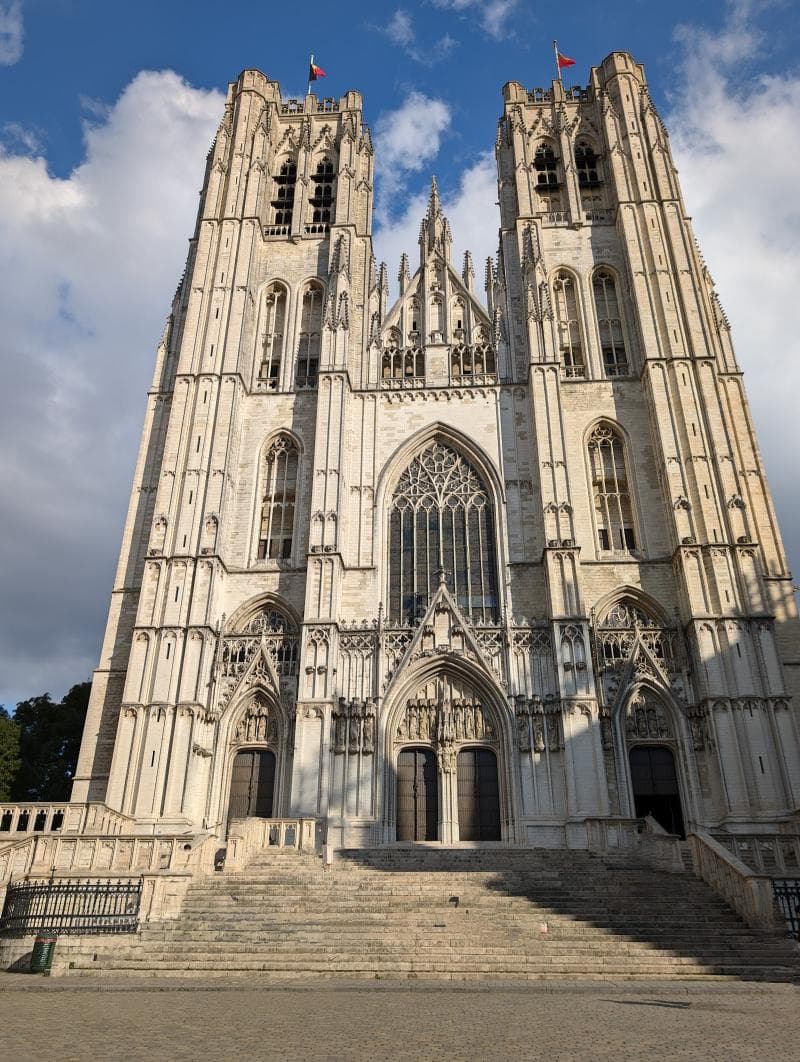
Explore the majestic Towers Exterior of Saint-Michael and Saint-Gudula Cathedral in Brussels, Belgium. Discover its Brabantine Gothic architecture and rich history.
Overview
The Cathedral of Saint-Michael and Saint-Gudula, often simply referred to as Brussels Cathedral, stands majestically in the heart of Brussels, Belgium. This imposing structure is one of the most significant landmarks in the city, renowned for its architectural grandeur and historical depth. Officially designated as the co-cathedral of the Archdiocese of Mechelen-Brussels, it also holds the esteemed title of Belgium's national church. Its most striking exterior features are undoubtedly the twin towers, a hallmark of its French Gothic facade, which rise proudly over the cityscape.
Constructed primarily in the Brabantine Gothic style, the cathedral embodies centuries of design evolution, showcasing a blend of strength and intricate detail. Visitors approaching this magnificent edifice are immediately struck by its scale and the detailed craftsmanship evident in every stone.
History & Cultural Background
The origins of the Saint-Michael and Saint-Gudula Cathedral can be traced back to a modest 9th-century chapel dedicated to Saint Michael, nestled on Treurenberg Hill. This humble beginning set the stage for centuries of transformation. In the 11th century, a Romanesque church replaced the chapel, laying the foundation for what would become the grand cathedral we see today. A pivotal moment occurred in 1047 when the relics of Saint Gudula were brought to this site, leading to the church's dual dedication and its current name.
The construction of the present Gothic masterpiece commenced in 1226, evolving over an extensive period of approximately 300 years, with its main structure largely completed by 1519. The distinctive western facade, adorned with its twin towers, was a significant addition crafted between 1470 and 1485 by the esteemed architect Jan van Ruysbroeck. The cathedral's historical importance was further solidified when it was designated a historic monument in 1936 and later elevated to cathedral status in 1962.
Beyond its architectural significance, the cathedral plays a crucial role in Belgian national life. It frequently serves as the venue for momentous national events, including royal weddings, state funerals, and the annual Te Deum celebration on Belgian National Day, underscoring its cultural and ceremonial importance.
What Makes It Special
The Towers Exterior of the Saint-Michael and Saint-Gudula Cathedral stands as a testament to Brabantine Gothic architecture, characterized by its imposing scale and intricate details. The twin towers, reaching heights of 64 to 69 meters, are a dominant feature of the Brussels skyline, offering a striking silhouette.
Unlike many Gothic cathedrals that feature a prominent rose window, this cathedral's facade is distinguished by a large ogival window, a characteristic element of the Brabantine Gothic style. The exterior also showcases robust double-span flying buttresses, crowned with elegant pinnacles and grotesque gargoyles, contributing to its formidable and ornate appearance. These architectural elements not only provide structural support but also add to the cathedral's visual drama and historical narrative. The building material itself, stone from the Gobertange quarry, highlights local craftsmanship and resources.
Stories, Fun Facts & Local Details
The architect responsible for the cathedral's iconic towers, Jan van Ruysbroeck, also left his mark on another Brussels landmark: he designed the tower of the Brussels Town Hall, linking these two significant city structures through shared architectural genius.
The cathedral's location on Treurenberg Hill is steeped in history. The name 'Treurenberg' itself once referred to a city gate and even a prison, lending a somewhat somber historical layer to the cathedral's surroundings. A fascinating detail for those interested in cartography and history is the meridian line marked on the floor of the south transept. In 1836, Adolphe Quetelet, the director of Brussels' first observatory, precisely marked this line. An oculus (eye-like opening) in the window above the south gate allows a beam of sunlight to illuminate this meridian at midday, a subtle nod to early astronomical calculations.
The towers are not merely decorative; they house bells and offer a unique vantage point. Since 2004, peregrine falcons have nested on one of the towers, a surprising touch of nature amidst the urban Gothic grandeur, with their activities sometimes viewable via live cameras.
Visitor Perspective
Approaching the Saint-Michael and Saint-Gudula Cathedral, visitors are greeted by a grand staircase leading up to its imposing facade, creating an immediate sense of awe. The sheer size of the exterior, measuring approximately 110 meters in length and 50 meters in width, is impressive, inviting contemplation of the centuries of labor and artistry involved in its creation.
While the main body of the cathedral is freely accessible, the opportunity to ascend the towers offers a unique and rewarding experience. From March to October, guided tours to the towers are available, providing not only an in-depth look at the construction techniques and historical evolution of the cathedral but also unparalleled panoramic views across Brussels. This ascent, which typically lasts around 2.5 to 3 hours, requires a good physical condition, making the reward of the cityscape vista all the more satisfying. Observing the intricate details of the flying buttresses, pinnacles, and gargoyles up close provides a deeper appreciation for the meticulous craftsmanship of the Gothic era.
The cathedral's central location near Brussels Central Station makes it easily accessible for curious travelers, inviting them to step back in time and immerse themselves in a significant piece of Belgian heritage.
Coordinates: 4.36028, 50.84778
View on Google Maps💬 How Travelers Describe This Place
Based on community votes
Must See
797Interesting
695Unique
396Beautiful
286Photogenic
22
Traveler Stories
Discover memorable experiences shared by travelers who have visited this place.
No traveler stories yet.
Be the first traveler to share what made this place memorable.

Tour
By
Spot
Discover amazing places around the world. Your journey starts here.
Explore
© 2026 TourBySpot. All rights reserved.