Organ Loft
Brussels, Belgium
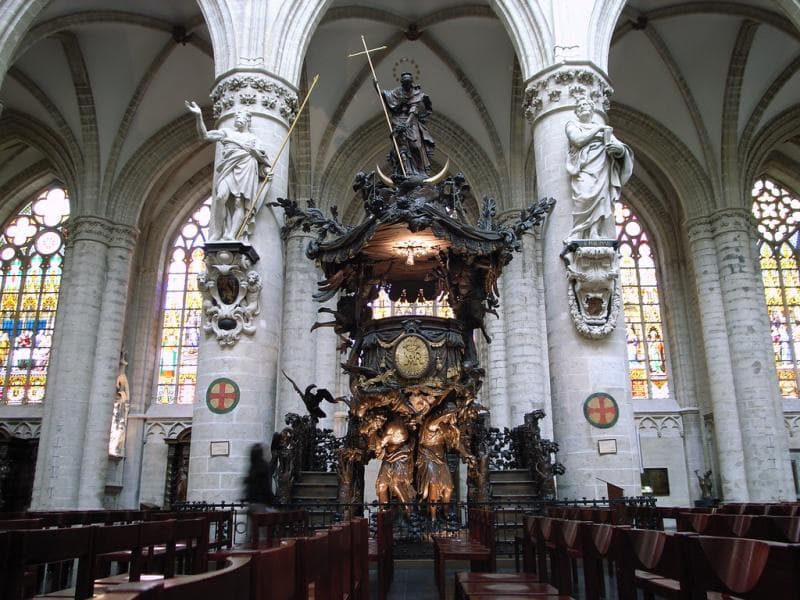
Discover the 'swallow's nest' grand organ at Saint-Michael and Saint-Gudula Cathedral in Brussels, Belgium. Explore its history, unique design, and powerful sound.
Overview
Perched high on the north wall within the majestic Saint-Michael and Saint-Gudula Cathedral in Brussels, Belgium, you'll discover more than just an 'organ loft'; you'll find a monumental 'swallow's nest' grand organ. This extraordinary instrument is not merely a fixture but a central element of the cathedral's rich spiritual and cultural life. Inaugurated in October 2000, this impressive organ was meticulously crafted by the renowned German organ builder Gerhard Grenzing and his team from El Papiol, Barcelona, in collaboration with English architect Simon Platt. It stands as a testament to both traditional artistry and modern engineering, boasting an astounding 4,300 pipes, 63 stops, four manual keyboards, and a pedal-board. Its substantial weight of approximately 30 tonnes is supported by an ingenious metallic corset hidden behind wooden panels, a structural feat making its unique suspended placement possible.
Beyond its sheer scale, the Grenzing organ is celebrated for its exceptional acoustic placement. Suspended at the triforium level, its sound benefits immensely from the cathedral's architecture, reflecting off the grand vault and the opposite wall to fill the vast space with a rich, immersive auditory experience. This design ensures that the music reaches every corner of the sacred building with remarkable clarity and power.
History & Cultural Background
The history of the organ within Saint-Michael and Saint-Gudula Cathedral is intertwined with the larger narrative of this venerable edifice. The cathedral itself, a stunning example of Brabantine Gothic architecture, traces its origins back to an 11th-century Romanesque church, with its current Gothic form largely completed by the 16th century.
The installation of the current grand organ in the year 2000 marked a significant milestone, coinciding with the new millennium and Brussels' designation as a European Cultural Capital. The cathedral authorities sought 'an artwork for the third millennium, an organ with about 60 stops and four manuals', a vision splendidly realized by Grenzing's creation. This 'swallow's nest' style of organ placement is steeped in historical tradition, a practice dating back centuries in grand European churches and cathedrals, with notable examples found in Metz, Chartres, and Cologne.
Prior to the grand organ's installation, a choir organ, built by Brussels organ builder Patrick Collon in 1977, served the cathedral's musical needs, particularly for Baroque repertoire. This earlier instrument, inspired by the sound of Gottfried Silbermann's organs from Johann Sebastian Bach's era, still plays an important role in certain services and concerts, offering a distinct and historically resonant voice within the cathedral.
What Makes It Special
- Unique 'Swallow's Nest' Design: Unlike organs situated in traditional lofts, the Grenzing organ is suspended dramatically on the north wall of the nave. This daring placement is a visual marvel and a nod to ancient organ-building traditions, allowing the instrument to hang freely and project its sound unobstructed into the expansive cathedral interior.
- Exceptional Acoustics: The chosen location is acoustically ideal. The sound waves produced by its thousands of pipes are expertly distributed and amplified by the cathedral's high vaults and sturdy walls, creating a majestic and enveloping sound experience that truly resonates with the grandeur of the space.
- Masterful Craftsmanship and Versatility: Built by Gerhard Grenzing, the organ embodies a philosophy of traditional craftsmanship. It features mechanical key action, much like historical instruments, ensuring a responsive and nuanced playing experience for organists. While its tonal palette leans towards the Baroque, its extensive range of stops, including a deep, rich 25-rank plenum and distinctive Spanish horizontal trumpets called 'chamadas,' allows it to masterfully perform neo-classical and even contemporary compositions.
- Dual Organ Presence: The cathedral houses not one, but two significant organs. In addition to the grand Grenzing organ, the 1977 Collon choir organ, specifically designed for Baroque music, adds another layer of musical depth, ensuring a wide range of musical expression for both worship and concert performances.
Stories, Fun Facts & Local Details
The Grenzing organ became operational following extensive restoration work on the cathedral itself, symbolically ushering in a new era of both spiritual and cultural vibrancy. This state-of-the-art instrument, weighing as much as several elephants, is held aloft by a specialized metallic framework, a testament to ingenious modern engineering discreetly integrated into a historical setting.
For curious visitors, the cathedral regularly hosts organ concerts, particularly during its annual 'Ars in Cathedrali' and 'Bach ad Meridiem' festivals. These events offer a splendid opportunity to hear the grand organ come alive under the hands of acclaimed organists from around the world. Imagine sitting in the nave, gazing up at the magnificent instrument, while its powerful notes echo through the Gothic arches. During some concerts, a giant screen is even set up, allowing the audience a rare close-up view of the organist's intricate footwork and hand movements at the console, high above the floor.
Visitor Perspective
Visiting Saint-Michael and Saint-Gudula Cathedral offers a profound encounter with history, art, and spirituality, and the grand organ is undoubtedly a highlight. Whether you happen upon a practice session during a quiet weekday visit or intentionally attend one of the many scheduled concerts, the experience of hearing this majestic instrument is unforgettable. The sheer volume and complexity of its sound, filling every corner of the vast Gothic interior, creates an atmosphere of awe and reverence. It's a chance to connect with centuries of musical tradition and appreciate the incredible craftsmanship that brings such an immense instrument to life, serving as the powerful voice of the cathedral in the heart of Brussels.
Coordinates: 4.36028, 50.84778
View on Google Maps💬 How Travelers Describe This Place
Based on community votes
Interesting
989Unique
613Photogenic
581Must See
514Beautiful
207
Traveler Stories
Discover memorable experiences shared by travelers who have visited this place.
No traveler stories yet.
Be the first traveler to share what made this place memorable.

Tour
By
Spot
Discover amazing places around the world. Your journey starts here.
Explore
© 2026 TourBySpot. All rights reserved.