Archaeological Site
Brussels, Belgium
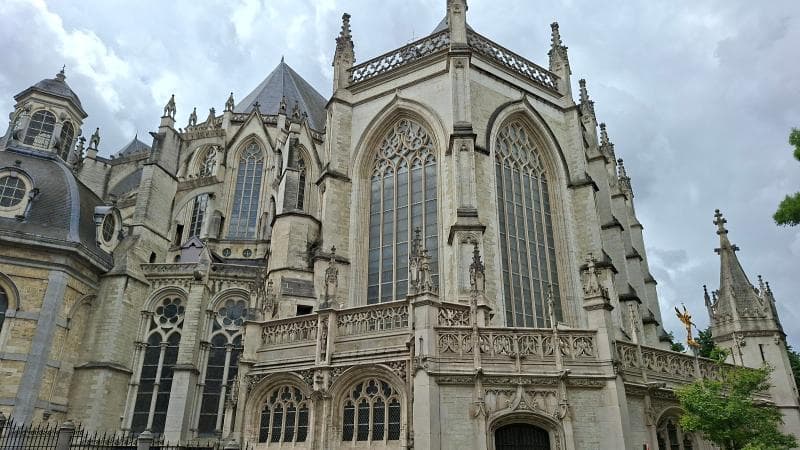
Explore the Archaeological Site beneath Saint-Michael and Saint-Gudula Cathedral in Brussels, Belgium, revealing 9th-century foundations and Romanesque crypts.
Overview
Beneath the magnificent Gothic spires of the Saint-Michael and Saint-Gudula Cathedral in Brussels, Belgium, lies a profound secret: an archaeological site that unveils the very origins of this sacred place and the city itself. This subterranean realm offers a unique journey back in time, allowing visitors to explore the foundational layers of history hidden beneath the present-day cathedral. Discovered during extensive restoration work, this site preserves the remnants of earlier religious structures that predate the grand Gothic edifice we see today. It serves as a tangible link to Brussels' deep historical roots, offering a quiet, contemplative space far removed from the bustling city above.
Stepping into this archaeological zone means descending into the earth where the echoes of centuries past are almost palpable. It reveals a story of architectural evolution, from early chapels to the robust Romanesque church that once stood proudly on this very spot. For those curious about the layers of history that underpin major European cities, this site provides an invaluable insight into the continuous human endeavor to build, worship, and evolve in one significant location.
History & Cultural Background
The story of the Saint-Michael and Saint-Gudula Cathedral's archaeological site begins long before the Gothic marvel took shape. Its origins trace back to a modest chapel dedicated to Saint Michael, believed to have been established on the Treurenberg hill as early as the 9th century. In the 11th century, this humble chapel was replaced by a more substantial Romanesque church. A pivotal moment in its history occurred in 1047 when Lambert II, Count of Leuven, and his wife, Oda of Verdun, founded a college of twelve canons at this church and orchestrated the transfer of the relics of Saint Gudula, the patron saint of Brussels, from the lower town to this collegiate church. This act officially bestowed the double name upon the church: the Collegiate Church of Saint Michael and Saint Gudula.
The current Brabantine Gothic cathedral began its construction around 1226, built directly over these earlier Romanesque foundations. The immense scale of the Gothic project meant that construction continued for approximately 300 years, finally reaching completion in the early 16th century. For centuries, the older structures lay buried, their existence largely forgotten until a major restoration campaign between 1983 and 2000 brought them back to light. It was specifically in 1991 that an ancient Romanesque crypt was discovered, revealing the remnants of the 11th-century church structures and several medieval tombs. These excavations provided concrete evidence of the continuous religious significance of this site over more than a millennium, showcasing the evolution of religious architecture and the enduring spiritual heritage of Brussels.
What Makes It Special
The Archaeological Site within the Saint-Michael and Saint-Gudula Cathedral is truly special because it offers an unparalleled opportunity to stand amidst the very foundations of Brussels' early history. It’s not merely a display of excavated artifacts; it’s an immersive experience within the surviving lower walls of an 11th-century Romanesque collegiate church.
Visitors can explore the foundations of this earlier Romanesque building, which includes parts of its nave and the crypt. Among the remarkable discoveries is the sarcophagus of Duke John II of Brabant, who died in 1312, providing a direct link to the medieval nobility of the region. The ability to walk through a subterranean walkway, directly observing these curved masonry structures and ancient burial sites beneath the modern cathedral floor, is a rare privilege. It is considered by many to be the oldest visitable place in central Brussels, making it a cornerstone for understanding the city’s foundational past. The contrast between the towering Gothic architecture above and these humble, ancient stones below creates a powerful sense of continuity and historical depth, revealing the enduring layers of belief and construction on this sacred hill.
Stories, Fun Facts & Local Details
The Archaeological Site holds a captivating narrative of perseverance and transformation. Imagine the dedication required to build such a grand Gothic cathedral directly atop an existing, revered Romanesque church. The decision to construct the new over the old speaks volumes about the continuous evolution of faith and architectural ambition in Brussels. A fascinating detail is how the relics of Saint Gudula, brought to the site in 1047 by Lambert II, Count of Leuven, became instrumental in establishing the church’s importance, attracting pilgrims and solidifying its role as a key religious center.
A ‘fun fact’ for many visitors is the relatively recent discovery of these ancient layers. Until the late 20th century, these historical treasures lay hidden. The extensive restoration campaign from 1983 to 2000, and specifically the 1991 discovery, allowed modern historians and the public to ‘read’ the architectural diary of the site firsthand. This site visually demonstrates the concept of a palimpsest, where successive layers of history are written over one another, yet each layer contributes to the richness of the whole. It’s a compelling reminder that the ground beneath our feet often holds stories far older and more complex than what stands visibly above.
Visitor Perspective
For the curious traveler, visiting the Archaeological Site beneath the Saint-Michael and Saint-Gudula Cathedral is an experience of quiet discovery. Access to this underground area typically involves a small entrance fee, separate from the main cathedral, ensuring a dedicated and often less crowded exploration. Upon descent, you enter a hushed environment where the ambient sounds of the cathedral above fade away, replaced by a sense of historical gravitas. The walkway is designed to guide you through the excavated remains, often featuring clear viewing panels or strategic lighting to highlight the ancient foundations of the Romanesque church.
You will walk past the rough-hewn stones that formed the walls of the 11th-century structure, observing the stark difference in building techniques and materials compared to the soaring Gothic nave. The crypt and the sarcophagus of Duke John II of Brabant offer a poignant connection to specific historical figures. It’s a reflective journey, providing a deeper understanding of the cathedral’s longevity and its pivotal role in the religious and civic life of Brussels across millennia. This subterranean visit complements the grandeur of the main cathedral, offering a complete picture of its layered past.
Coordinates: 4.36028, 50.84778
View on Google Maps💬 How Travelers Describe This Place
Based on community votes
Beautiful
953Unique
658Photogenic
585Interesting
69Must See
22
Traveler Stories
Discover memorable experiences shared by travelers who have visited this place.
No traveler stories yet.
Be the first traveler to share what made this place memorable.

Tour
By
Spot
Discover amazing places around the world. Your journey starts here.
Explore
© 2026 TourBySpot. All rights reserved.