Fort Santiago
Manila, Philippines
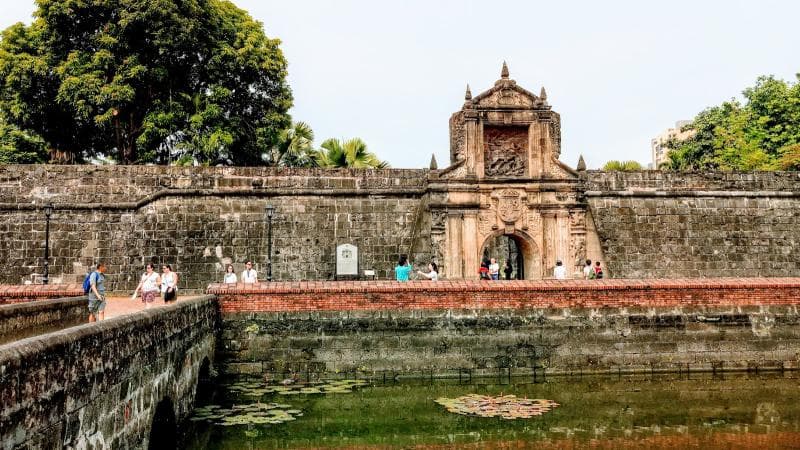
Explore Fort Santiago, a historic citadel in Intramuros, Manila, Philippines. Discover its Spanish colonial past, Jose Rizal's legacy, and WWII stories.
Overview
Fort Santiago, or Fuerte de Santiago, stands as a formidable historical sentinel within the walled city of Intramuros in Manila, Philippines. This ancient citadel, originally built in 1571 by Spanish conquistador Miguel López de Legazpi, occupies a highly strategic location at the mouth of the Pasig River where it meets Manila Bay. It was initially constructed on the site of a pre-colonial settlement of logs and earth belonging to Rajah Soliman. Today, Fort Santiago is not merely a ruin but a powerful symbol of the Philippines' enduring spirit, offering a profound glimpse into centuries of colonial rule, struggle for freedom, and national identity.
History & Cultural Background
The foundations of Fort Santiago were laid shortly after the Spanish established Manila as the capital of the newly colonized islands in 1571. The initial wooden palisade was destroyed during a Chinese attack led by Limahong in 1574. A more robust stone fort was subsequently built between 1589 and 1592, later repaired and extended after the damaging 1645 earthquake.
Throughout its long history, Fort Santiago served as the primary defense fortress for the Spanish government. It was also utilized as a military headquarters and prison by successive occupation forces including the British (briefly from 1762-1764), Americans (from 1898), and the Japanese during World War II. Its dungeons witnessed unimaginable suffering, particularly during the Japanese occupation when hundreds were imprisoned and tortured by the Kempeitai, the Japanese secret police. The fort suffered extensive damage during the Battle of Manila in 1945, but its historical significance was recognized when it was declared a Shrine of Freedom in 1950, leading to extensive restoration efforts.
What Makes It Special
What sets Fort Santiago apart is its profound historical resonance and its architectural testament to centuries of change. Its design, influenced by Italian-Spanish fortification styles, incorporates thick stone walls, bastions, and a unique triangular shape. The fort's strategic placement at the river's mouth not only provided defense but also served as a crucial hub for the lucrative Manila Galleon trade route that connected Asia with the Americas and Europe for over 300 years.
Walking its grounds, one can feel the layers of history beneath their feet. The remnants of ancient walls, watchtowers, and the main gate with its iconic relief of Saint James the Great, or 'Santiago Matamoros', tell stories of empire, trade, and conflict. The fort's resilience, surviving earthquakes, sieges, and wars, makes it a powerful symbol of endurance and a significant National Cultural Treasure.
Stories, Fun Facts & Local Details
Perhaps the most poignant story associated with Fort Santiago is that of Dr. Jose Rizal, the Philippines' national hero. He was imprisoned here in Cell No. 1 before his execution in Bagumbayan (now Rizal Park) on December 30, 1896. Visitors can retrace his final steps, marked by bronze footsteps embedded in the ground from his cell to the execution site, a truly moving experience.
The fort is named after Saint James the Great (Santiago in Spanish), the patron saint of Spain, whose image is carved on the main gate. Inside the fort lies the Rizal Shrine, a museum dedicated to Rizal's life and works, housing memorabilia that illuminate his intellect and patriotism. The infamous dungeons, once dark prison cells, serve as a stark reminder of the fort's grim past, especially during World War II when countless lives were lost within its confines.
Visitor Perspective
A visit to Fort Santiago is an immersive journey through time. As you pass through the grand entrance, the bustling sounds of modern Manila fade, replaced by a sense of calm and historical weight. The sprawling grounds invite quiet contemplation, allowing visitors to connect with significant moments in Philippine history. You can explore the various courtyards, walk along the impressive walls offering views of the Pasig River, and reflect at the Rizal Shrine. The atmosphere is one of solemn remembrance mixed with national pride, providing a tangible link to the sacrifices made for Filipino freedom. It is a place that educates, inspires, and offers a profound understanding of the nation's past.
Coordinates: 120.9683, 14.5903
View on Google Maps💬 How Travelers Describe This Place
Based on community votes
Beautiful
997Interesting
785Photogenic
546Must See
231Unique
103
Traveler Stories
Discover memorable experiences shared by travelers who have visited this place.
No traveler stories yet.
Be the first traveler to share what made this place memorable.
Things to see at Fort Santiago



Tour
By
Spot
Discover amazing places around the world. Your journey starts here.
Explore
© 2026 TourBySpot. All rights reserved.