Plaza De Armas
Manila, Philippines
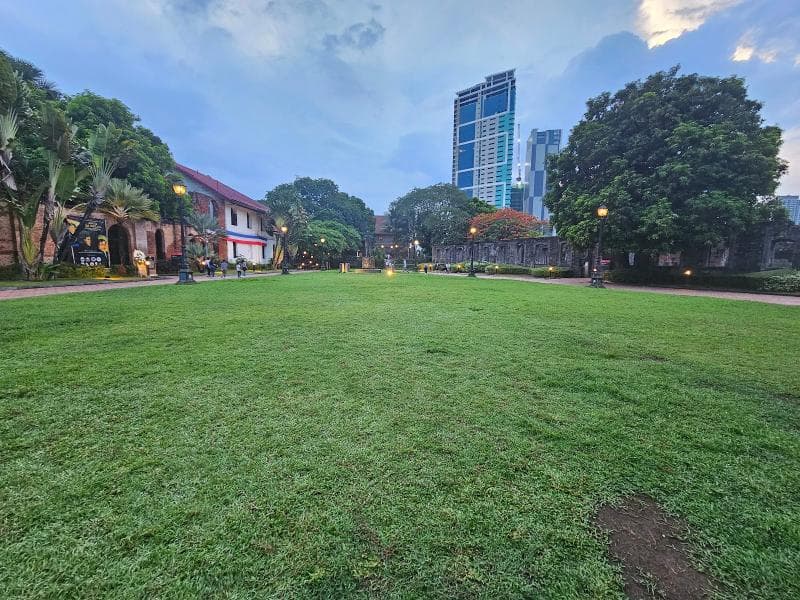
Explore Plaza de Armas in Fort Santiago, Manila, Philippines – a historic square where Jose Rizal walked his final path. Discover its rich past.
Overview
Nestled within the historic walls of Fort Santiago in Manila, Philippines, the Plaza de Armas stands as a verdant, open square, a tranquil heart amidst a site steeped in centuries of history. This plaza, whose name literally translates to 'Arms Plaza', is a characteristic feature found in many fortresses built by the Spanish in their former colonies across the globe. Originally, it served as a vital strategic space, a central ground for military drills and for the storage of arms and ammunition when not in active use. Today, it offers a serene escape, its well-maintained green lawns and surrounding trees providing a peaceful atmosphere for visitors exploring the fort.
Surrounded by the remnants of former barracks and royal warehouses, the Plaza de Armas invites contemplation and offers a tangible connection to Manila's intricate past. It functions not just as a historical landmark but also as a quiet park where one can pause, reflect, and appreciate the layers of history that have unfolded on this very ground. It is an essential component of the Fort Santiago experience, guiding visitors through the site's rich historical and cultural tapestry.
History & Cultural Background
The history of Plaza de Armas is inextricably linked with that of Fort Santiago, a citadel whose foundations were laid by Spanish conquistador Miguel López de Legazpi in 1571. This formidable fort was strategically built upon the ruins of a pre-colonial settlement once ruled by Rajah Sulayman, a local chieftain. Historical evidence even suggests that the Plaza de Armas itself might occupy the very site where Rajah Sulayman's wooden palisade once stood.
Throughout various periods of occupation, Fort Santiago, and by extension its central plaza, witnessed pivotal moments in Philippine history. It served as the military headquarters and a significant prison for Spanish, British, American, and Japanese forces. Most notably, it was within the military barracks adjacent to this plaza that Dr. Jose Rizal, the revered Philippine national hero, was held captive for 56 days before his execution in 1896. The plaza bore witness to the fort's destruction during the intense Battle of Manila in 1945, a grim testament to the scars of World War II. Recognizing its profound significance, Fort Santiago was later declared a National Monument and a Shrine of Freedom in 1951, and further designated as a National Cultural Treasure in 2014, solidifying its place in the nation's heritage.
What Makes It Special
The Plaza de Armas holds a unique charm and significance, making it far more than just an open space. Its central position within Fort Santiago allows it to serve as a historical nexus, from which the fort's various narratives converge and emanate. The plaza is gracefully framed by hauntingly beautiful ruins, including the remains of the Almacenes Reales, or Royal Warehouses, which once stored goods unloaded from ships along the Pasig River. These decaying structures whisper tales of trade, logistics, and daily life within the walled city of Intramuros.
Perhaps its most poignant feature is its proximity to the Rizal Shrine, a museum and memorial dedicated to the life and works of Dr. Jose Rizal. This spiritual connection to the national hero imbues the plaza with a profound emotional weight. The tranquil green space itself, seemingly untouched by the passage of time, offers a stark and moving contrast to the tumultuous history it has endured. It represents a powerful blend of military might, colonial legacy, and the unyielding spirit of national heroism, inviting visitors to delve deep into the Filipino identity forged through struggle and resilience.
Stories, Fun Facts & Local Details
Beyond its grand historical narrative, the Plaza de Armas is a treasury of smaller, yet equally compelling, stories and details. Imagine Spanish soldiers, clad in their uniforms, meticulously marching across this very ground during daily drills, or the area bustling with activity as arms were prepared for defense. It is believed that the plaza stands on the exact spot where Rajah Sulayman's wooden fort once protected pre-colonial Manila, making it a site of continuous historical occupation and transformation.
One of the most moving features connected to the plaza is the series of bronze footsteps embedded in the ground, leading from Jose Rizal's prison cell to the site of his execution. These markers offer a somber and powerful visualization of the national hero's final walk, a path of sacrifice that inspired a nation. On the eastern side of the plaza, an 18th-century building has been creatively repurposed into the Dulaang Raha Sulayman, or Rajah Sulayman Theater, which today hosts seasonal performances by the Philippine Educational Theater Association (PETA), breathing contemporary life into historical walls. A large white cross on the northern side stands as a solemn memorial to the victims of World War II, many of whom were buried in a mass grave beneath the plaza. These details weave a rich tapestry of human experience, from strategic military importance to individual heroism and collective remembrance.
Visitor Perspective
For the curious traveler, visiting the Plaza de Armas within Fort Santiago is an immersive journey through time. It offers a unique opportunity to walk on ground that has witnessed centuries of pivotal events in Philippine history. The open, grassy expanse provides a welcome respite, perfect for a moment of quiet reflection or simply to soak in the historical ambiance. While traversing the plaza, one can almost hear the echoes of past military parades or envision the quiet determination of national heroes.
The plaza serves as a central hub from which to explore other significant sites within Fort Santiago, such as the Rizal Shrine, the old barracks, and various other ruins and defensive structures. It is a place that stirs the imagination, encouraging visitors to connect with the narratives of courage, sacrifice, and the enduring quest for freedom that define the Filipino spirit. The Intramuros Administration diligently preserves and maintains this iconic site, ensuring that its historical and cultural significance continues to educate and inspire generations of visitors.
Coordinates: 120.97, 14.59444
View on Google Maps💬 How Travelers Describe This Place
Based on community votes
Interesting
719Unique
655Must See
583Photogenic
396Beautiful
300
Traveler Stories
Discover memorable experiences shared by travelers who have visited this place.
No traveler stories yet.
Be the first traveler to share what made this place memorable.

Tour
By
Spot
Discover amazing places around the world. Your journey starts here.
Explore
© 2026 TourBySpot. All rights reserved.