Spanish Gates
Manila, Philippines
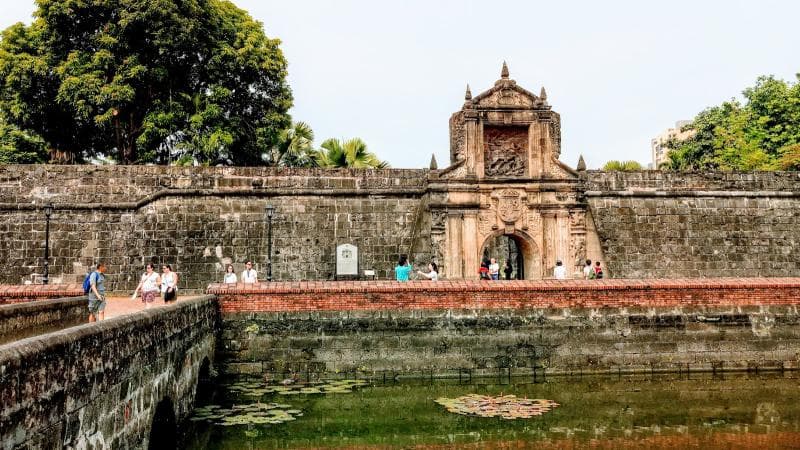
Discover the historic Spanish Gates, the main entrance to Fort Santiago in Manila, Philippines. Explore its rich history, cultural significance, and architectural resilience.
Overview
The Spanish Gates, famously known as the main gate of Fort Santiago, stands as an enduring symbol of Manila's rich and often turbulent past. Located within the historic walled city of Intramuros in Manila, Philippines, this iconic entrance ushers visitors into a realm steeped in centuries of history. More than just an entryway, the Spanish Gates represent the resilience and cultural tapestry of a nation, inviting exploration into one of the most significant historical sites in the Philippines.
History & Cultural Background
Fort Santiago itself was established in 1571 by Spanish conquistador Miguel López de Legazpi, on the site of a pre-Hispanic settlement led by Rajah Sulayman. The initial wooden fort was soon replaced by a more formidable stone structure between 1589 and 1592. The ornate main gate, which we now refer to as the Spanish Gates, was originally erected in 1714.
This fortress served as the premier defense stronghold for the Spanish government during its 333-year rule, strategically positioned at the mouth of the Pasig River where it meets Manila Bay. It was a crucial nexus for the global spice trade, particularly the lucrative Manila Galleon trade with Acapulco, Mexico.
Throughout its existence, Fort Santiago and its gates have witnessed pivotal moments in Philippine history, serving as headquarters for Spanish, British, American, and Japanese forces during various occupations. It also functioned as a prison, where countless individuals, including the national hero Dr. José Rizal, were incarcerated. Rizal spent his final days within its walls before his execution in 1896, making the fort a sacred site for Filipino patriots.
The main gate suffered severe damage during the Battle of Manila in 1945 amidst World War II, a testament to the brutal conflict that engulfed the city. However, its historical importance led to its declaration as a National Monument and a Shrine of Freedom in 1951, with meticulous restoration efforts initiated thereafter, including the rebuilding of the gate by the Intramuros Administration in 1982. In 2014, the National Museum of the Philippines further recognized its significance by declaring it a National Cultural Treasure.
What Makes It Special
The Spanish Gates are distinguished by their Baroque-style stone arch, a testament to Spanish colonial architecture. Adorning the facade is a relief carving of Santiago Matamoros—Saint James, the 'Moor-slayer'—the patron saint of Spain, alongside the coat of arms of the Kingdom of Castile and Leon. This intricate detailing was not merely decorative; it symbolized Spanish sovereignty and power.
Its strategic location, guarding the entrance to Manila from the Pasig River, underscored its critical role in controlling trade and defending the city. Passing through these gates is to traverse centuries, connecting directly to the narratives of explorers, colonizers, and revolutionaries who shaped the Philippines. The gates, though rebuilt, retain the spirit of their original design, standing as a powerful reminder of endurance and rebirth.
Stories, Fun Facts & Local Details
- The Patron Saint's Image: The depiction of Santiago Matamoros on the gate is a striking historical detail, representing Spain's religious and military legacy. This iconic image was a common feature in Spanish-occupied territories.
- Architectural Resilience: The fact that the gates were meticulously rebuilt after being almost completely destroyed during WWII speaks volumes about their perceived value and the nation's commitment to preserving its heritage. The restoration ensures that new generations can experience its historical grandeur.
- Rizal's Last Walk: While not directly on the gate, the path leading from Rizal's cell within the fort to his execution site passes through the fort's grounds, making the gates a poignant starting point for understanding his final journey. Bronze footsteps embedded in the ground trace this path.
- Fortress Island: The fort's defensive design historically included a moat that connected the Pasig River and Manila Bay, essentially turning Fort Santiago into a formidable fortress island, with the gates serving as the primary land access point over a bridge.
Visitor Perspective
Approaching the Spanish Gates is an experience that immediately transports you to another era. After crossing the moat bridge, the imposing stone arch, with its detailed carvings, creates a profound sense of entering a sacred historical space. It is the literal and metaphorical gateway to understanding the complexities of Filipino history, from colonial rule to the fight for independence.
Once inside, the gates lead to the heart of Fort Santiago, providing access to other significant attractions like the Rizal Shrine Museum and the Plaza de Armas. Visitors walk on cobblestones that have been trod by generations, from Spanish governors to Filipino heroes. The aura of the place is one of quiet contemplation, where every stone seems to whisper tales of the past, offering a meaningful connection to the heritage of Manila.
Coordinates: 120.970102, 14.594428
View on Google Maps💬 How Travelers Describe This Place
Based on community votes
Unique
997Photogenic
785Must See
523Beautiful
231Interesting
103
Traveler Stories
Discover memorable experiences shared by travelers who have visited this place.
No traveler stories yet.
Be the first traveler to share what made this place memorable.

Tour
By
Spot
Discover amazing places around the world. Your journey starts here.
Explore
© 2026 TourBySpot. All rights reserved.