Rajah Sulayman Theater
Manila, Philippines
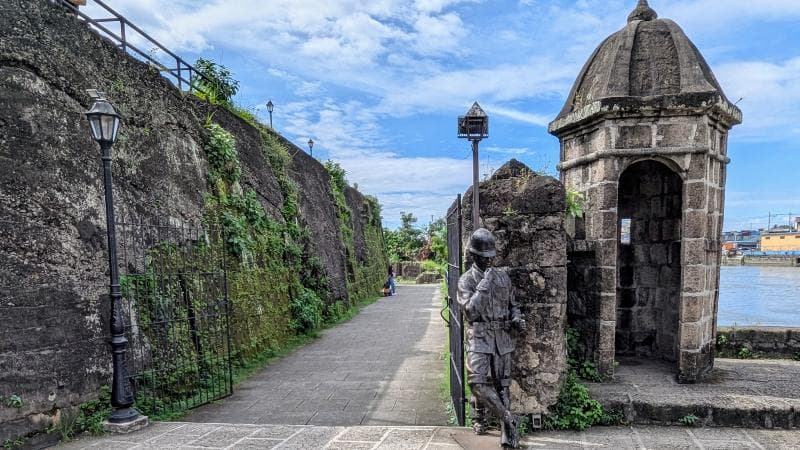
Discover the historic Rajah Sulayman Theater, an open-air stage within Fort Santiago, Manila, Philippines. Explore its rich history, cultural significance, and connection to Filipino performing arts.
Overview
Nestled within the historic walls of Fort Santiago in Manila, Philippines, the Rajah Sulayman Theater stands as a compelling open-air performance venue, weaving together centuries of history, architectural ingenuity, and vibrant performing arts. This unique theater is named in honor of Rajah Sulayman, the valiant pre-colonial ruler of Maynila who courageously resisted Spanish invasion. Transformed from the evocative ruins of 18th-century Spanish military barracks, which were largely destroyed during the Battle of Manila in 1945, the theater was meticulously redesigned by National Artist for Architecture Leandro Locsin. Since its renovation in 1967, the Rajah Sulayman Theater has served as the original and spiritual home of the Philippine Educational Theater Association (PETA), becoming a crucible for Filipino theatrical expression and cultural storytelling.
History & Cultural Background
The site upon which the Rajah Sulayman Theater now stands holds layers of profound historical significance. Originally, Fort Santiago itself was established by the Spanish conquistador Miguel López de Legazpi in 1571, built over the palisaded wooden fortress of Rajah Sulayman's kingdom of Maynila. Over centuries, Fort Santiago functioned as a crucial military installation, a seat of colonial power, and a grim prison under Spanish, American, and Japanese occupations. The specific area now occupied by the theater was once the infantry quarters for Spanish and later American soldiers. Poignantly, a cellblock within these very barracks held the Philippines' national hero, Dr. Jose Rizal, during his final nights before his execution in 1896.
After the devastation of World War II, the ruins presented an opportunity for new life. It was National Artist Cecile Guidote-Alvarez, founder of the Philippine Educational Theater Association (PETA) in 1967, who envisioned this ruined structure as the ideal stage for a national theater. With the architectural brilliance of National Artist Leandro Locsin, the remains of the barracks were sensitively converted into the open-air theater it is today. PETA staged its inaugural production, 'Bayaning Huwad' (Straw Patriot), here in December 1967, marking the beginning of the theater's storied career as a platform for socially relevant and culturally enriching plays in Filipino. PETA remained the resident company until 2005, and notably returned for its 50th-anniversary celebration in 2017 with 'Ang Buhay ni Galileo', symbolizing a homecoming.
What Makes It Special
What truly sets the Rajah Sulayman Theater apart is its profound intertwining of heritage and art. It is not merely a theater; it is a living monument where the echoes of history provide a dramatic backdrop to contemporary performances. The open-air design, with its aged stone walls and the sky as its ceiling, creates an atmosphere unlike any conventional indoor venue, offering an immersive experience that connects audiences directly to the historical fabric of the Philippines. Its very existence is a testament to the Filipino spirit of resilience and creativity, transforming destruction into a space of artistic rebirth. The theater's dedication to Rajah Sulayman ensures that the memory of pre-colonial Filipino resistance is honored, while its association with PETA and National Artists underscores its significance in the development of Philippine theater and culture.
Stories, Fun Facts & Local Details
The transformation of these war-torn barracks into a stage is a remarkable tale of artistic vision. Cecile Guidote-Alvarez recounted that upon seeing the ruined structure, she immediately recognized its potential, believing it was 'perfect for a theater, something close to the people'. This intuitive vision led to the creation of a theater that has since championed Filipino narratives and fostered a unique theatrical identity. The naming of the theater after Rajah Sulayman is not just a historical nod but a powerful statement, celebrating a Muslim warrior-king who fiercely defended his land against foreign colonizers, a figure whose courage resonates deeply within the national consciousness. For PETA, staging plays in the Rajah Sulayman Theater was about bringing theater closer to the people and addressing social issues, often utilizing the very historical context of the venue to amplify their messages. The 2017 return of PETA to the theater for their 50th anniversary was a highly anticipated event, allowing a new generation to witness performances in the historic space where the company first blossomed.
Visitor Perspective
For any traveler exploring Fort Santiago, a visit to the Rajah Sulayman Theater is an essential stop. It offers more than just a glimpse into a historical site; it provides a portal into the soul of Filipino artistry and resilience. Walking through the fort, visitors can feel the weight of its past, from its role as a defensive bastion to a place of imprisonment for national heroes. The theater itself, with its exposed stone and natural setting, invites contemplation on the stories it could tell, both from its past as barracks and its present as a stage. It stands as a powerful reminder of how art can flourish amidst the remnants of conflict, transforming spaces of pain into platforms for expression and hope. While performances may not be ongoing during every visit, the sheer presence of this open-air theater, imbued with so much history and cultural significance, is a profoundly moving experience for anyone interested in the rich tapestry of Manila's past and its enduring artistic spirit. Managed by the Intramuros Administration, this theater, like the entire fort, is meticulously preserved for future generations.
Coordinates: 120.96944, 14.595
View on Google Maps💬 How Travelers Describe This Place
Based on community votes
Must See
719Unique
705Photogenic
449Beautiful
396Interesting
256
Traveler Stories
Discover memorable experiences shared by travelers who have visited this place.
No traveler stories yet.
Be the first traveler to share what made this place memorable.

Tour
By
Spot
Discover amazing places around the world. Your journey starts here.
Explore
© 2026 TourBySpot. All rights reserved.