Baluartillo De San Francisco Javier
Manila, Philippines
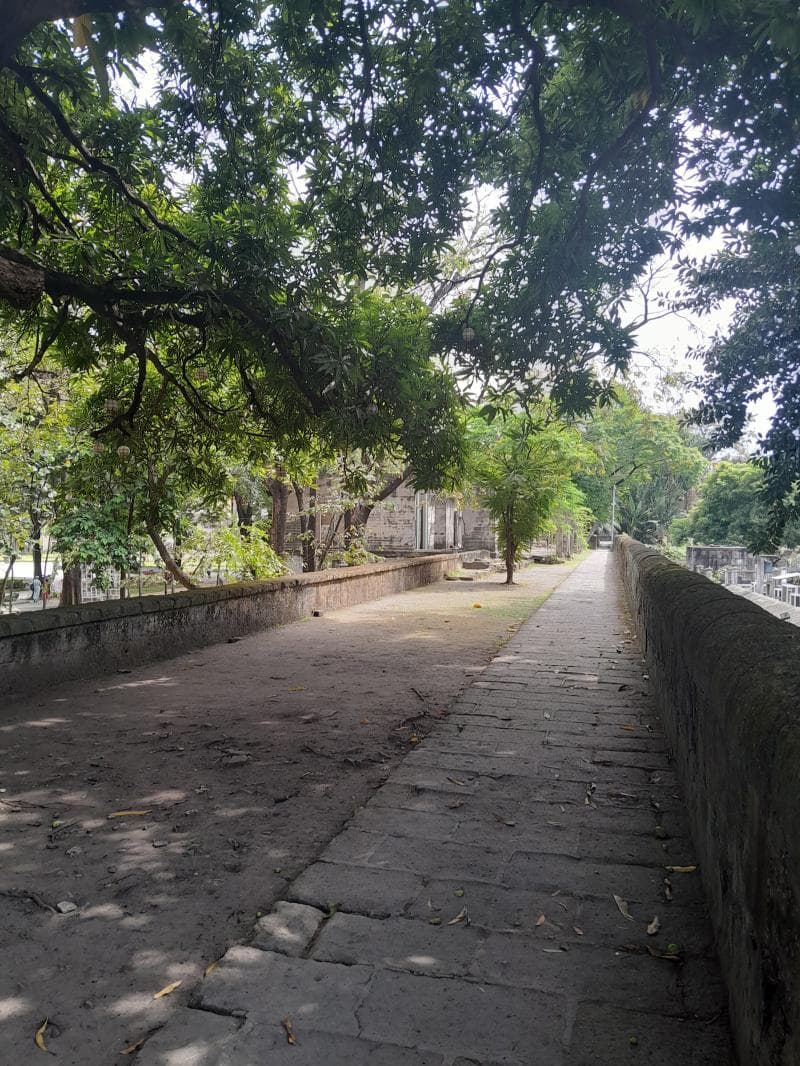
Discover Baluartillo de San Francisco Javier, a historic defense structure within Fort Santiago in Manila, Philippines. Explore its rich history as a bulwark, storage, and WWII prison.
Overview
Nestled within the historic walls of Fort Santiago in Manila, Philippines, lies the Baluartillo de San Francisco Javier. This sub-spot is a significant component of the larger fortress, offering a glimpse into centuries of Philippine history. Built in 1662, the Baluartillo was initially conceived as a crucial part of Intramuros' seafront defenses. Named in honor of St. Francis Xavier, the patron saint of foreign missions, it stands as a testament to the Spanish colonial era's strategic military architecture. Strategically positioned at the mouth of the Pasig River, the Baluartillo de San Francisco Javier once guarded against attacks from Manila Bay, protecting the vital gateway to the city. Today, this historic structure serves a different, yet equally important role: it houses the Intramuros Visitors Center, welcoming travelers and providing insights into the rich heritage of the walled city.
History & Cultural Background
The story of the Baluartillo de San Francisco Javier is interwoven with the broader history of Fort Santiago, which was established by the Spanish in 1571. The Baluartillo itself began its existence as a robust defensive structure. However, it faced an early challenge when a section of its original fortification was damaged during the powerful earthquake of 1645. Following this devastation, it was rebuilt and subsequently expanded in the late 1700s with the addition of a curtain wall, showcasing the resilience and adaptive engineering of its time. Further enhancing its defensive capabilities, the Reducto de San Francisco Javier, a crescent-shaped outer defensive structure, was constructed in 1773. This reducto was designed to reinforce the Baluartillo against seaward assaults and also functioned as a storage area for essential ammunition and food supplies.
Over its long history, the Baluartillo de San Francisco Javier transitioned through various roles. For centuries, up until the early 20th century, its chambers were primarily utilized for storage. However, a darker chapter unfolded during World War II. Under the Japanese occupation, these very chambers were repurposed by the Kempei Tai, the Japanese military police, into grim prison cells. Both Filipino and American soldiers endured captivity within these walls, making the Baluartillo a poignant reminder of wartime suffering. Echoing this period, former Philippine President Elpidio Quirino was also imprisoned nearby in the American Barracks ruins in 1943. After the devastation of the Battle of Manila in 1945, Fort Santiago, including the Baluartillo, underwent significant restoration efforts, leading to its declaration as a Shrine of Freedom in 1950.
What Makes It Special
What makes the Baluartillo de San Francisco Javier particularly special is its multifaceted historical narrative and its enduring presence as a physical link to Manila's colonial past. Its initial purpose as a strategic seafront defense against external threats highlights its critical role in protecting early colonial Manila. The architectural evolution of the structure, undergoing rebuilding and reinforcement after natural disasters and military needs, speaks to its resilience and adaptive design over centuries.
Furthermore, the Baluartillo's transformation from a defensive bulwark to storage chambers, and then tragically to wartime prison cells, encapsulates the dramatic shifts in the Philippines' history. This layered past allows visitors to contemplate the contrasting uses of the same physical space through different epochs. Its modern-day function as the Intramuros Visitors Center creates a bridge between its profound history and contemporary engagement, serving as a starting point for exploring the wider wonders of Fort Santiago and Intramuros. Its location within Fort Santiago places it amidst other significant historical sites, including the Rizal Shrine and the infamous dungeons, making it an integral piece of a larger, compelling historical puzzle.
Stories, Fun Facts & Local Details
The very name 'Baluartillo de San Francisco Javier' carries a tale, honoring St. Francis Xavier, a revered patron saint of foreign missions and a co-founder of the Jesuit Order. This naming practice often reflected the spiritual inclinations of the Spanish colonizers. A fascinating architectural detail is the crescent-shaped Reducto de San Francisco Javier, built in 1773 to bolster the Baluartillo's defenses. Today, this once purely military outpost has been transformed into a place of reverence, housing a chapel dedicated to Our Lady of Guadalupe. This spiritual repurposing offers a unique blend of military history and religious devotion.
Historically, the Baluartillo also played a role in the daily lives of Manila's elite, guarding a postern gate that was reportedly used by the Governor-General and his family. Adjacent to the Baluartillo are the ruins of the American Barracks, which once held historical figures like President Elpidio Quirino. These ruins have since been repurposed into an open-air exhibition space, demonstrating a continuous evolution of purpose within the fort's grounds. While not directly inside the Baluartillo, visitors to Fort Santiago can follow the bronze footsteps embedded on the ground, tracing the poignant final walk of national hero Jose Rizal from his cell to his execution site. This powerful detail resonates throughout the entire fort, including the area around the Baluartillo, adding a layer of national significance to every corner.
Visitor Perspective
For any traveler exploring Intramuros, a visit to the Baluartillo de San Francisco Javier offers an enriching experience. Situated inside the expansive grounds of Fort Santiago, it is easily accessible and forms an important part of the historical circuit. The Fort Santiago premises are generally well-maintained and offer mostly flat pathways, making it comfortable for most visitors to navigate and explore the various sections, including the Baluartillo. As the current home of the Intramuros Visitors Center, the Baluartillo is often one of the first points of contact for tourists, providing valuable information and context before they delve deeper into the fort's history.
To fully appreciate the Baluartillo and its surroundings, visitors should allocate ample time for their exploration of Fort Santiago, typically ranging from 1.5 to 3 hours. This allows for a leisurely pace to absorb the historical details, appreciate the architecture, and reflect on the many stories held within its walls. The Baluartillo de San Francisco Javier is not merely a ruin but a living testament to Manila's complex past, offering a meaningful journey for anyone keen to understand the enduring spirit of the Philippines. Its integration into the larger Fort Santiago experience makes it an essential stop for history buffs and curious travelers alike.
Coordinates: 120.970102, 14.594428
View on Google Maps💬 How Travelers Describe This Place
Based on community votes
Photogenic
981Must See
958Unique
565Beautiful
157Interesting
28
Traveler Stories
Discover memorable experiences shared by travelers who have visited this place.
No traveler stories yet.
Be the first traveler to share what made this place memorable.

Tour
By
Spot
Discover amazing places around the world. Your journey starts here.
Explore
© 2026 TourBySpot. All rights reserved.