Old Barracks
Manila, Philippines
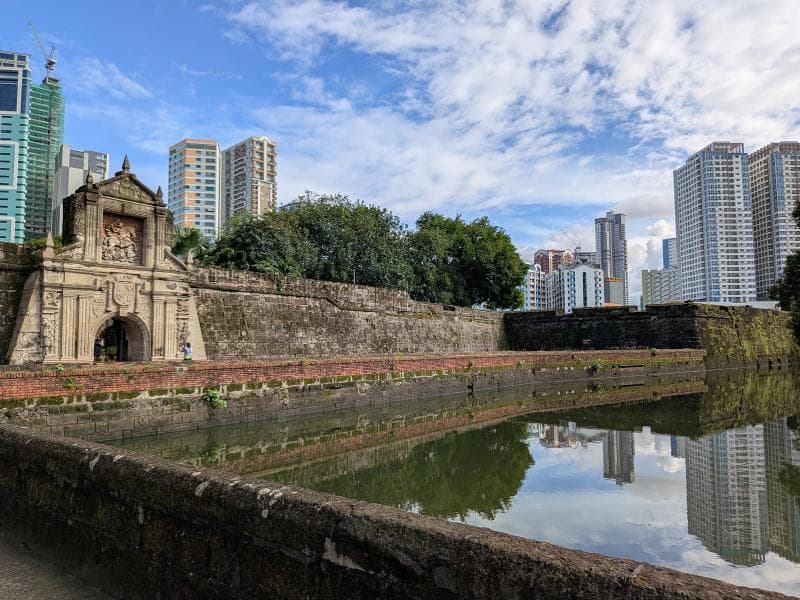
Explore the Old Barracks within Fort Santiago, Manila, Philippines. Discover centuries of history, from Spanish colonial times to WWII, and Jose Rizal's prison cell.
Overview
Deep within the historic walls of Fort Santiago in Manila, Philippines, lie the compelling remnants of what are collectively known as the 'Old Barracks'. These structures, far from being mere ruins, are powerful witnesses to centuries of Philippine history, bearing the indelible marks of Spanish, American, and Japanese occupations. They are not a single, isolated building but rather several former barracks that served as military quarters and, at times, places of imprisonment for countless individuals throughout different eras. Today, these preserved ruins invite visitors to step back in time, offering a poignant glimpse into the lives of soldiers, prisoners, and revolutionaries who once walked their grounds.
Standing silently within the fortress, these barracks tell a story of resilience, conflict, and the enduring quest for freedom. From their initial construction in the 16th century, these brick and adobe structures have witnessed the ebb and flow of colonial powers, each leaving its distinct architectural and historical imprint. Visiting these sites within Fort Santiago offers a profound connection to the nation's past, transforming abstract historical facts into a tangible, emotional experience.
History & Cultural Background
The history of the Old Barracks is intrinsically linked with that of Fort Santiago itself, which was first built by the Spanish conquistador Miguel López de Legazpi in 1571. Over time, various barracks were constructed to house the soldiers of successive colonial regimes. During the Spanish era, some of these structures functioned as military quarters for Spanish troops, with records indicating brick barracks dating back to the 16th century. One such brick barracks, notably, was where Dr. Jose Rizal, the Philippines' national hero, was imprisoned for 56 days before his execution in 1896.
With the advent of American rule, some of these facilities were repurposed or new ones built, leading to the designation of 'American Barracks.' These were utilized by the U.S. Army from the onset of the American colonial period in 1898, even serving as the Manila Arsenal. However, the most destructive period for these structures was during World War II. The Battle of Manila in 1945 saw Fort Santiago suffer immense damage, as American forces bombarded the fort to dislodge Japanese troops who had occupied it. Many of these barracks were left in a ruined state, scarred by bullet holes and crumbling walls, stark reminders of the brutal conflict.
Following the war, Fort Santiago was declared a Shrine of Freedom in 1950, and restoration efforts began. The right wing of the brick barracks where Jose Rizal was held was reconstructed in 1953 to become the Museo ni Rizal, now a shrine dedicated to the hero's memory.
What Makes It Special
What makes the Old Barracks particularly special is their raw, unfiltered preservation of history. Unlike fully restored buildings, many sections remain in their ruined state, showcasing the actual impact of war and time. Visitors can observe bullet holes etched into the thick stone walls, a visceral connection to the intense fighting that occurred during the Battle of Manila.
These ruins offer a multi-layered historical narrative, revealing how each colonial power adapted and utilized the structures. They represent not just military architecture, but also a space where countless personal stories of sacrifice, imprisonment, and longing for freedom unfolded. The contrast between the imposing, defensive architecture and the tranquil, reflective atmosphere today creates a powerful sense of awe and solemnity. The sheer endurance of these structures, despite being repeatedly damaged and rebuilt, speaks volumes about their strategic importance and the enduring spirit of the Filipino people.
Stories, Fun Facts & Local Details
Among the most compelling stories associated with the Old Barracks is that of Jose Rizal. His cell within the 16th-century brick barracks is now a museum, the Museo ni Rizal, allowing visitors to walk through the very space where he spent his final days. Bronze footsteps embedded in the ground within Fort Santiago trace his final walk from his cell to Bagumbayan (now Luneta Park), where he was executed.
Another significant barrack ruin is the American Barracks, which once housed the U.S. Army. Interestingly, former Philippine President Elpidio Quirino was also imprisoned in this very building for 16 days in 1943 during the Japanese Occupation, adding another layer of historical intrigue. Today, some parts of the old Spanish military barracks have been creatively adapted, such as the site of the Rajah Sulayman Theater, an open-air performance space where the Philippine Educational Theater Association (PETA) has staged shows. This transformation from a place of military command and confinement to one of cultural expression underscores Manila's dynamic blend of past and present.
Visitor Perspective
Walking through the Old Barracks at Fort Santiago is a deeply contemplative experience. As a visitor, you are enveloped by the quiet solemnity of the stone structures, imagining the footsteps of soldiers marching through these courtyards and the hushed despair of prisoners held within these walls. The preserved ruins serve as a powerful reminder of the human cost of conflict and the sacrifices made for independence.
The blend of destruction and reconstruction, particularly visible in the partially rebuilt Museo ni Rizal, creates a unique dialogue between past suffering and present commemoration. It's an opportunity to connect with history on a personal level, reflecting on the historical figures and untold individuals who experienced these spaces. The Old Barracks are not just architectural remains; they are sacred grounds that evoke a profound sense of respect for the Philippines' rich and often tumultuous history, encouraging visitors to ponder the universal themes of freedom, struggle, and remembrance.
Coordinates: 120.970102, 14.594428
View on Google Maps💬 How Travelers Describe This Place
Based on community votes
Beautiful
934Must See
449Photogenic
326Unique
279Interesting
276
Traveler Stories
Discover memorable experiences shared by travelers who have visited this place.
No traveler stories yet.
Be the first traveler to share what made this place memorable.

Tour
By
Spot
Discover amazing places around the world. Your journey starts here.
Explore
© 2026 TourBySpot. All rights reserved.