Choijin Lama Temple Museum
Ulaanbaatar, Mongolia
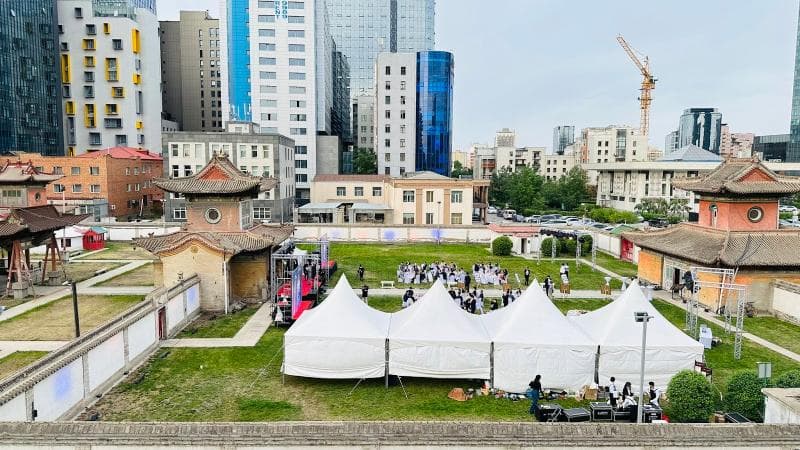
Explore the Choijin Lama Temple Museum in Ulaanbaatar, Mongolia, a preserved Buddhist monastery showcasing ancient art, history, and unique architecture.
Overview
Nestled amidst the modern high-rises of Ulaanbaatar, Mongolia, the Choijin Lama Temple Museum stands as a serene and captivating oasis, offering a profound glimpse into the nation's rich Buddhist heritage. This meticulously preserved temple complex, originally a functioning monastery, now serves as a museum dedicated to religious history and art. Its distinctive architecture, a beautiful blend of Mongolian, Tibetan, and Chinese styles, immediately draws the eye, providing a striking contrast to the bustling contemporary city that surrounds it. Visitors stepping through its gates are transported to a bygone era, where intricate artistry and deep spiritual devotion once flourished. It is considered one of Mongolia's most significant and well-preserved religious complexes, showcasing an invaluable collection of Buddhist artifacts and artwork.
History & Cultural Background
The Choijin Lama Temple complex was constructed between 1904 and 1908, commissioned by the Eighth Bogd Khaan Jebtsundamba, who was the theocratic ruler of Mongolia, for his younger brother, Luvsan Haidav Choijin Lama. The title 'Choijin' signifies an honorary designation given to certain monks, and Luvsan Haidav himself held the esteemed position of state oracle. This spiritual leader played a crucial role in the religious and political life of Mongolia during that period. The original temple built for Luvsankhaidav between 1899 and 1901 was destroyed by fire in 1903, leading to the construction of the current complex at its present location, overseen by architect Uran Ombo and over 300 craftsmen.
The monastery remained an active center of worship until 1938 when it was closed during the period of intense communist repression against religious institutions in Mongolia. While countless monasteries across the country were destroyed during this era, the Choijin Lama Temple was remarkably preserved due to the foresight of some wise individuals. In 1942, it was reopened as a museum, specifically designated to demonstrate the 'feudal' ways of the past, thereby securing its survival. Despite the re-establishment of religious freedom in Mongolia in 1990, the complex has continued its role as a state-run museum, focusing on religious history and art, rather than reverting to an active place of worship.
What Makes It Special
The Choijin Lama Temple Museum is exceptional for several reasons, primarily its architectural integrity and the sheer richness of its collections. The complex consists of multiple temples, each with its own distinct purpose and artistic treasures. Key structures include:
- Maharaja Süm: Often the first temple encountered upon entering the grounds.
- Main Temple: Houses significant statues, including one of Sakyamuni Buddha, flanked by statues of Choijin Lama and Baltung Choimba, whose mummified remains are reportedly inside his statue.
- Gongkhang (Protector Chapel): Located behind the main hall, it contains the oracle's throne and intricate depictions of deities.
- Zuu Süm: Dedicated to Sakyamuni Buddha, featuring papier-mâché sculptures of Buddha in past, present, and future forms.
- Yadam Süm: Contains a collection of wooden and bronze statues, some attributed to the renowned Mongolian sculptor Zanabazar.
- Amgalan Süm: Features a self-portrait of Zanabazar and a small stupa.
The museum boasts an extraordinary array of Buddhist art, including gilded bronze statues, impressive thangka paintings, delicate silk embroideries, intricate wood carvings, and a vast collection of Tsam dance masks. Many pieces date back to the 17th century, showcasing the incredible skill of Mongolian artisans. Its survival as one of the few intact Buddhist complexes from the early 20th century, particularly after the purges, makes it an invaluable cultural landmark.
Stories, Fun Facts & Local Details
One of the most intriguing details within the main temple is the statue of Baltung Choimba, the teacher of the Bogd Khaan, which is said to contain his mummified remains. This practice highlights a unique aspect of veneration in Mongolian Buddhism. The Tsam dance masks, displayed prominently, are not merely decorative; they are central to a sacred ritual dance performed by monks to ward off evil spirits and clear obstacles. The intricate designs, often encrusted with precious materials like coral, convey powerful symbolism and artistic mastery.
The location of the temple itself tells a story. Situated in the heart of Ulaanbaatar, surrounded by gleaming modern skyscrapers, it creates a visual dialogue between Mongolia's ancient spiritual past and its contemporary urban development. This juxtaposition offers a unique photographic opportunity and a contemplative experience for visitors. The complex was built with blue bricks and timber roofs adorned with green tiles and animal figures, reflecting a distinct architectural style.
Visitor Perspective
Visiting the Choijin Lama Temple Museum is an immersive journey into the spiritual and artistic soul of Mongolia. As you wander through the courtyards and enter each temple, a profound sense of tranquility envelops you, offering a peaceful escape from the city's hustle. The detailed explanations available, sometimes through audio guides or volunteer guides, help contextualize the overwhelming collection of artifacts. It's an opportunity to appreciate not just the beauty of the art but also the historical resilience of Mongolian culture and faith. While it is no longer a place of active worship, the reverence for the objects and the historical significance of the site are palpable. It serves as a powerful reminder of Mongolia's rich past and its enduring spiritual heritage, inviting quiet reflection and deep appreciation.
Coordinates: 106.91833, 47.915
View on Google Maps💬 How Travelers Describe This Place
Based on community votes
Interesting
915Must See
211Unique
123Beautiful
74Photogenic
53
Traveler Stories
Discover memorable experiences shared by travelers who have visited this place.
No traveler stories yet.
Be the first traveler to share what made this place memorable.
Things to see at Choijin Lama Temple Museum



Tour
By
Spot
Discover amazing places around the world. Your journey starts here.
Explore
© 2026 TourBySpot. All rights reserved.