Monastic Courtyards
Ulaanbaatar, Mongolia
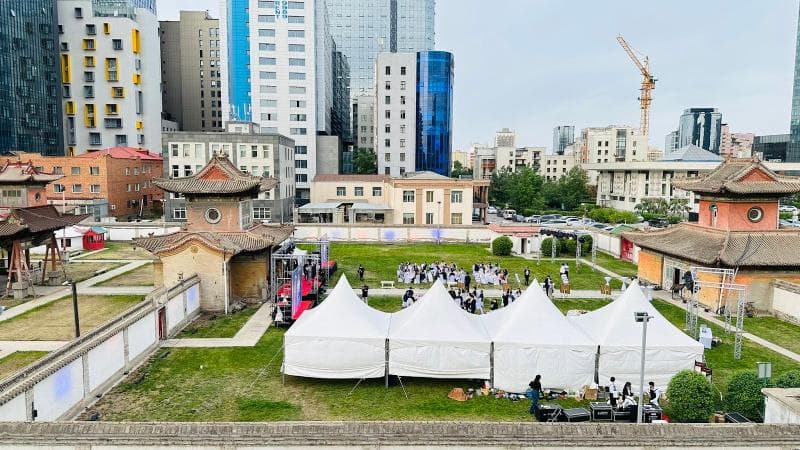
Discover the tranquil Monastic Courtyards of Choijin Lama Temple Museum in Ulaanbaatar, Mongolia. Explore historic architecture and peaceful grounds.
Overview
Nestled within the bustling heart of Ulaanbaatar, the Monastic Courtyards of the Choijin Lama Temple Museum offer a serene escape, acting as tranquil pathways connecting the historic temple buildings. These courtyards are not merely open spaces but integral components of the museum complex, guiding visitors through a spiritual journey amidst architectural beauty. They create a distinct atmosphere, a quiet oasis where the sounds of the modern city fade, allowing for reflection and appreciation of Mongolia's rich Buddhist heritage. The museum complex itself comprises five main temples, each historically significant, and the courtyards are the very fabric that weaves them together into a cohesive and meaningful whole.
History & Cultural Background
The Choijin Lama Temple complex, including its courtyards, was constructed between 1904 and 1908 under the patronage of the 8th Bogd Khaan Jebtsundamba, dedicated to his brother, Luvsankhaidav, who was the State Oracle of Mongolia. Originally a fully functional Buddhist monastery, these courtyards would have once buzzed with the quiet activity of monks performing daily rituals, meditating, and moving between the various temples for prayers and studies. The complex was a vibrant center of Buddhist practice until the communist purges of the late 1930s, which led to the closure and widespread destruction of monasteries across Mongolia. Fortunately, the Choijin Lama Temple was preserved by being converted into a museum in 1942, a strategic move that saved it from demolition. The courtyards, therefore, stand as silent witnesses to both a flourishing religious past and a period of significant cultural upheaval, representing a rare surviving example of pre-revolution Mongolian Buddhist architecture.
What Makes It Special
What truly distinguishes the Monastic Courtyards is the striking juxtaposition they present: ancient, intricately designed temples set against the backdrop of Ulaanbaatar's modern skyscrapers. This contrast creates a unique visual narrative, highlighting the enduring legacy of Mongolian culture amidst contemporary development. As you wander through these peaceful brick courtyards, you'll notice the distinctive architectural elements of the temples themselves – the blue bricks, sturdy timber roofs, and vibrant green tiles, often adorned with animal figures along their spines. These courtyards offer an unparalleled vantage point to admire the blend of Mongolian, Tibetan, and Chinese architectural influences evident in the temple structures. The quietude here is profound, offering a rare opportunity for introspection and a deep connection to the historical and spiritual essence of the place.
Stories, Fun Facts & Local Details
The entire Choijin Lama Temple complex, including its courtyards, is steeped in history. It was built for Choijin Lama Luvsankhaidav, a figure of immense spiritual and political importance as the State Oracle and brother to Mongolia's theocratic ruler. The very survival of this complex is a testament to its significance; while over a thousand monasteries were destroyed during the communist era, the Choijin Lama Temple was one of the very few spared. The courtyards facilitate the exploration of the five main temples: the Temple of the Maharajas, the Main Temple, the Zuu Temple, the Yadam Temple, and the Amgalan Temple, each housing extraordinary collections of Buddhist art. It's said that the layout was designed by craftsman Lama Ombyn of Khuree, incorporating the skills of around 300 Mongolian artisans. The courtyards would have been the stages for the movement of monks and devotees, connecting these sacred spaces and perhaps even witnessing vibrant 'Tsam' dance ceremonies, which are now represented by the intricate masks displayed inside the museum.
Visitor Perspective
For the curious traveler, exploring the Monastic Courtyards is an essential part of the Choijin Lama Temple Museum experience. They serve as an outdoor museum gallery, allowing visitors to appreciate the scale and intricate details of the temple architecture before stepping inside. The courtyards invite a slower pace, encouraging visitors to pause, take in the serene atmosphere, and observe the architectural grandeur from different angles. It is a place where you can feel the weight of history and sense the spiritual energy that once permeated these grounds. The quiet pathways provide a moment of calm, making the transition between each temple a thoughtful and contemplative journey. Wandering through these courtyards offers a peaceful, immersive experience, transporting you back to a time when this complex was a living, breathing center of Mongolian Buddhism.
Coordinates: 106.9177, 47.909
View on Google Maps💬 How Travelers Describe This Place
Based on community votes
Beautiful
673Photogenic
219Interesting
186Must See
143Unique
80
Traveler Stories
Discover memorable experiences shared by travelers who have visited this place.
No traveler stories yet.
Be the first traveler to share what made this place memorable.

Tour
By
Spot
Discover amazing places around the world. Your journey starts here.
Explore
© 2026 TourBySpot. All rights reserved.