Main Temple Hall
Ulaanbaatar, Mongolia
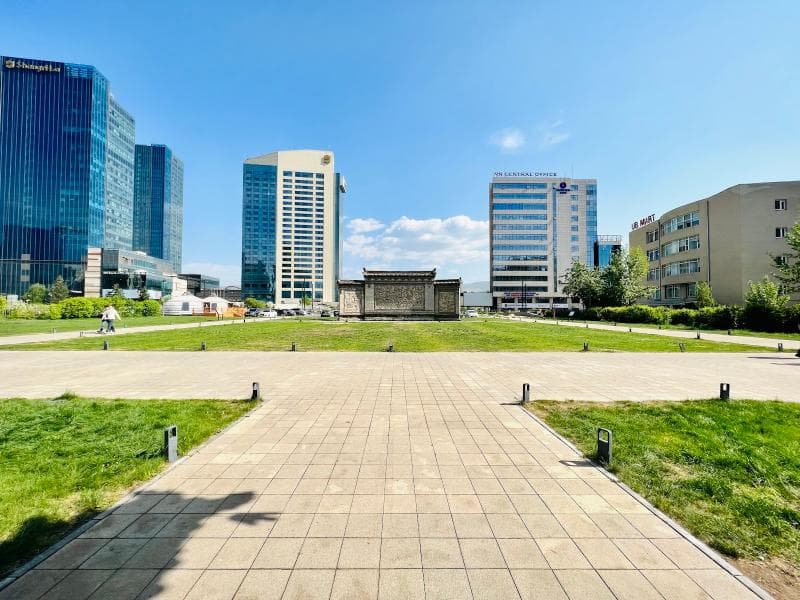
Explore the Main Temple Hall at Choijin Lama Temple Museum in Ulaanbaatar, Mongolia, a preserved Buddhist monastery showcasing ancient art and history.
Overview
Stepping into the Main Temple Hall of the Choijin Lama Temple Museum in Ulaanbaatar, Mongolia, is like journeying back in time. This revered sub-spot, nestled within the larger temple complex, offers a profound glimpse into Mongolia's rich spiritual and artistic heritage. Constructed between 1904 and 1908, the temple was originally dedicated to Choijin Lama Luvsankhaidav, the state oracle and younger brother of the 8th Bogd Khaan Javzandamba, Mongolia's theocratic ruler. Remarkably, it stands as one of the few Buddhist monasteries that survived the purges of the 1930s, eventually being repurposed as a museum in 1942 to preserve its invaluable contents and architectural splendor. Today, while no longer an active place of worship, the Main Temple Hall serves as a vital repository of Buddhist art, history, and culture, inviting visitors to explore its elaborately decorated interiors and the sacred artifacts it houses. Its unique blend of Mongolian and Chinese architectural styles further enhances its charm, making it a distinctive landmark in the heart of the capital.
History & Cultural Background
The foundation of the Choijin Lama Temple complex was initiated by the 8th Bogd Khaan Javzandamba, a pivotal figure in Mongolian history who also served as the country's spiritual leader. The temple, named after his younger brother Luvsankhaidav, who held the honorary title of 'Choijin Lama' meaning 'fierce defender of Buddhism', was a significant center for Buddhist practice. This complex was conceived as a vibrant monastery, comprising a main temple and several smaller branch temples, designed to house sacred relics and facilitate religious ceremonies. However, the fate of the monastery took a dramatic turn with the advent of the Communist era in Mongolia. During the widespread religious suppression of the 1930s, thousands of monasteries were destroyed, and religious practices were prohibited. Through a 'shrewd' act of preservation, the Choijin Lama Temple complex was converted into a museum in 1942, ostensibly to showcase the 'feudal' past, thereby safeguarding its structures and contents from demolition. This conversion ensured the survival of a priceless collection of religious artifacts and an architectural style that represents a crucial period in Mongolian Buddhism, providing a continuous link to a spiritual past that was nearly erased.
What Makes It Special
The Main Temple Hall's exceptional status stems from several distinct features. Foremost among these is its remarkable preservation as one of the few Buddhist monasteries to endure the communist purges, offering an authentic glimpse into pre-revolutionary Mongolian religious architecture and art. Inside, the central focus is an 18th-century gilded statue of Buddha Shakyamuni, flanked by his two disciples, creating a powerful spiritual tableau. To the Buddha's right stands a statue of Choijin Lama Luvsankhaidav himself, and to the left, a statue of his revered teacher, Baldan Choephel (also known as Baltung Choimba). What makes the latter particularly poignant is the tradition that his mummified remains are encased within the statue, a deeply personal and sacred detail. The hall also boasts an extensive collection of Buddhist art, including intricate thangka paintings, delicate silk embroideries, detailed wood carvings, and an array of statues and ritual objects. The diverse collection includes magnificent Tsam dance masks, which are known for their vibrant colors and cultural significance. Historically, this very hall was the space where the Choijin Lama would enter a trance to deliver oracular pronouncements, making it a site imbued with profound spiritual energy.
Stories, Fun Facts & Local Details
Beyond its solemn beauty, the Main Temple Hall holds a treasury of stories and unique details. The honorific 'Choijin' given to Lama Luvsankhaidav signifies 'fierce defender of Buddhism,' highlighting his important role in the spiritual life of Mongolia. A particularly fascinating detail is the belief that the mummified remains of Choijin Lama's teacher, Baldan Choephel, are preserved within his statue. This ancient practice underscores a profound respect for spiritual masters and a unique form of ancestral veneration within Mongolian Buddhism. The temple complex itself, having been spared from destruction during the communist era through its conversion into a museum, represents a remarkable story of cultural resilience and ingenuity. Within the broader museum, visitors can also encounter a more macabre, yet culturally significant, collection of images depicting Naraka, or Buddhist Hell. These vivid and sometimes 'gruesome' depictions served a didactic purpose, intended to encourage practitioners to lead virtuous lives and accumulate merit. Furthermore, some of the exquisite gilded bronze statues displayed throughout the complex are attributed to the renowned 17th-century Mongolian sculptor and spiritual leader, Zanabazar, whose artistic legacy continues to inspire awe.
Visitor Perspective
For a curious traveler, a visit to the Main Temple Hall offers an immersive journey into Mongolia's spiritual and artistic heart. While photography is often strictly prohibited inside the temples, this restriction paradoxically enhances the experience, allowing for a deeper, more personal engagement with the artifacts and the atmosphere. It creates a sense of 'peeking into a sacred, hidden world,' fostering a unique connection to the history preserved within its walls. Although the informational signage might sometimes be less exhaustive, attentive room attendants are often available to provide further insights and context. During your visit, you may observe local Mongolians still offering prayers to the deities on display, a testament to the enduring spiritual significance of the place, even as a museum. This blend of historical preservation and lingering devotion offers a compelling insight into the cultural fabric of Ulaanbaatar. Be mindful that the temples are not typically heated, so dressing warmly, especially during the colder months, will ensure a more comfortable and enjoyable exploration of this architectural and cultural treasure. The Main Temple Hall truly provides a powerful window into Mongolia's resilience and rich heritage.
Coordinates: 106.9177, 47.909
View on Google Maps💬 How Travelers Describe This Place
Based on community votes
Beautiful
872Must See
846Unique
684Interesting
363Photogenic
250
Traveler Stories
Discover memorable experiences shared by travelers who have visited this place.
No traveler stories yet.
Be the first traveler to share what made this place memorable.

Tour
By
Spot
Discover amazing places around the world. Your journey starts here.
Explore
© 2026 TourBySpot. All rights reserved.