Religious Paintings
Ulaanbaatar, Mongolia
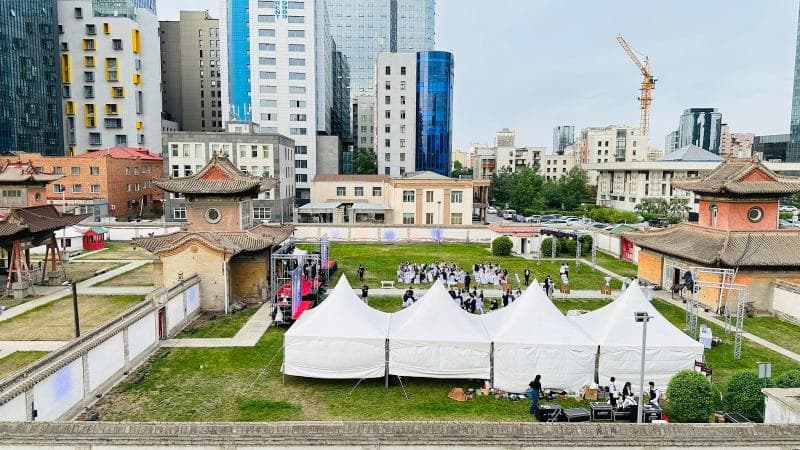
Explore the rich 'Religious Paintings' at the Choijin Lama Temple Museum in Ulaanbaatar, Mongolia. Discover ancient Thangkas and Buddhist art.
Overview
Nestled amidst the bustling modernity of Ulaanbaatar, Mongolia, the Choijin Lama Temple Museum stands as a serene and profoundly significant cultural landmark. Once a vibrant Buddhist monastery complex, it now serves as a custodian of Mongolia's rich religious and artistic heritage. The 'Religious Paintings' exhibition within this museum offers a captivating journey into the spiritual and artistic expressions of Mongolian Buddhism. Converted into a museum in 1942, this architectural masterpiece from the early 20th century preserved invaluable artworks from the widespread destruction of Buddhist monasteries during the communist era.
The museum complex comprises five temples, each meticulously adorned and housing a diverse collection of Buddhist art. Among its most cherished possessions are the religious paintings, which include intricate Thangka paintings, detailed silk embroideries, and other significant artistic representations of deities and spiritual narratives. These artworks not only showcase exceptional craftsmanship but also serve as vital historical documents of Mongolia's deep connection to Tibetan Buddhism.
History & Cultural Background
The Choijin Lama Temple complex was constructed between 1904 and 1908 under the patronage of the Eighth Bogd Khaan, Jebzundamba. It was dedicated to his younger brother, Luvsankhaidav, who held the esteemed title of Choijin Lama, meaning the 'fierce defender of Buddhism'. This designation underscored his crucial role as the state oracle and protector of Buddhist teachings in Mongolia. The original monastery was a vibrant center of religious activity, reflecting the profound influence of Buddhism on Mongolian society and culture at the turn of the 20th century.
However, the monastery's active religious life came to an abrupt halt in 1937, coinciding with the rise of the communist regime and its severe repression of religious institutions. During this period, hundreds of monasteries across Mongolia were destroyed, and religious practices were largely forbidden. Remarkably, the Choijin Lama Temple complex was spared due to the efforts of wise individuals who advocated for its preservation as a museum. It was officially re-established as a Museum of Religious History in 1942, safeguarding its invaluable collections from obliteration and ensuring its survival as one of the few intact Buddhist complexes from that era.
What Makes It Special
The collection of religious paintings at the Choijin Lama Temple Museum is truly exceptional, offering profound insights into the artistic and spiritual dimensions of Mongolian Buddhism. Visitors encounter a rich array of Thangka paintings, which are traditional Tibetan Buddhist scroll paintings depicting deities, mandalas, or scenes from the life of Buddha. These vibrant artworks are often made with mineral and organic pigments on cotton or silk appliqué, showcasing incredible detail and symbolic depth.
Among the standout pieces are works attributed to renowned artists like Zanabazar, the first Bogd Khan and a celebrated 17th-century sculptor and religious reformer, whose artistic legacy significantly shaped Mongolian Buddhist art. The museum also houses striking silk embroideries, which are intricate and delicate, further demonstrating the diverse artistic techniques employed in devotional art.
Perhaps some of the most emotionally impactful paintings are those depicting Naraka, or the Buddhist Hell. These vivid and sometimes gruesome images of suffering serve a didactic purpose, encouraging believers to lead virtuous lives and accumulate merits to avoid such fates. The presence of tantric deities, often portrayed in union with their consorts (yab-yum), symbolizes the unity of compassion and wisdom, adding another layer of complex iconography to the collection. The sheer volume and artistic quality of these paintings make the museum a cornerstone for understanding Mongolian Buddhist art.
Stories, Fun Facts & Local Details
A fascinating aspect of the Choijin Lama Temple Museum is its very survival. While over a thousand monasteries were destroyed across Mongolia during the purges of the 1930s, this complex was transformed into a museum, effectively preserving its architecture and contents. This strategic conversion allowed a significant portion of Mongolia's Buddhist heritage to endure. The name 'Choijin' itself, meaning 'fierce defender of Buddhism,' reflects the dedication of Luvsankhaidav to his faith, a spirit that symbolically continued through the preservation of his temple.
Within the main temple, visitors can find statues of Choijin Lama Luvsankhaidav and his teacher, Baldanchoimbol. Intriguingly, the mummified remains of Baldanchoimbol, and reportedly even of Choijin Lama himself, are said to be encased within these statues, adding a profound layer of sanctity and historical presence to the exhibits. The Yadam Temple, one of the five structures within the complex, was once used by Luvsankhaidav as his private place of prayer, closed off to the public, offering a glimpse into the personal spiritual practices of the era.
The architecture of the temple complex is a remarkable blend of traditional Mongolian, Chinese, and Tibetan styles, characterized by blue brick construction, timber roofs, and intricately decorated green tiles. This architectural fusion reflects the historical and cultural exchanges that shaped Mongolian Buddhism.
Visitor Perspective
Visiting the Religious Paintings section within the Choijin Lama Temple Museum is an immersive experience that transports travelers back in time. Despite its location in the heart of modern Ulaanbaatar, just a block south of Sukhbaatar Square, the museum grounds offer a remarkable sense of tranquility and an escape from the urban rush. The ancient pagodas with their vibrant paintings and intricate carvings provide a striking visual contrast to the surrounding glass skyscrapers, making it a unique photographic opportunity.
While the complex no longer functions as an active place of worship, it remains a site of deep cultural reverence. It is not uncommon to see local visitors offering quiet prayers to the deities on display, underscoring the enduring spiritual significance of these artifacts. Travelers are encouraged to appreciate the rich details of each painting, understanding their narrative, symbolic, and historical value. Although photography rules may vary and sometimes require a fee or be restricted inside the temples, the visual splendor and spiritual atmosphere are deeply impactful. The museum truly offers an authentic glimpse into Mongolia's profound Buddhist heritage, presenting clear explanations, historical context, and meaningful cultural details that resonate long after the visit.
Coordinates: 106.9183318251906, 47.91481042044013
View on Google Maps💬 How Travelers Describe This Place
Based on community votes
Photogenic
623Must See
363Interesting
302Beautiful
250Unique
88
Traveler Stories
Discover memorable experiences shared by travelers who have visited this place.
No traveler stories yet.
Be the first traveler to share what made this place memorable.

Tour
By
Spot
Discover amazing places around the world. Your journey starts here.
Explore
© 2026 TourBySpot. All rights reserved.