Historic Gates
Ulaanbaatar, Mongolia
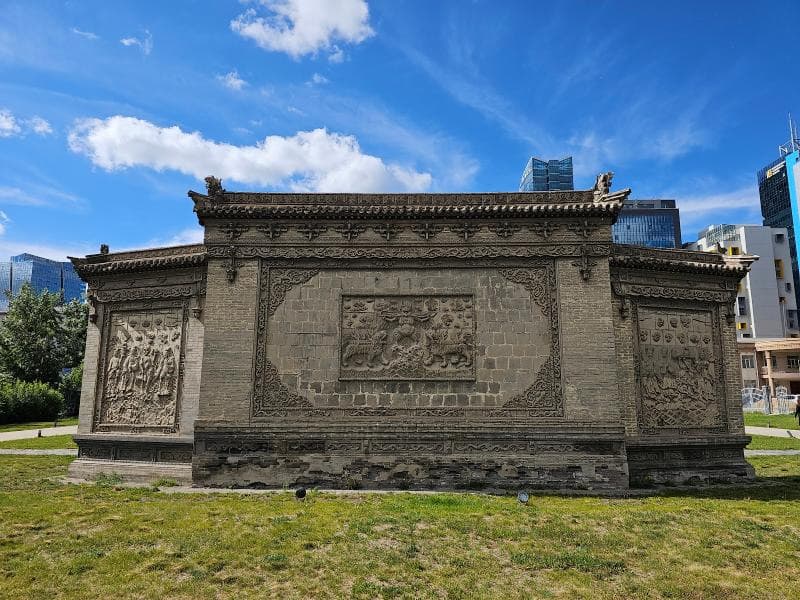
Explore the Historic Gates of Choijin Lama Temple Museum in Ulaanbaatar, Mongolia, a preserved architectural marvel blending Buddhist history and art.
Overview
Stepping through the Historic Gates of the Choijin Lama Temple Museum in Ulaanbaatar, Mongolia, is like journeying back in time. This architectural marvel, built between 1904 and 1908, stands as a testament to Mongolia's rich Buddhist heritage and serves as a beautifully preserved example of traditional Chinese-style religious architecture, subtly blended with Tibetan influences. The gates are not merely entry points; they are integral components of the complex's spiritual and physical design, each holding significant cultural and historical weight. They offer a unique glimpse into the artistic prowess and religious devotion that characterized early 20th-century Mongolia. The complex survived the tumultuous period of religious purges by being repurposed as a museum, preserving these invaluable structures for future generations.
History & Cultural Background
The Choijin Lama Temple Museum complex was commissioned by the Eighth Bogd Khaan Jebzundamba, the theocratic ruler of Mongolia, and dedicated to his younger brother, Luvsanhaidav, who was the Choijin Lama, or State Oracle. The construction, carried out between 1904 and 1908, involved over 300 master craftsmen and resulted in a magnificent monastic center. The gates played a crucial role in the spiritual life of the complex. During the communist era in the 20th century, when countless monasteries across Mongolia were destroyed, the Choijin Lama Temple was one of the few to be spared. It was converted into a Museum of Religious History in 1942, a strategic move that preserved its unique architecture and extensive collection of Buddhist artifacts, including its impressive gates.
What Makes It Special
The Historic Gates of the Choijin Lama Temple Museum are remarkable for their intricate design and symbolic significance. The Outer Entrance Gate, often referred to as the Temple of the Four Maharajas, is particularly striking. It houses grand papier-mâché sculptures of the four majestic 'heavenly kings' or Maharajas, who are depicted as powerful guardian deities of the four directions. These figures, crafted by Mongolian masters, were traditionally placed at the entrance of temples to ward off evil and protect the sacred grounds. Another notable gateway is the Gate of Honour (Hundetgeliin Haalga). This majestic archway was specifically designed for ceremonial processions, through which the Bogd Khaan and high-ranking lamas would pass. Symbolically, it was believed to keep out inauspicious omens while inviting boundless happiness and bliss into the temple complex.
Stories, Fun Facts & Local Details
- The name 'Choijin' means 'fierce defender of Buddhism,' reflecting the protective role of the temple and its associated lamas.
- The survival of the entire complex, including its gates, during the widespread destruction of Buddhist sites in the 1930s, is a remarkable story of preservation, often attributed to the foresight of those who re-established it as a museum.
- The architectural style, characterized by blue bricks, timber roofs, and green tiles adorned with animal-shaped ornaments, showcases a blend of Mongolian and Chinese artistic traditions, making the gates and the entire complex a unique architectural treasure.
- The complex comprises several gates beyond the Outer Entrance and Gate of Honour, including the Baruun (West) and Zuun (East) gates, each contributing to the cohesive and sacred layout of the temple grounds.
Visitor Perspective
As you approach the Choijin Lama Temple Museum, the imposing Historic Gates immediately command attention, setting a sacred and reverent tone. Walking through them, visitors can feel the weight of centuries of spiritual practice and cultural history. The vibrant colors, detailed carvings, and formidable statues of the guardian deities within the Outer Entrance Gate are not just artistic displays; they evoke a sense of protection and spiritual presence. The experience of passing through these gates offers a profound connection to Mongolia's Buddhist past, providing a moment of contemplation before delving deeper into the temple's extensive collection of religious artifacts and artworks. The peaceful atmosphere within the complex, contrasted with the bustling city outside, makes the transition through these gates all the more impactful, truly transporting one to another era.
Coordinates: 106.9177, 47.909
View on Google Maps💬 How Travelers Describe This Place
Based on community votes
Photogenic
915Beautiful
211Interesting
123Unique
74Must See
20
Traveler Stories
Discover memorable experiences shared by travelers who have visited this place.
No traveler stories yet.
Be the first traveler to share what made this place memorable.

Tour
By
Spot
Discover amazing places around the world. Your journey starts here.
Explore
© 2026 TourBySpot. All rights reserved.