Sule Pagoda
Yangon, Myanmar
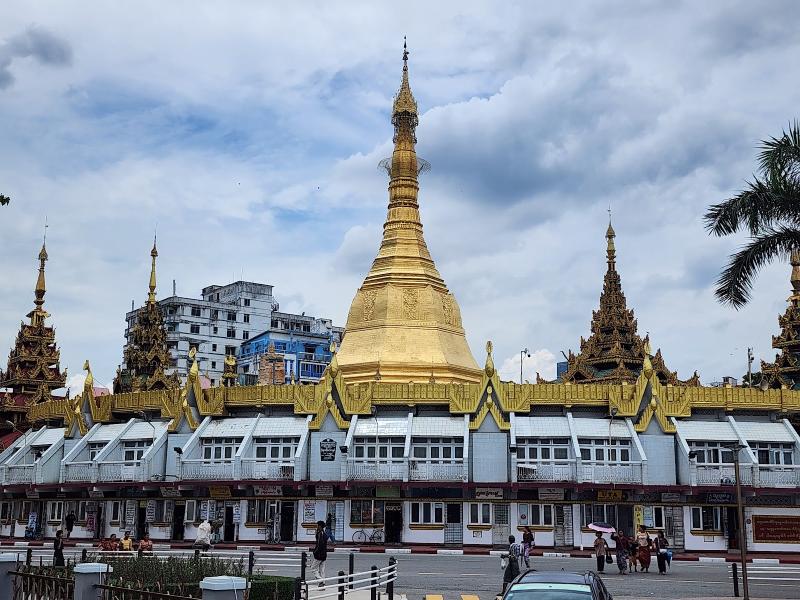
Discover Sule Pagoda, an ancient golden stupa and cultural landmark in downtown Yangon, Myanmar, enshrining a Buddha hair relic.
Overview
In the bustling heart of Yangon, Myanmar, where history and modern life intertwine, stands the magnificent Sule Pagoda. This golden stupa, believed to be over 2,000 to 2,600 years old, is not just a religious monument but also a pivotal landmark that has shaped the city's very identity. Located strategically at the intersection of Sule Pagoda Road and Maha Bandula Road, it serves as Yangon's spiritual and urban nucleus.
Rising approximately 46 to 48 meters (152 feet) into the sky, the pagoda's gilded, octagonal body is a distinctive feature, maintaining its unique shape from its base all the way to its spire. At its core, it is said to enshrine a sacred hair relic of the Buddha, making it a site of profound veneration for Buddhists worldwide. Beyond its religious significance, Sule Pagoda has witnessed and played a crucial role in the political landscape of Myanmar, acting as a rallying point for peaceful demonstrations, including the 1988 uprisings and the 2007 Saffron Revolution.
History & Cultural Background
The origins of Sule Pagoda are steeped in ancient legends, predating many other sacred sites in the region. Burmese lore suggests it was constructed during the lifetime of the Buddha, possibly even before the renowned Shwedagon Pagoda. The pagoda derives its name from Sularata, a venerable Nat (spirit) who, according to legend, resided at this very spot for millions of years. This powerful spirit is said to have guided King Okkalapa to the sacred hill where relics of three previous Buddhas were buried, enabling the construction of the Shwedagon Pagoda.
The name 'Sule' itself holds cultural resonance. While honoring the guardian spirit Sularata, it is also believed to stem from the Burmese word 'su-way,' meaning 'gathering' or 'meeting,' a testament to its enduring role as a spiritual and civic center. Architecturally, the pagoda exhibits a Mon-style design, a reflection of the Mon people's historical influence in spreading Theravada Buddhism across Southeast Asia. Though ancient, the pagoda has seen renovations and enlargements over the centuries, notably by Queen Shin Sawbu in the mid-15th century, which brought it to its current impressive size.
Its strategic location was recognized even by colonial planners. When the British rebuilt Yangon in the 1880s, they used Sule Pagoda as the central point from which to lay out the city's grid plan. This decision solidified its status as the geographical heart of Yangon, making it an inescapable symbol of the city's past and present.
What Makes It Special
Sule Pagoda's uniqueness lies in several aspects, both architectural and symbolic. Its distinctive octagonal shape, which gracefully tapers from its base to its golden spire, sets it apart from many other Burmese pagodas. The belief that it enshrines a hair relic of the Buddha, a relic shared in origin with the magnificent Shwedagon Pagoda, bestows upon it immense spiritual significance and draws pilgrims from far and wide.
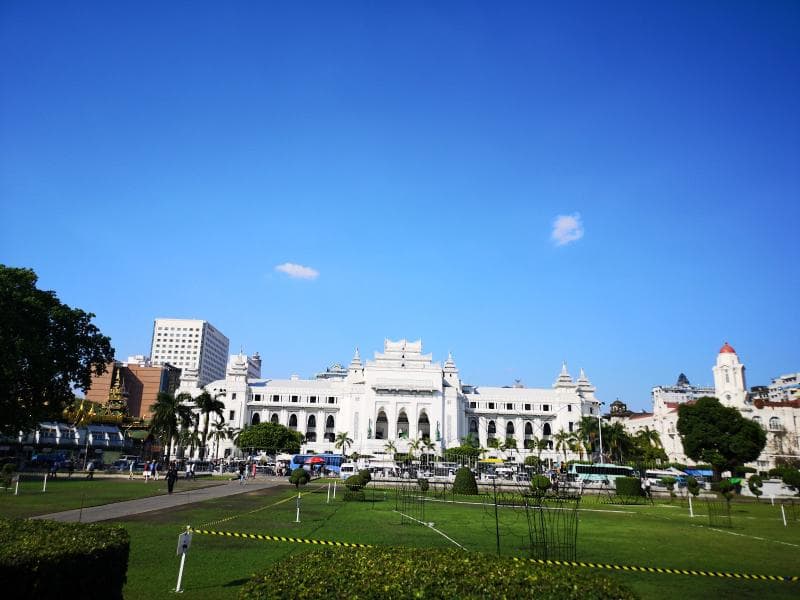
More than just a religious edifice, Sule Pagoda is the very nucleus of Yangon's urban fabric. Its central position is not merely geographical but also historical, serving as the starting point for understanding the city's development, especially its colonial-era grid layout. The pagoda is surrounded by an intriguing tableau of colonial-era buildings, including the Yangon City Hall, the High Court, and the Independence Monument within Maha Bandula Park. This juxtaposition of sacred ancient architecture with grand colonial structures creates a compelling visual narrative of Yangon's layered history. Furthermore, Sule Pagoda beautifully illustrates the harmonious blend of Buddhism with ancient animist beliefs in Myanmar, featuring dedicated Nat shrines where devotees pay respects to these powerful spirits alongside the Buddha.
Stories, Fun Facts & Local Details
Beyond its grand appearance, Sule Pagoda is rich with engaging stories and local traditions. The legend of Sularata Nat, the ancient spirit whose wisdom helped locate the site for the Shwedagon Pagoda, is a captivating tale passed down through generations, highlighting the deep connection between indigenous beliefs and Buddhism. Visitors will also discover that the pagoda's name is not only linked to this powerful Nat but also to the Burmese word 'su-way,' meaning 'gathering' or 'meeting,' aptly describing its role as a focal point for the community.
Inside the pagoda complex, you will find eight Buddha statues, each representing a day of the week, with a unique exception where Wednesday is represented by two statues. This allows devotees to identify with the statue corresponding to their birth day and offer special prayers for health, luck, and prosperity. The circular pathway that visitors follow around the main stupa is said to symbolize one's journey through the celestial sphere, adding a layer of spiritual depth to the physical act of circumambulation. Around the pagoda, small shops and fortune-telling stands create a vibrant, lively atmosphere, reflecting local customs and beliefs. A poignant local practice seen here involves the symbolic release of birds, which are believed to represent the hope for continued peace and freedom for the Myanmar people.
Visitor Perspective
Visiting Sule Pagoda offers a truly immersive experience into Myanmar's spiritual and cultural heart. As with all sacred sites in Myanmar, visitors are expected to remove their shoes before stepping onto the pagoda platform and dress modestly, ensuring shoulders and knees are covered. Be mindful that the platform can become quite hot during midday, so wearing socks or planning your visit during cooler hours like dawn or dusk is advisable. These times also offer the best light for photography, casting a beautiful glow on the golden spire and the surrounding historical buildings.
The pagoda's central location makes it incredibly accessible, often serving as an ideal starting point for exploring downtown Yangon. Inside, you'll observe locals engaged in prayer, making offerings (dana), and participating in various Buddhist rituals, providing a genuine glimpse into daily religious life. While exploring, it's wise to keep an eye on your belongings, as the area can be quite crowded. An average visit typically lasts one to two hours, allowing ample time to admire the golden stupa, explore the surrounding shrines, and soak in the serene yet vibrant atmosphere. Foreign visitors are usually required to pay a small entrance fee, typically a few US dollars or equivalent in local currency.
Coordinates: 96.158741, 16.774427
View on Google Maps💬 How Travelers Describe This Place
Based on community votes
Unique
719Photogenic
705Beautiful
655Interesting
396Must See
300
Traveler Stories
Discover memorable experiences shared by travelers who have visited this place.
No traveler stories yet.
Be the first traveler to share what made this place memorable.
Things to see at Sule Pagoda





Tour
By
Spot
Discover amazing places around the world. Your journey starts here.
Explore
© 2026 TourBySpot. All rights reserved.