Prayer Hall
Yangon, Myanmar
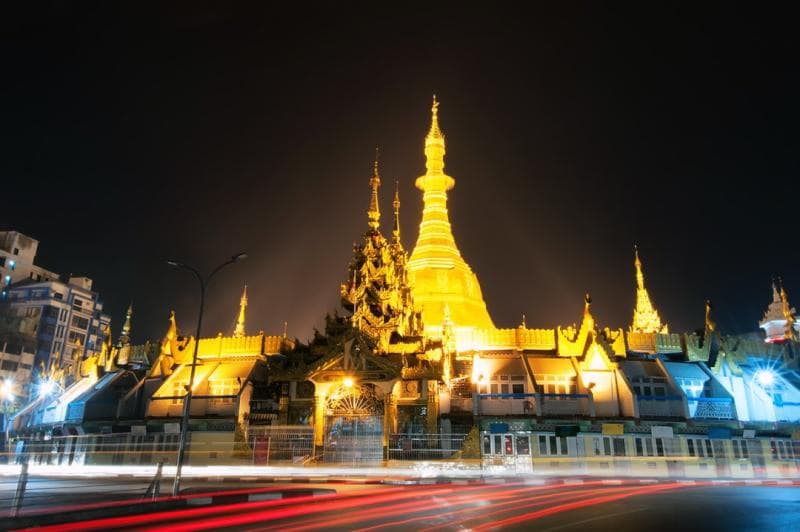
Explore the serene Prayer Halls within Sule Pagoda in Yangon, Myanmar, a spiritual heart blending ancient history and vibrant Buddhist devotion.
Overview
Nestled amidst the bustling streets of downtown Yangon, Myanmar, within the revered Sule Pagoda, lies a collection of serene spaces often referred to as the Prayer Halls. These are not a single, distinct hall, but rather a series of 'covered prayer areas,' 'shrines,' 'interior halls,' and 'image houses' that collectively serve as the spiritual heart of the pagoda complex. Here, the incessant urban rhythm outside gives way to an atmosphere of quiet devotion and contemplation. Visitors step onto sun-warmed marble tiles, leaving their shoes behind as a sign of respect, to discover gilded altars, intricate carvings, and the gentle murmur of prayers. These areas invite both locals and travelers to pause, reflect, and engage with Myanmar's deep-rooted Buddhist traditions.
The Sule Pagoda itself, a golden octagonal stupa believed to be over 2,000 years old, stands as a central landmark and a testament to enduring faith. The Prayer Halls, integral to this ancient site, offer a tangible connection to the spiritual life of Yangon. They are spaces where offerings are made, candles are lit, and the profound customs of Buddhist worship unfold daily.
History & Cultural Background
The Sule Pagoda holds a history stretching back over two millennia, predating even the establishment of Yangon. Legend claims it enshrines a strand of Buddha's hair, given to two Burmese merchant brothers. According to some accounts, the pagoda was built before the Shwedagon Pagoda, making it one of the oldest religious monuments in the country.
The pagoda's name is believed to derive from 'Sularata,' an old 'nat' (spirit) who, according to legend, revealed the location for the Shwedagon Pagoda. Historically, the Sule Pagoda has not only been a sacred site but also a pivotal civic and political landmark. During British colonial rule, it became the central point around which Yangon's grid-patterned downtown was designed. In more recent history, its central location has made it a rallying point for significant political movements, including the 1988 pro-democracy uprisings and the 2007 Saffron Revolution, highlighting its role as a spiritual and community focal point.
The Prayer Halls within this historic complex reflect this rich tapestry, serving as continuous spaces of worship and cultural practice throughout centuries of change. They are places where the ancient legends and historical significance of the pagoda converge with the living faith of its devotees.
What Makes It Special
What makes the Prayer Halls at Sule Pagoda truly special is their vibrant, active role in daily spiritual life, juxtaposed against the backdrop of a modern, bustling city. Stepping into these covered areas provides an immediate sense of calm and spiritual immersion. The interior is a 'labyrinth of shrines,' each adorned with delicate carvings, ornate decorations, and offerings that create an ambiance connecting the earthly with the divine.
Here, the practice of 'devotion of the faithful' is palpable. Visitors can witness monks chanting, locals offering flowers, incense, and candles at various shrines, and devotees pouring water over Buddha statues. The main stupa is encircled by eight shrines known as 'planetary posts,' each dedicated to a day of the week (with Wednesday split into two). Devotees offer respects at the altar corresponding to their birth day, a ritual accompanied by the gentle sound of splashing water.
These intimate spaces are not static displays but living centers of worship, where the sacred traditions of Myanmar Buddhism are practiced daily, offering an authentic glimpse into the spiritual fabric of the country.
Stories, Fun Facts & Local Details
The Sule Pagoda, and by extension its prayer areas, is steeped in fascinating local stories and details. One enduring legend suggests that the 'Sule Nat,' a guardian spirit, resided at the site and was instrumental in revealing the location for the revered Shwedagon Pagoda. This mythical connection links Sule Pagoda to Myanmar's most famous spiritual site, painting it as a foundational place in the country's Buddhist narrative. Another story mentions that the word 'Sule' might come from the Mon word 'su-way,' meaning 'gather around,' referring to King Okkalapa's meetings to plan the Shwedagon Pagoda.
Inside the covered areas, you might encounter local astrologers and palmists offering their services, a tradition that has long been intertwined with Burmese spiritual life around pagodas. The air often carries the faint, sweet scent of jasmine garlands and the waxy smell of burning candles, creating a sensory experience unique to these sacred spaces. The architecture itself, specifically the octagonal shape of the main stupa, is a distinctive Mon-style design, a shape that continues from the base all the way to its spire, symbolizing the Noble Eightfold Path.
For those interested in local customs, observing the acts of devotion at the planetary posts offers a profound insight into Burmese astrological beliefs and personal worship practices. Each small, tinkling bronze bell rung by devotees with a wooden striker adds a delicate soundscape to the spiritual ambiance.
Visitor Perspective
Visiting the Prayer Halls within Sule Pagoda offers a deeply enriching experience for any curious traveler. The transition from the chaotic urban roundabout to the tranquil interior is striking, providing a sanctuary for quiet reflection. As you step inside, the cooler, dimmer atmosphere, often lit by the soft glow of butter lamps, invites a sense of peace.
Observing the devotion of the faithful provides a window into the cultural and spiritual life of Yangon. It's a privilege to witness locals engage in rituals like offering flowers, lighting candles, and pouring water, which are tangible expressions of respect and devotion. Remember to dress modestly, covering shoulders and knees, and remove your shoes before entering the pagoda compound as a sign of respect. While photography is generally allowed, discretion is advised, especially when capturing images of people at prayer.
Allowing 30 to 90 minutes is often sufficient to explore the various shrines and soak in the atmosphere. The best times to visit for a more serene experience are early mornings or late afternoons, when temperatures are cooler and the golden light enhances the pagoda's beauty, creating a magical setting for prayer and contemplation.
Coordinates: 96.1553, 16.7713
View on Google Maps💬 How Travelers Describe This Place
Based on community votes
Beautiful
997Interesting
785Photogenic
546Must See
231Unique
103
Traveler Stories
Discover memorable experiences shared by travelers who have visited this place.
No traveler stories yet.
Be the first traveler to share what made this place memorable.

Tour
By
Spot
Discover amazing places around the world. Your journey starts here.
Explore
© 2026 TourBySpot. All rights reserved.