Downtown Plaza
Yangon, Myanmar
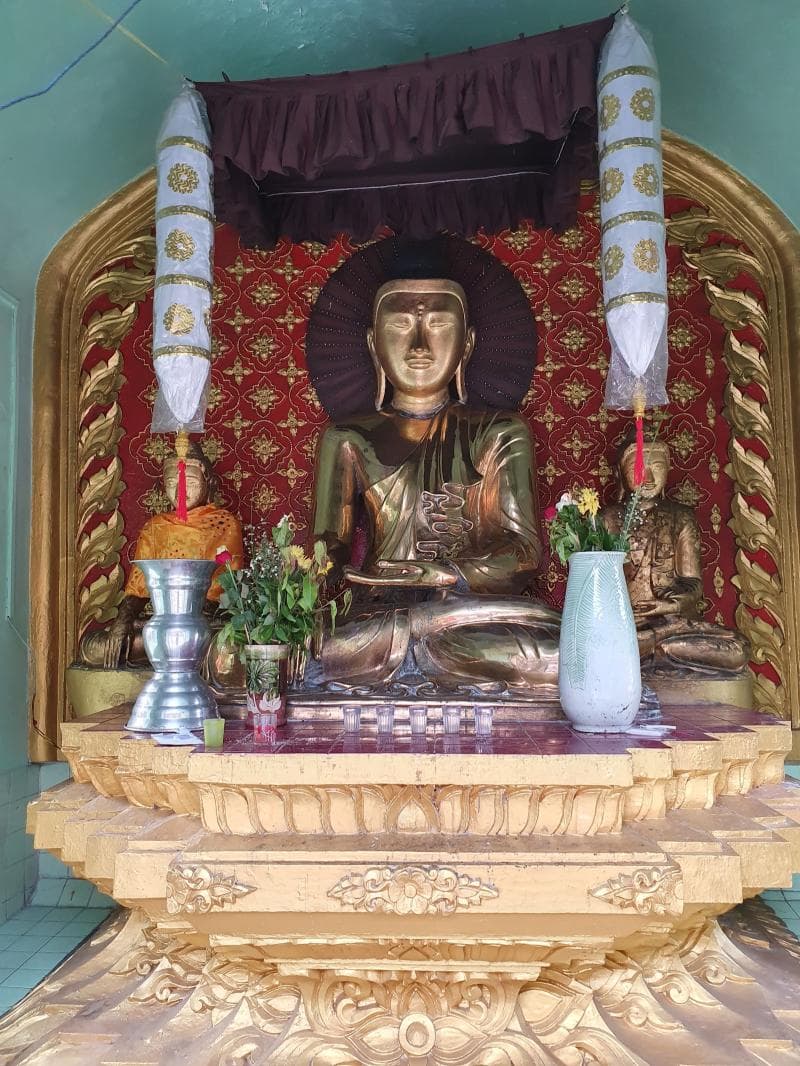
Explore Sule Pagoda in downtown Yangon, Myanmar—a 2,600-year-old golden stupa and cultural heart of the city's central 'plaza' area.
Overview
At the bustling heart of Yangon, Myanmar, stands the venerable Sule Pagoda, a golden beacon that acts as the city's geographical and spiritual anchor. While not formally named a 'Downtown Plaza', the area immediately surrounding Sule Pagoda functions as just that—a vibrant central hub where ancient spirituality converges with the energetic rhythm of modern urban life. This magnificent stupa is encircled by a major roundabout, making it a natural focal point for both locals and travelers exploring downtown Yangon.
Its strategic position amidst colonial-era buildings, bustling markets, and major thoroughfares underscores its role as a nexus of daily activity and historical significance. The pagoda's shimmering golden spire rises majestically, offering a serene contrast to the surrounding city, and inviting onlookers to delve into its profound history and cultural tapestry.
History & Cultural Background
The Sule Pagoda boasts a history stretching back over 2,600 years, predating even the iconic Shwedagon Pagoda, making it one of the most ancient pagodas globally. Burmese legend narrates that the site was once home to Sularata, the Sule Nat (spirit), who, due to his immense age, had his eyelids propped open. He was instrumental in revealing the location where the Buddha's sacred hair relics were buried, guiding the mythical King Okkalapa to build the Shwedagon Pagoda. The pagoda itself is believed to enshrine a strand of the Buddha's hair, given by Gautama Buddha to two Burmese merchant brothers.
Architecturally, Sule Pagoda is a Mon-style chedi, characterized by its unusual octagonal shape which tapers gracefully towards its golden spire. This design reflects the indigenous architectural evolution away from earlier Indian influences. Historically, the British colonial administration, particularly Lieutenant Fraser in the mid-19th century, recognized its central importance and designed the grid pattern of downtown Yangon with Sule Pagoda as its nucleus. Beyond its religious role, Sule Pagoda has also been a pivotal site for political gatherings and protests, serving as a rallying point during significant national movements in 1988, 2007, and 2021.
What Makes It Special
What sets Sule Pagoda apart is its unparalleled integration into the fabric of a vibrant metropolis. Unlike many other ancient religious sites that stand in secluded tranquility, Sule Pagoda is enveloped by the constant hum of city life, making it a living monument that actively participates in the everyday. Its golden dome rises 48 meters (152 feet) high, shining brilliantly against the backdrop of colonial architecture like the City Hall and the Supreme Court.
The pagoda's unique octagonal structure, maintaining its form from base to spire, is a distinctive feature. It is not merely a historical relic but a dynamic center where spiritual devotion coexists with commerce, politics, and urban movement. The surrounding area, often referred to as the 'downtown plaza', is a melting pot of cultures, sights, and sounds, truly making the pagoda a witness to centuries of change and continuity in Myanmar.
Stories, Fun Facts & Local Details
One of the most captivating stories linked to Sule Pagoda is the legend of the Sule Nat, the ancient spirit whose wisdom was crucial in locating the sacred relics for Shwedagon Pagoda. This tale highlights the deep intertwining of animist beliefs (Nat worship) with Buddhism in Myanmar's cultural heritage.
Inside the pagoda complex, visitors can observe a fascinating local tradition: the Burmese zodiac. Surrounding the main stupa are eight Buddha statues, each corresponding to a day of the week (with two for Wednesday), and associated with an animal. Devotees offer prayers and pour water over the Buddha statue corresponding to their birthday, a practice believed to bring good health, luck, and prosperity. This ritual offers a personal connection to the spiritual traditions of the country. Around the pagoda, you might also see locals releasing caged birds, a symbolic act of making merit. The blend of religious merit-making, the sounds of bells, and the sight of colonial buildings create an atmosphere unlike anywhere else.
Visitor Perspective
For a curious traveler, visiting Sule Pagoda offers a rich, immersive experience. Upon arrival, one immediately feels the pulse of Yangon's downtown. Walking around the pagoda's precinct provides opportunities to observe pious devotees in their rituals, alongside vendors and street life. The contrast between the serene, golden pagoda and the lively, sometimes chaotic, urban environment is striking. It's a place where you can witness the daily routines and spiritual devotions of the local people up close.
The pagoda is accessible through four entrances facing the cardinal directions, and footbridges offer elevated views of the roundabout and surrounding cityscape. At night, the pagoda glows, offering a different, equally enchanting ambiance. It is advisable to dress modestly, covering shoulders and knees, as a sign of respect for this sacred site.
Coordinates: 96.158778, 16.774389
View on Google Maps💬 How Travelers Describe This Place
Based on community votes
Photogenic
958Interesting
794Must See
785Unique
571Beautiful
546
Traveler Stories
Discover memorable experiences shared by travelers who have visited this place.
No traveler stories yet.
Be the first traveler to share what made this place memorable.

Tour
By
Spot
Discover amazing places around the world. Your journey starts here.
Explore
© 2026 TourBySpot. All rights reserved.