Night Illumination Area
Yangon, Myanmar
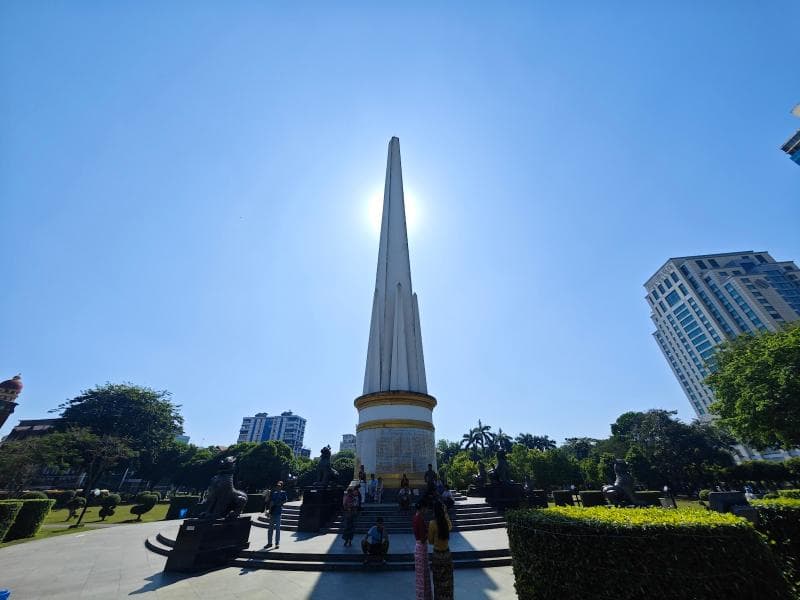
Discover the enchanting Night Illumination Area of Sule Pagoda in Yangon, Myanmar, where history meets spiritual glow after dark.
Overview
As darkness descends upon Yangon, Myanmar, the iconic Sule Pagoda transforms into a radiant beacon, earning its unofficial designation as the city's 'Night Illumination Area'. This ancient, gold-plated stupa, a spiritual and geographical heart of downtown Yangon, shines brilliantly, offering a captivating spectacle that draws both devoted locals and curious travelers. Situated at a bustling traffic roundabout, the pagoda’s illuminated form stands as a tranquil, glowing jewel amidst the urban dynamism, inviting quiet contemplation and admiration.
While not a separate, distinct 'area' within the pagoda grounds, the entire structure and its immediate surroundings come alive with light after dusk, creating a unique nighttime experience. The Sule Pagoda at night is not merely about artificial light; it's about witnessing the pagoda's spiritual essence enhanced by illumination, fostering an atmosphere of peace and reverence. Its golden spire, visible from a distance, acts as a guiding light, a silent testament to centuries of faith and history in the heart of Myanmar's largest city.
History & Cultural Background
The Sule Pagoda boasts a history spanning over 2,600 years, making it one of Myanmar's most ancient pagodas, predating even the famous Shwedagon Pagoda according to legend. Its Mon name, 'Kyaik Athok Ceti', translates to 'stupa where a sacred hair is enshrined', referring to the belief that it houses a strand of Buddha's hair.
Beyond its profound religious significance, the Sule Pagoda has played a pivotal role in Myanmar's urban and political landscape. During the British colonial era in the mid-19th century, Lieutenant Alexander Fraser strategically used the pagoda as the central point for Yangon's grid-pattern street layout, making it the city's undisputed geographical anchor. Throughout modern history, it has served as a critical rallying point for political movements and demonstrations, including the 1988 uprisings and the 2007 Saffron Revolution, solidifying its place not just as a spiritual center but also as a symbol of national identity and resilience.
What Makes It Special
What makes the Sule Pagoda truly special, especially after sunset, is its ability to blend deep historical roots with a vibrant, living spirituality. As evening descends, the pagoda's golden exterior, adorned with meticulously applied gilded plates, catches the artificial lights, shimmering and radiating a warmth that contrasts beautifully with the encroaching darkness. The architectural design, particularly its octagonal shape that tapers gracefully to the spire, is typical of Mon-style pagodas and becomes even more pronounced against the night sky.
The nighttime ambiance allows visitors to experience the pagoda in a different light – literally and figuratively. While the busy streets of downtown Yangon continue to bustle, the illuminated pagoda offers a serene sanctuary. The golden glow highlights the intricate details of its structure, from the small surrounding stupas to the bronze bells that devotees ring, each sound adding to the meditative atmosphere. This luminous presence transforms the pagoda from a daytime landmark into a captivating night-time spectacle, embodying the spiritual wealth and devotion of countless pilgrims.
Stories, Fun Facts & Local Details
According to Burmese legend, the Sule Pagoda is named after Sularata, the 'Sule Nat' (spirit) who resided at the site. This ancient nat is said to have known the location where three previous Buddhas had buried sacred relics, and later revealed the site for the Shwedagon Pagoda's construction to King Okkalapa, making the Sule Pagoda a place of ancient wisdom and guidance. The name 'Sule' itself is thought to be derived from the Burmese word 'suway', meaning 'meeting', reflecting its role as a gathering place both spiritually and socially.
Locals visit the pagoda from early morning until late evening, participating in rituals such as offering flowers and incense, and lighting candles at night. This practice of lighting candles, coupled with the pagoda's floodlighting, contributes significantly to its nighttime glow. Around the main stupa, you'll find eight shrines, each dedicated to a day of the week (with Wednesday split into two). Devotees pour water over the Buddha image corresponding to their birth day, a quiet, rhythmic ritual that provides a fascinating insight into local Buddhist practices.
Visitor Perspective
Visiting the Sule Pagoda at night offers a distinct and memorable perspective. The pagoda is open daily, typically from 4:00 AM to 10:00 PM, allowing ample opportunity to experience its illuminated beauty. The evening hours provide cooler temperatures and a more intimate atmosphere compared to the daytime crowds. As the golden stupa gleams under floodlights, the scene becomes ideal for photography, capturing the interplay of light and shadow on its ancient architecture.
Walking barefoot on the cool marble tiles, surrounded by the soft glow and the sounds of devotion, creates a deeply grounding experience amidst the city's hustle. The pagoda's central location means it's easily accessible and serves as an excellent starting point for exploring other nearby illuminated landmarks, such as Mahabandoola Park with its dancing fountains, and the colonial-era buildings that frame the pagoda, which often feature their own decorative lighting. This allows for an enriching evening stroll through Yangon's historic core, with the radiant Sule Pagoda always at its heart.
Coordinates: 96.158778, 16.774389
View on Google Maps💬 How Travelers Describe This Place
Based on community votes
Must See
934Interesting
326Beautiful
279Unique
276Photogenic
270
Traveler Stories
Discover memorable experiences shared by travelers who have visited this place.
No traveler stories yet.
Be the first traveler to share what made this place memorable.

Tour
By
Spot
Discover amazing places around the world. Your journey starts here.
Explore
© 2026 TourBySpot. All rights reserved.